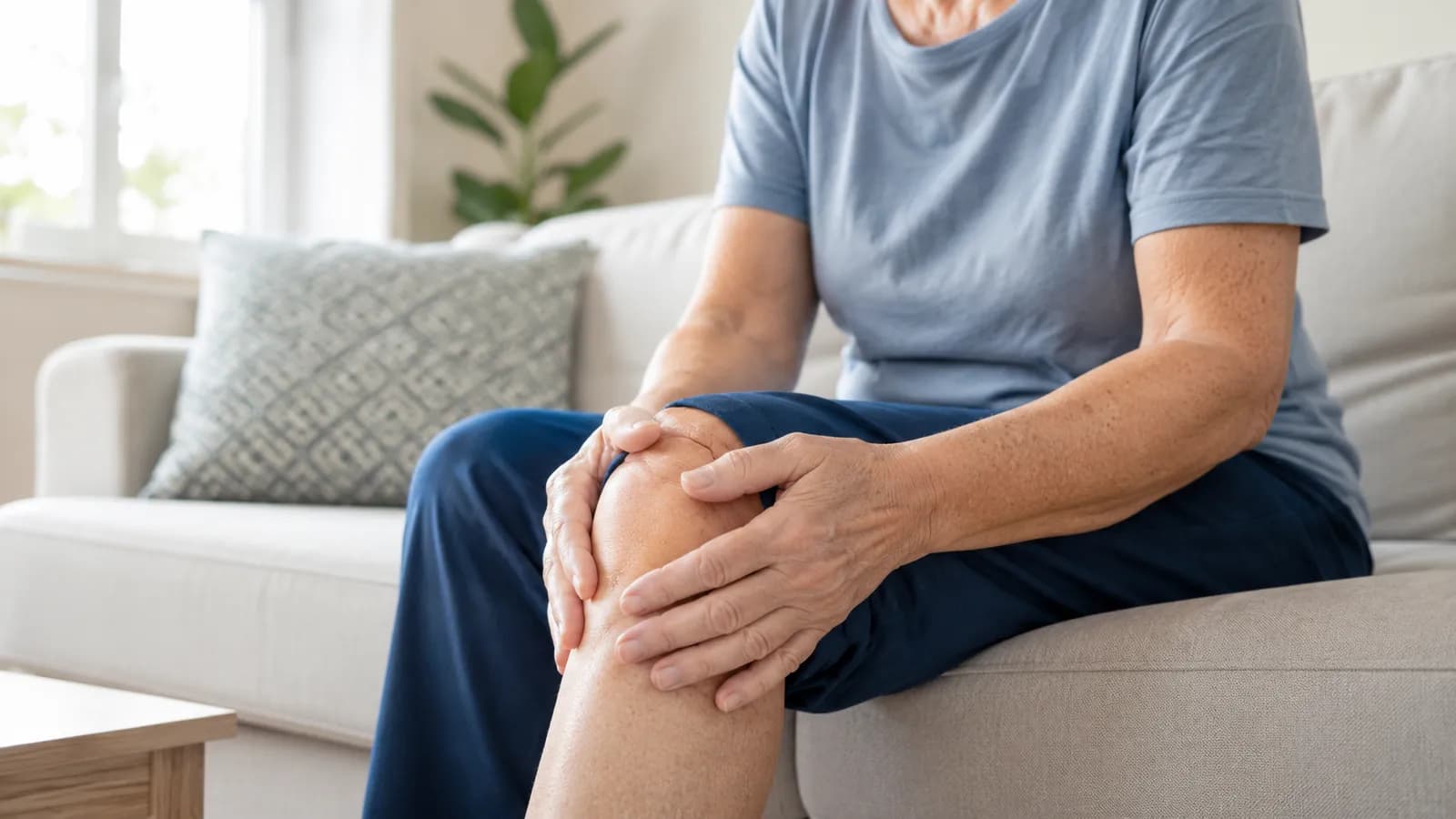
Most patients who come to our clinic in Antalya with knee pain open the same way: "I had an X-ray and they said my knee is worn out." Two questions follow almost every time. If I keep walking, will I wear it out faster? And does this end in surgery?
This article is the answer we give in the consulting room, written down. The short version: in knee osteoarthritis, movement is not the enemy — it is the treatment. Here is the long version.
How the knee joint actually works
The knee is one of the most heavily loaded joints in the body, and it is not a simple hinge: with every step it bends, straightens and rotates slightly. Knowing what is inside it helps you work out where your pain is coming from.
- Cartilage. The smooth layer covering the facing surfaces of the thigh bone, shin bone and kneecap. It reduces friction to almost nothing, and it is the tissue that thins in osteoarthritis.
- Menisci. Two C-shaped cartilage cushions sitting on top of the shin bone. They spread load over a wide area and add stability. When one tears, the pain is usually sharper and points to a single spot.
- Ligaments. The cruciate ligaments at the centre and the collateral ligaments on either side hold the knee together and limit sliding and sideways opening.
- Muscles and tendons. Quadriceps, hamstrings and hip muscles. They decide how much of the load ends up on bone rather than being absorbed — and this is precisely the part of the system we can change.
- Synovial fluid and joint lining. They lubricate the joint and feed the cartilage. What you call "a swollen knee" is usually an increase in this fluid.
All of these structures can produce pain, and the character of the pain — sharp or dull, pinpoint or diffuse, and which movement brings it on — often reveals which one is involved. Stiffness and loss of knee mobility are read the same way.
Not every knee pain is osteoarthritis
Seeing arthritis on an X-ray does not mean arthritis is the source of your pain. Symptom-free osteoarthritis is very common after the age of 55: the finding sits there while something else generates the pain. These are the conditions we most often have to tell apart in clinic:
- Meniscal problems. Pinpoint pain along the joint line, usually provoked by twisting or squatting, sometimes with catching or locking. Menisci can also degenerate with age without any clear injury.
- Ligament strains. They start after a sudden twist, a sideways force or a turn in sport. A sense of the knee giving way and feeling unreliable is typical; ligament pain is usually felt on the inner or outer edge of the knee.
- Patellofemoral pain (pain at the front of the knee). A dull ache around the kneecap that worsens going down stairs, sitting for a long time with bent knees and walking downhill. Common in younger and middle-aged people, unrelated to arthritis, and it responds very well to hip and quadriceps work.
- Inflammatory joint disease. Suspected when morning stiffness lasts well over half an hour, several joints are involved at once, or there is night pain and fatigue. This picture needs a doctor's assessment.
- Tendon and bursa problems. Tenderness when you press one specific spot on the knee, usually starting a few days after an unaccustomed activity.
Telling these apart is the job of the examination. The good news is that strengthening is a shared part of the programme in nearly all of them, so no time is lost while the diagnosis is being clarified.
"Wear and tear" paints the wrong picture

People usually picture a joint grinding itself away like a worn brake pad, or imagine something building up inside the knee. Neither is what happens. The medical name for the condition is osteoarthritis, and it is a slow change in the joint, not a machine breaking down.
Cartilage is the smooth, blood-vessel-free tissue capping the ends of your bones — the cushion of the joint. Over the years it thins and its surface roughens. Small bony spurs called osteophytes form at the joint margins. On an X-ray they look bright white, which is where the alarming image in most people's heads comes from.
The distinction matters in practice, because no treatment "dissolves" arthritis and nobody should promise you one. What can be done is concrete: reduce the load the joint carries, strengthen the muscles around it, and get movement back. Osteoarthritis is one of the most common joint conditions in the world, and the World Health Organization's osteoarthritis fact sheet also places exercise at the centre of care.
The grade on your X-ray rarely matches how much you hurt
This is the finding that surprises patients most. Someone whose X-ray is read as "advanced" walks four kilometres every morning. Someone else, graded "mild", cannot manage a flight of stairs.
That is not an exception, it is the rule. Imaging shows the structure of the joint. Pain is the sum of many other things: muscle strength, general conditioning around the joint, body weight, sleep, how long you have been inactive, and how sensitised your nervous system has become. An X-ray measures none of them.
The grade in your report is not a photograph of your future. Even if the X-ray never changes, your pain can go down and your walking distance can go up — and we can measure that within weeks.
Which symptoms point to knee osteoarthritis?
- Pain that rises with activity and settles with rest. The first steps in the morning and the first stand-up after sitting a long time are typically the hardest.
- Short-lived morning stiffness. It usually eases within 30 minutes. Stiffness clearly longer than half an hour suggests other conditions and needs a doctor's assessment.
- Pain going down stairs. Descending is harder than climbing, because the knee absorbs more load on the way down.
- Trouble with deep bending. Squatting, kneeling and getting out of a low armchair become difficult.
- Catching and crackling. A rough joint surface can produce audible clicks or a grating feeling during movement.
- Occasional swelling. Usually the day after an unusually long walk or a long spell on your feet.
Symptoms come and go over the years. The good news is that most flare-ups settle with the right handling, and a flare-up does not mean the joint has taken a permanent step backwards.
"Will walking wear my knee out?" — and why exercise comes before medication
No, walking does not wear your knee out. This is the most common belief we have to correct, and the most damaging one, because it pushes people to do exactly the wrong thing.
Cartilage has no blood supply of its own. It feeds on the synovial fluid inside the joint, and that fluid only moves in and out of the cartilage when the joint moves and takes load — the way a sponge soaks up water and releases it. A knee that stops moving starves its own cartilage.
The second cost of inactivity is muscle. The quadriceps at the front of the thigh weakens within weeks. A weak quadriceps absorbs less of the impact of each step, which means more pain, less movement and further muscle loss. That loop can take someone off the stairs in a matter of months.
What actually harms the joint is not walking but sudden, unaccustomed overload: ten kilometres in one day after months of sitting, hours of squatting work on a painful knee, going back to running with no build-up. There is a simple test for the right dose — if your pain the day after a walk is not clearly worse than usual, the dose was right.
This is exactly why exercise is first-line treatment. Strong quadriceps and strong hip muscles take over part of the load that would otherwise land on the knee. If the hip abductors (gluteus medius in particular) are weak, the knee drops slightly inward with every step and pressure piles up on one corner of the joint. Strengthening is the most direct way to lower that pressure — and no painkiller can do it for you.
Four exercises you can do at home

These four movements are the starter programme we prescribe most often in knee osteoarthritis. Because they do not bend the joint deeply, they are usually well tolerated. Move slowly and do not hold your breath. If pain during an exercise goes above about 4 out of 10, stop.
- Straight leg raise. Lie on your back. Bend one knee and plant that foot; keep the other leg straight. Tighten the thigh muscle of the straight leg and lift it about 25 cm off the floor, hold 3 seconds, lower slowly. 10 repetitions, 3 sets per leg, once a day.
- Seated knee extension. Sit upright on a chair. Slowly straighten one knee until the leg is parallel to the floor, hold 5 seconds, lower under control. 10 repetitions, 3 sets. When it becomes easy, add a 0.5-1 kg ankle weight.
- Bridge. Lie on your back, knees bent, feet hip-width apart on the floor. Squeeze your glutes and lift your pelvis until your trunk and thighs form a straight line. Hold 3 seconds, lower slowly. 10-12 repetitions, 3 sets.
- Side-lying hip abduction. Lie on your side, lower knee slightly bent, top leg straight. Lift the top leg 30-40 degrees without letting it drift forward, hold 2 seconds, lower. 12 repetitions, 3 sets per side.
Keep the programme going at least three or four days a week for a solid six to eight weeks. Real gains in muscle strength do not appear before that; seeing no obvious difference in the first fortnight is the normal course, not failure. And when pain flares, cutting the number of repetitions is almost always a better decision than stopping altogether.
Weight, and managing pain in daily life
Walking on level ground, your knee carries several times your body weight, and more than that going down stairs. Because of that multiplier, every kilogram you lose takes several kilograms off the joint with each step. Five kilos may look modest on the scale; for the joint it is not modest at all.
- Ice and heat. For a flare-up, ice wrapped in a towel for 15-20 minutes. For morning stiffness, 15 minutes of warmth — a hot shower or a heat pack — usually works better.
- Split your walk. Instead of one 40-minute walk, do 20 and 20 with a sit-down in between. Same distance, far fewer flare-ups.
- Check your shoes. A cushioned sole and a firm heel counter help. Thin house slippers and high heels are among the quietest causes of a flare-up.
- Raise your seating. Low sofas and low toilet seats bend the knee past 90 degrees and increase pain; a simple raiser often does more good than a tablet.
- Walk in water. Walking in hip-deep water markedly reduces joint load — a real advantage in a city with a long sea and pool season.
- Account for the Antalya heat. In summer, early morning or late afternoon is far better for walking. The most common relapse we see is people getting worn out by the heat and abandoning walking altogether.
What we do at the clinic
The first session is spent measuring: the history of the complaint, range of motion in the knee and hip, muscle strength (particularly quadriceps and hip abductors), how you walk, the alignment of foot, knee and hip, and exactly which movement provokes the pain. We will look at your X-ray if you have one, but the examination — not the film — decides the programme.
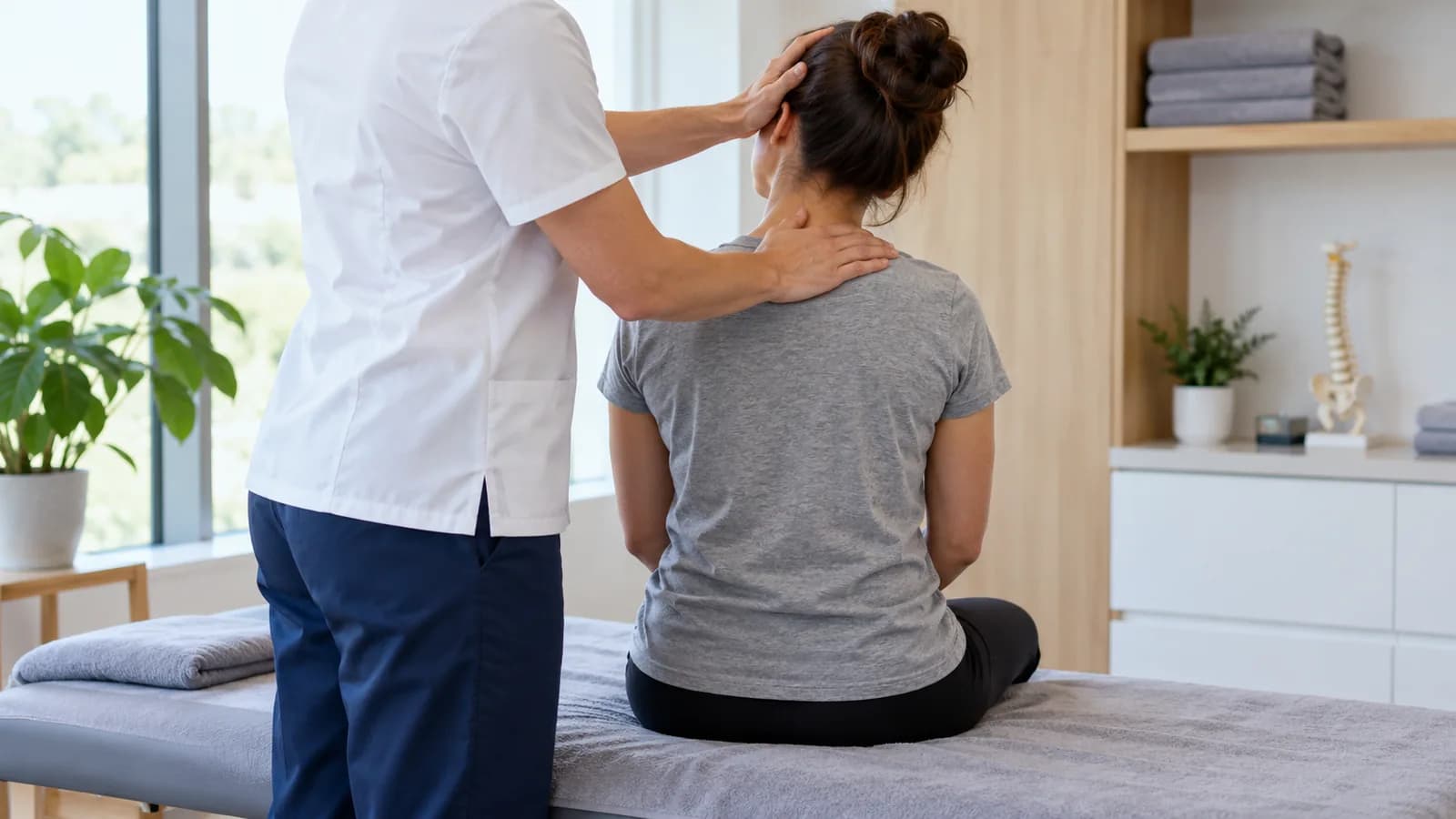
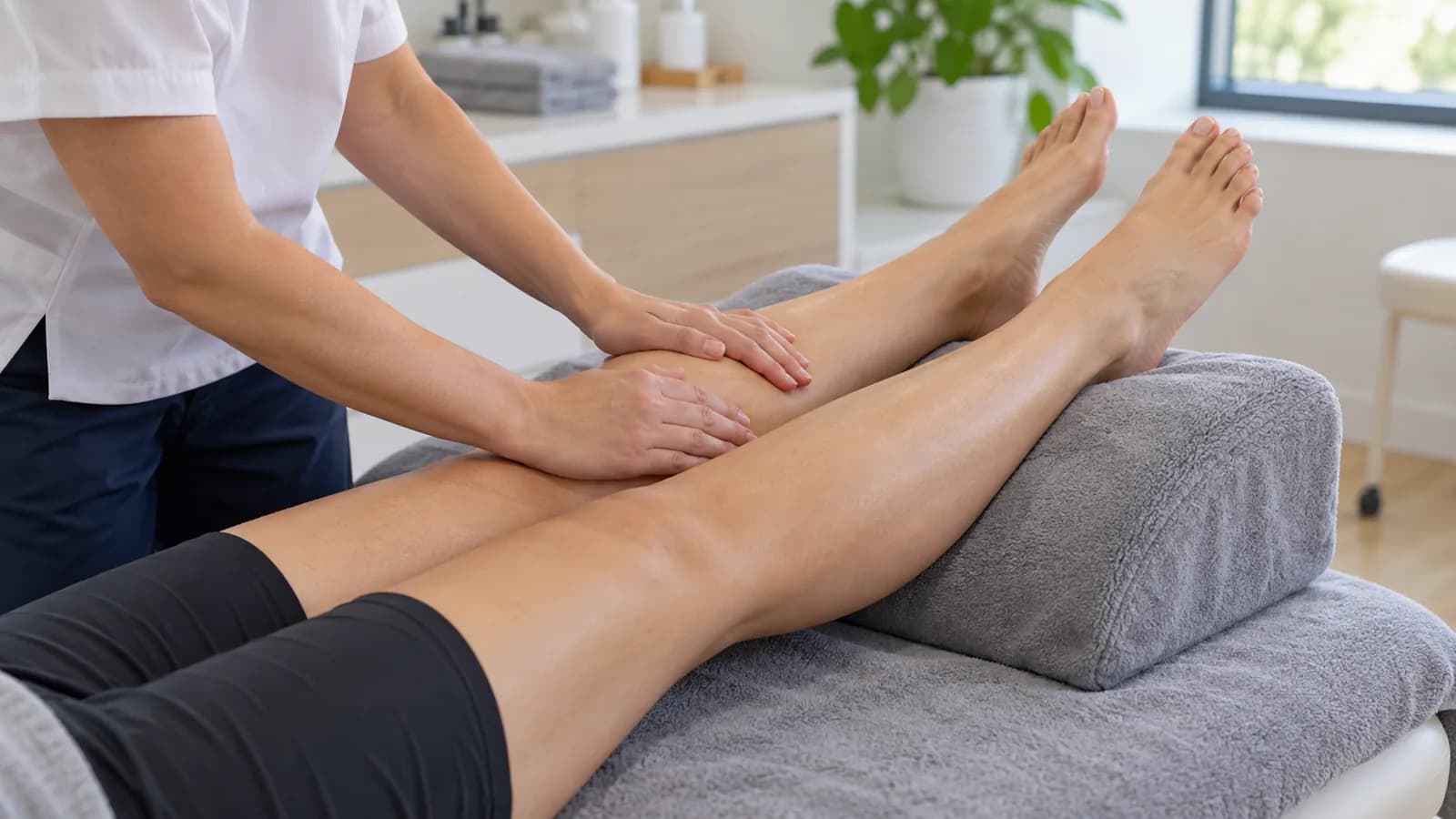
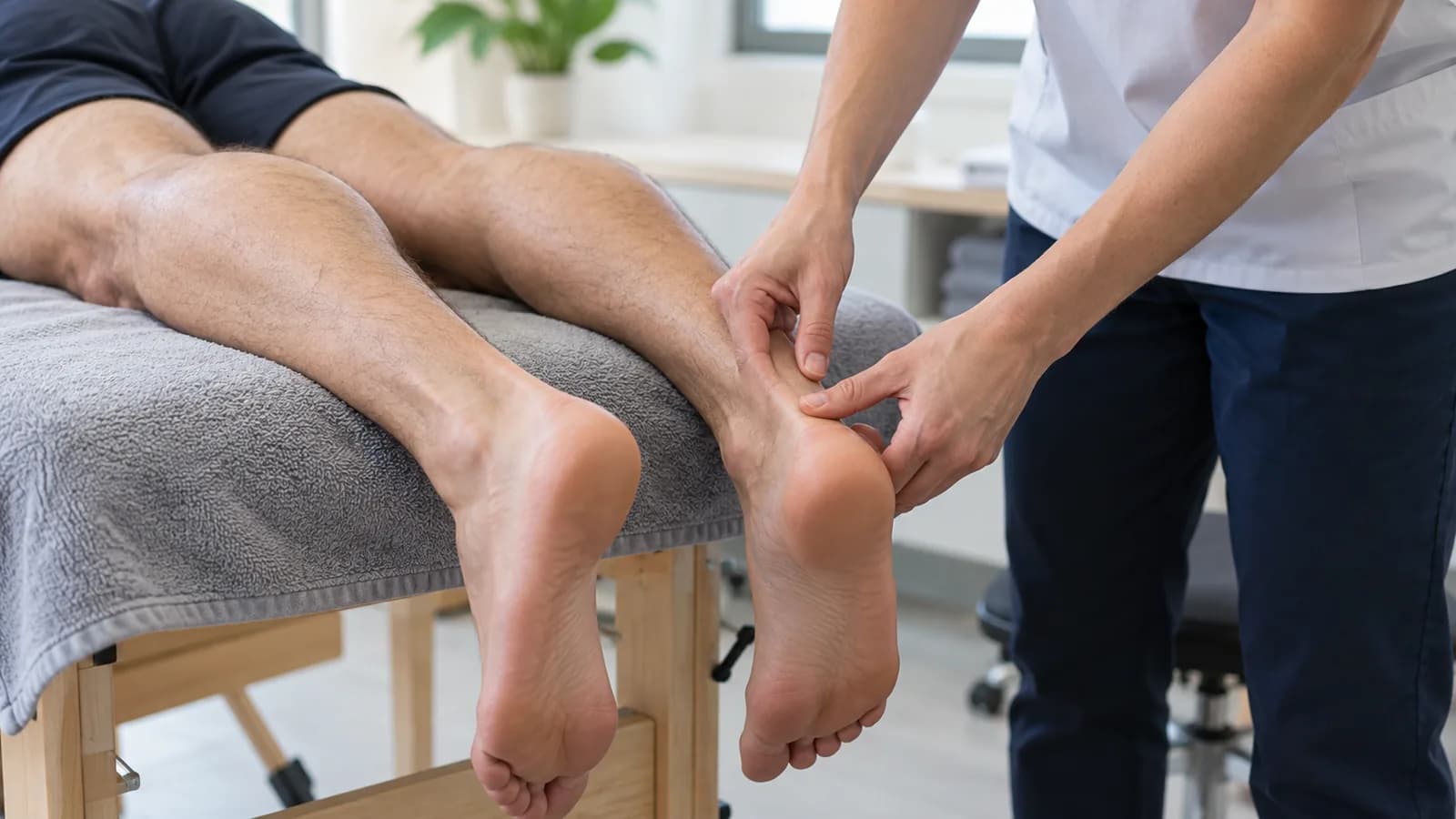
- Manual therapy — hands-on techniques to improve joint range and reduce tension in the surrounding tissue. It is not a standalone cure; its value is that it makes exercise possible.
- An individual exercise programme — the four movements above are the starting point. In the clinic, load, repetitions and difficulty are re-measured and progressed every two to three weeks.
- Clinical Pilates — the stage after basic strength is in place. It builds balance, trunk control and hip stability, and teaches the body to share the knee's load with the hip and trunk.
- Physical therapy modalities — electrotherapy, ultrasound and similar tools calm pain in the short term. They support the programme; they are not its backbone.
We do not tell anyone "let's do 20 sessions and it will go away". What lastingly reduces pain is not the session count but the strength you gain and the habit you keep. Half our job is teaching the programme so that you can carry on without us.
When should you see a doctor?
The large majority of knee osteoarthritis is managed without surgery. Some findings, though, mean you should not put an assessment off:
- A locking knee — the joint catches at a point and will not straighten or bend.
- Rest pain at night — pain that wakes you from sleep although you have not moved at all.
- Sudden swelling, redness, a hot knee and fever — joint infection or an inflammatory condition has to be ruled out. This is urgent; do not wait.
- The knee giving way, and falls — particularly important in older patients because of fracture risk.
- No progress after three months of consistent treatment — if your walking distance keeps shrinking and daily life is seriously restricted, an orthopaedic assessment and, if needed, surgical options come into the picture.
Surgery is not a sign of failure; it is a decision taken at the right time. And in joint replacement the outcome hinges on the same thing: muscle strength before and after the operation. In no scenario does the work you put into exercise go to waste.
The chain that protects the knee starts at the foot: an altered footstrike caused by heel or arch pain adds load to the knee too. Heel spurs and plantar fasciitis covers that lower link. For exercise to work, the load has to be increased correctly, and the guidelines in our article on recovery and progressing load help you move your knee programme forward without flaring the pain.
The fastest route is to find out which muscle, which movement and which habit is feeding your knee pain. For a knee assessment and a programme built around you at our centre in Muratpaşa, Antalya, you can book an appointment. In the first session we take your measurements, set out a realistic six-to-eight-week plan, and give you your home programme in writing.
This article is for general information only and does not replace personal examination, diagnosis or treatment. An exercise programme has to be tailored to the individual. If your symptoms persist, please consult a doctor or a physiotherapist.