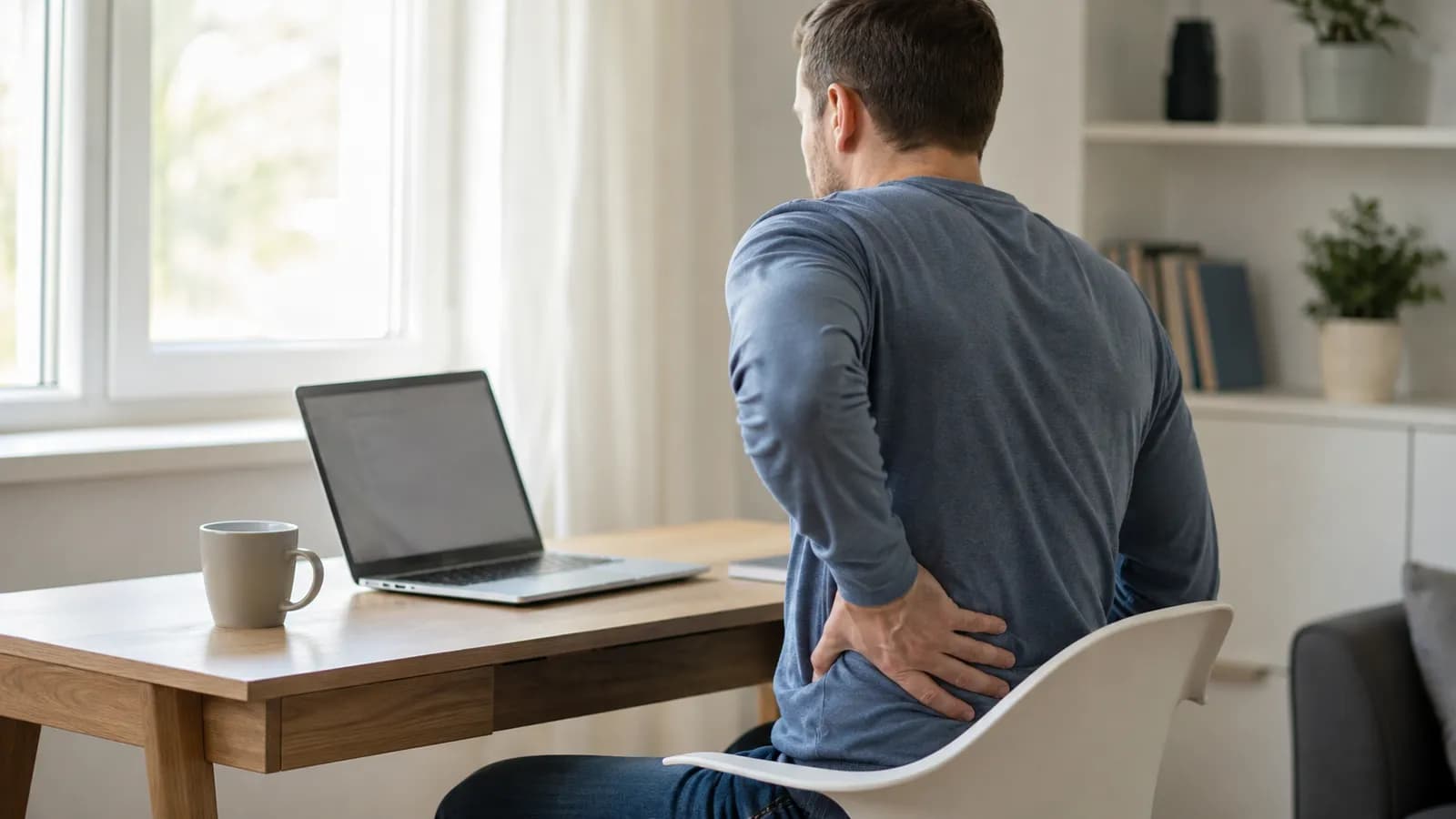
Lower back pain is the reason most of our patients walk through the door, and almost all of them open with the same question: "Is it a slipped disc?"
The answer is usually no. Most back pain has little to do with the disc and a lot to do with how your spine carries load. That said, we do not treat every backache the same way. Knowing the difference prevents both unnecessary fear and a delayed diagnosis.
Why most back pain is mechanical
The lower back is made of five vertebrae, the discs between them, the facet joints, ligaments and the layers of muscle that wrap around all of it. This structure is built to carry weight. The problem is rarely the load itself; it is how that load gets distributed.
That is what we mean by mechanical back pain: no serious tissue damage, just an imbalance in loading. It changes with movement, gets worse in certain positions and eases in others. It is stiff in the morning and loosens up during the day.
These are the causes we see most often in the clinic:
- Staying in one position too long: desk work, long drives, evenings on the sofa. What the back dislikes most is stillness.
- Lifting badly: bending from the waist to pick something up, and twisting while you lift. Those two together raise spinal pressure the most.
- Weak trunk and hip muscles: when they do not do their share, the whole load goes to the spine and the ligaments.
- A sudden jump in activity: months of sitting followed by a weekend of moving house, digging the garden or starting heavy lifting from zero.
- Poor sleep and high stress: they lower the pain threshold and keep muscles tense all day. We see this pattern clearly in our patients.
Low back pain is recognised as the leading cause of activity limitation worldwide; for the figures you can read the World Health Organization fact sheet on low back pain.
Muscle pain or disc pain?

We make the distinction through examination, but the way you describe the pain already gives us the first clue.
Muscle and joint pain usually stays in the back itself and spreads like a belt. When we press, there is a tender spot. It gets worse after long periods of stillness and eases once you start moving.
Disc-related pain looks different. It travels from the buttock down the leg, to the knee or further. Coughing, sneezing or straining makes it noticeably worse. Bending forward and sitting for long stretches become difficult. Numbness or pins and needles in the leg may come with it.
One point worth stressing: a scan report that mentions a bulging disc does not mean the disc is causing your pain. Plenty of people with no pain at all show the same findings on an MRI. We examine the person, not the image.
When we send you to a doctor first
Physiotherapy is the first step for most back pain. Some signs, however, change that order. If any of the following applies, we ask you to see a doctor before booking a session with us:
- Loss of strength in the leg: not being able to rise onto your toes or walk on your heels, or your foot catching as you walk
- Numbness around the groin or between the legs, or a change in bladder or bowel control. This one does not wait; it needs emergency assessment
- Pain that started after a fall, a blow or a traffic accident
- Pain that rest does not relieve and that wakes you at night
- Fever, unexplained weight loss, a known history of cancer or long-term steroid use
These are uncommon, and none of them is a diagnosis on its own. They only change the order of things: doctor first, physiotherapy after.
What helps in everyday life

Someone who comes to us twice a week is shaped mostly by what happens in the remaining days. Three things make the biggest difference:
- Sitting: there is no single correct posture; duration is the real issue. Stand up and walk for a couple of minutes every 30 to 45 minutes. In long meetings, a thin cushion supporting the curve of your lower back helps.
- Lifting: bring the load between your feet, bend your knees, get your body over it. Do not twist while lifting; if you need to turn, step your feet around.
- Your bed: a very soft mattress lets the back sag, a rock-hard one presses on the shoulder and hip. Medium firmness suits most people. Put a pillow between your knees if you sleep on your side, or under your knees if you sleep on your back.
Bed rest used to be standard advice during a flare-up. We now know it slows recovery. Staying as active as the pain allows, walking around the house and keeping up light daily tasks gives faster results.
Antalya makes this easier than most places, since walking outdoors is comfortable for most of the year. A 20 to 30 minute walk on level ground makes a noticeable difference for most of our patients within the first two weeks.
How we work in the clinic
The first session is an assessment: which movement provokes the pain, which muscle group is weak, whether there are nerve signs, what your work and sleep look like. A programme handed out without this tends to stay generic.
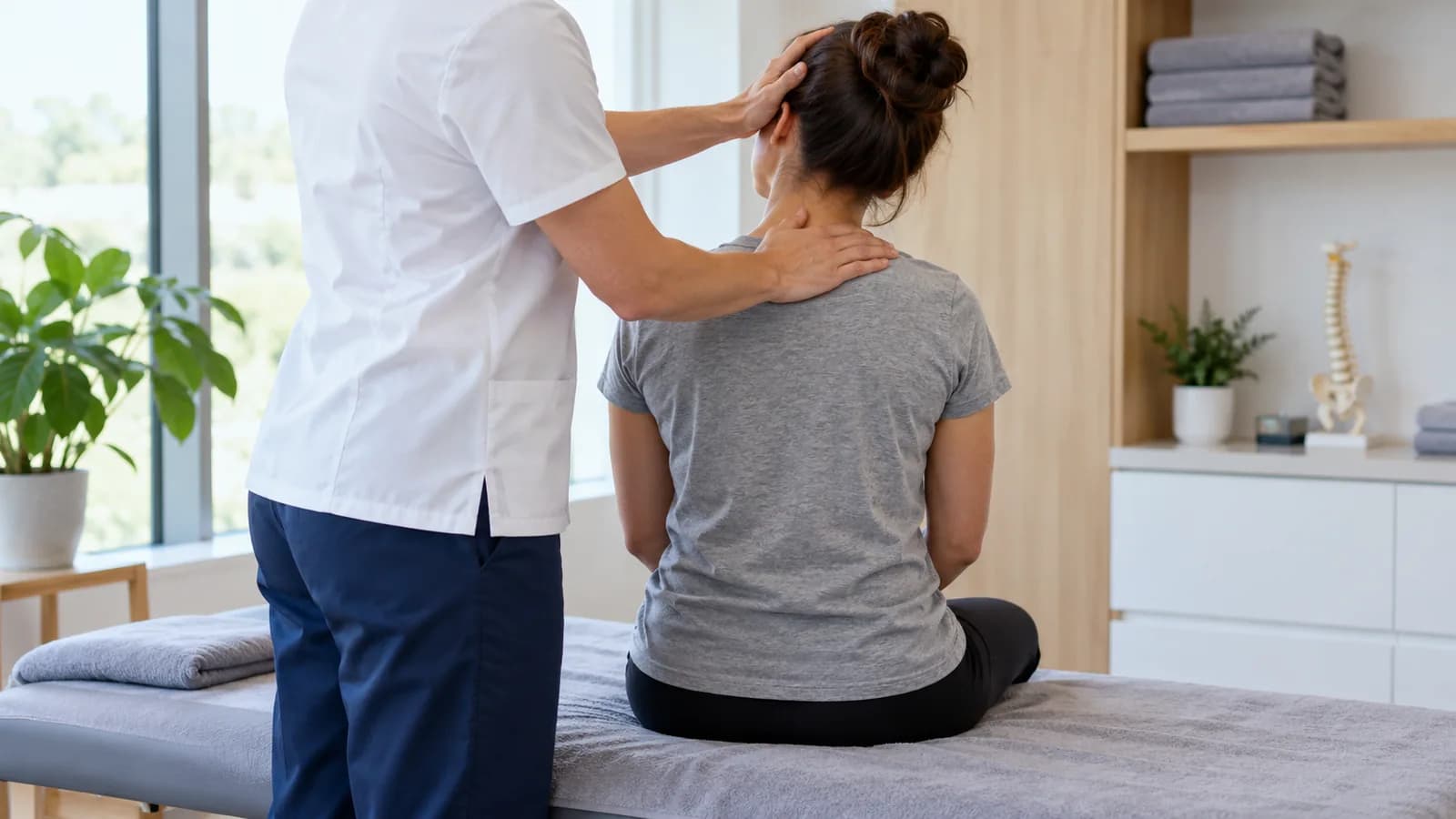
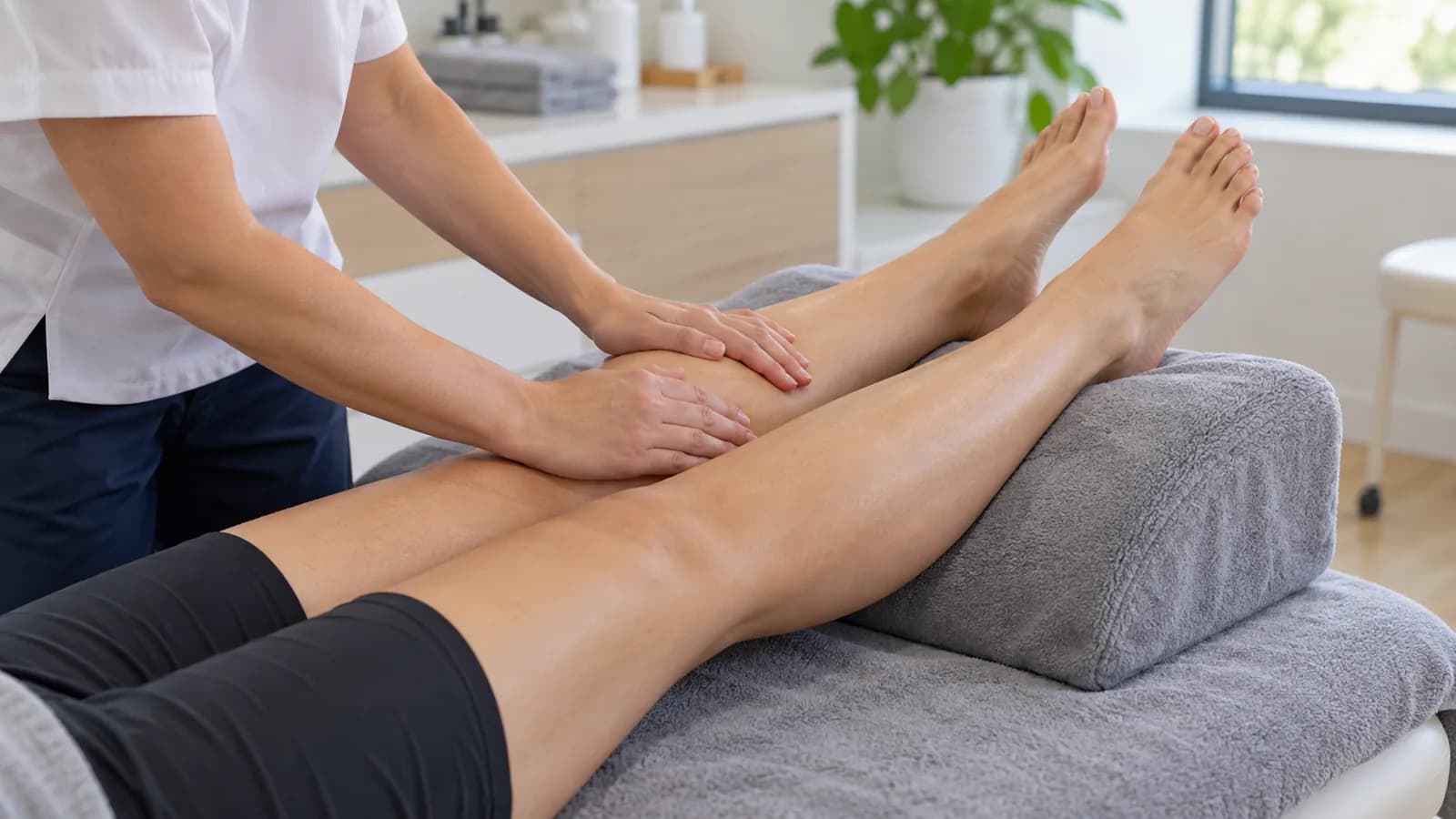
While the pain is at its worst we use manual therapy on the joints and soft tissue to restore movement and bring the pain to a manageable level. As it settles, the weight shifts to exercise: a clinical pilates programme built around your trunk and hip muscles, plus a short routine you can keep up at home.
Our goal is not the day the pain stops but the six months after it, with no return. That is decided less by the hour spent in the clinic and more by the other twenty-three.
The spine works as a single chain: a head held forward all day increases the load your lower back carries as well. We covered the same postural problem one link higher up in neck pain and tech neck. When the pain is mechanical in origin, hands-on techniques can restore movement quickly; which complaints manual therapy helps and what a session actually involves are covered in a separate article.
If your back has not settled in a few weeks, or it locks up the same way every few months, having it examined beats guessing. You can book an appointment at our clinic in Muratpaşa, or call first and tell us what is going on so we can say whether we are the right address.
This article is for information only and does not replace examination, diagnosis or treatment. If your symptoms persist, or if any of the warning signs above apply to you, see a healthcare professional.