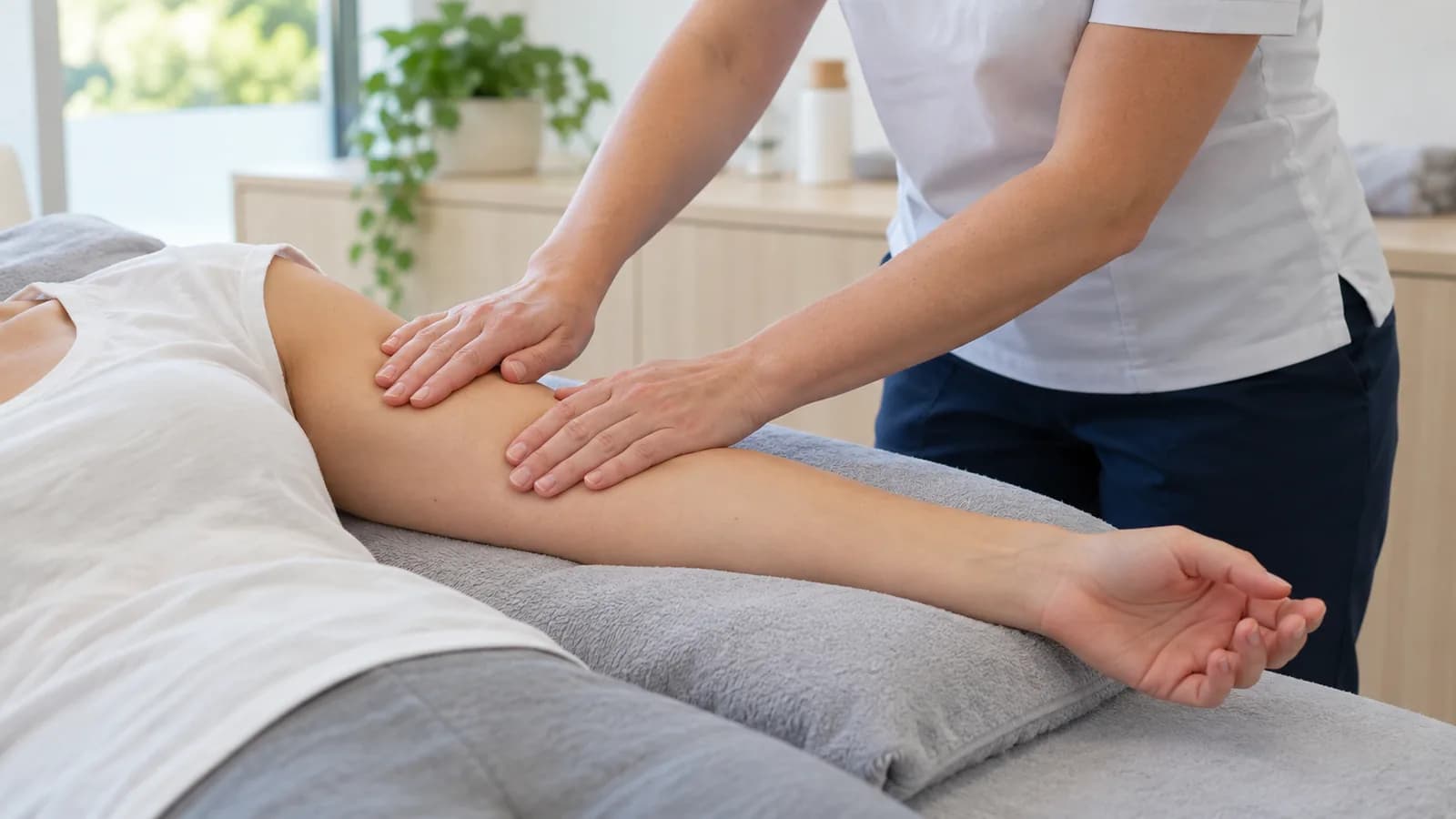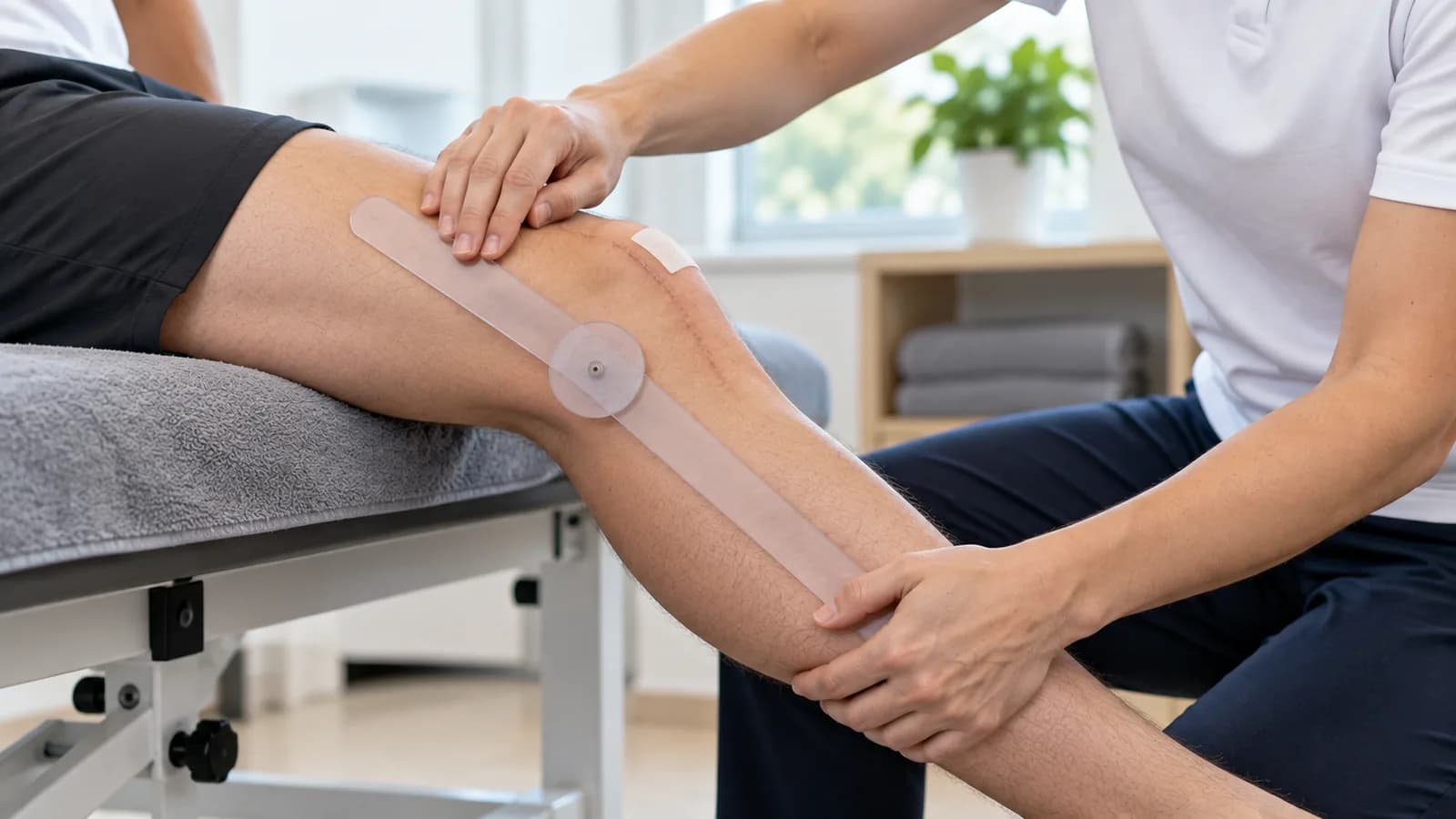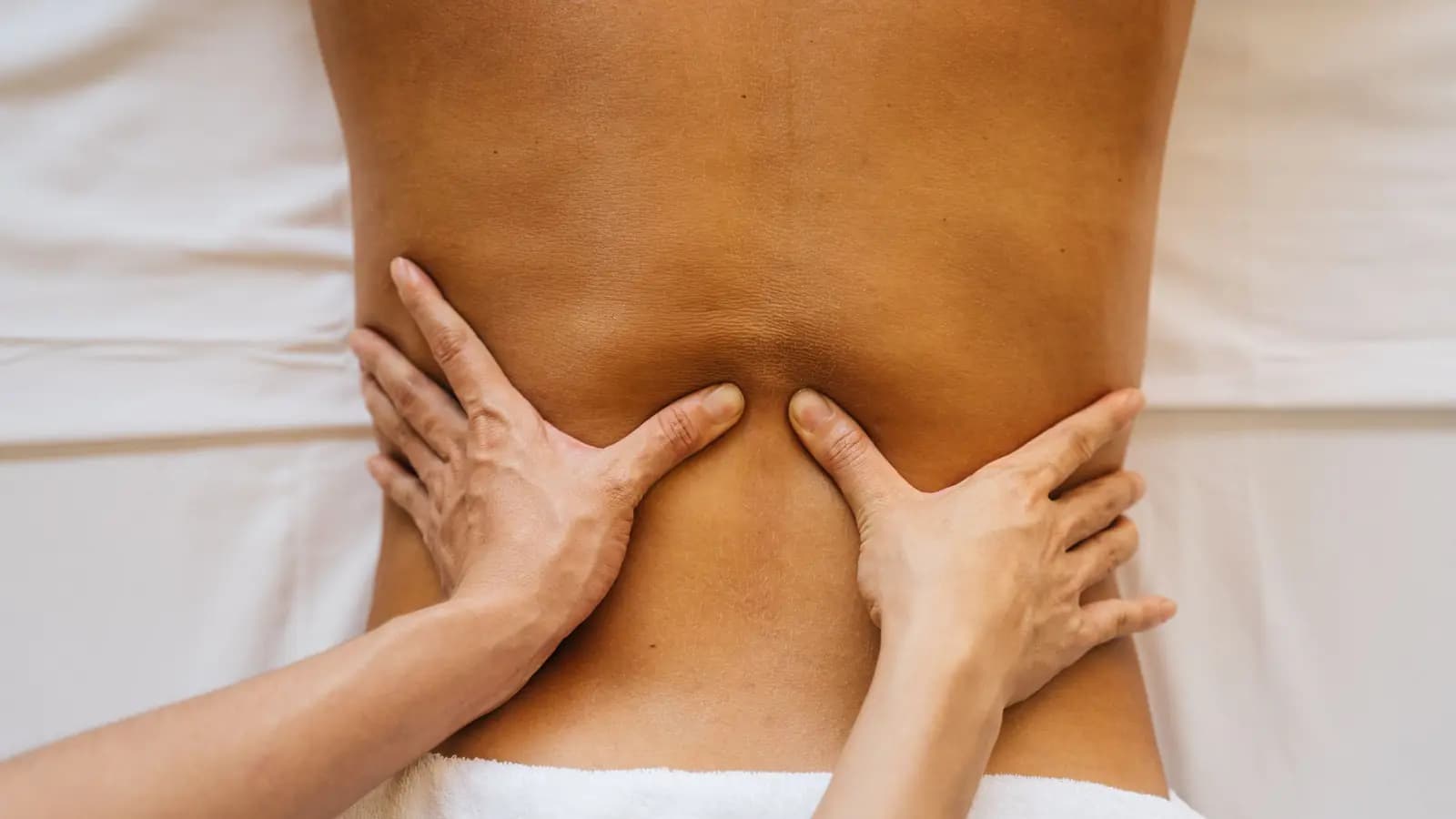
Manual therapy is a treatment approach in which the physiotherapist works on joints and soft tissue with their hands. The question we hear most often in the clinic is how it differs from a massage. The short answer: it is not a general relaxation treatment but a targeted intervention aimed at a specific problem identified during the assessment. Below we explain the techniques involved, the complaints they help with, how a session unfolds and when you should see a doctor first.
What Is Manual Therapy?

Manual therapy is the collective name for hands-on techniques applied to a painful or restricted area. The physiotherapist moves the joint in a specific direction with a controlled force, releases tight bands of muscle, and works to restore the gliding movement between tissues. The aim is twofold: to reduce pain and to widen the range in which you can move comfortably.
Treatment always follows assessment. With the same low back pain, one person may have restricted hip movement while another has weak trunk muscles; applying the same technique to both will not give the expected result. This is why we plan manual therapy alongside exercise and adjustments to daily habits, never on its own.
Which Techniques Are Involved?
Manual therapy is not a single manoeuvre but a family of techniques. These are the ones we use most often:
- Joint mobilisation: Small-amplitude, rhythmic movements are applied to the joint surface to increase range of motion gradually.
- Manipulation: A brief, quick thrust is applied. You may hear a popping sound; it comes from a pressure change inside the joint and has nothing to do with bones “going back into place”.
- Soft tissue techniques: Deep friction and sustained pressure on muscle, tendon and fascia to reduce tension.
- Trigger point work: Pressure is held for a set time on tender, hardened points within a muscle.
- Neural mobilisation: Controlled positions are used to support the nerve's gliding movement through surrounding tissue. Particularly useful when symptoms travel down the arm or leg.
- Muscle energy and stretching techniques: Your own muscle contraction is used to gain range of motion.
Which Complaints Does It Help?

Manual therapy is chosen for musculoskeletal complaints, especially where restricted movement accompanies the pain:
- Low back pain, neck pain and a stiff neck
- Shoulder impingement and frozen shoulder
- Tension-type headaches and headaches originating from the neck
- Tendon problems such as tennis and golfer's elbow
- Restricted movement due to hip and knee osteoarthritis
- Joint stiffness after surgery or a period in a cast
- Jaw joint pain, clicking and locking
- The recovery phase following sports injuries
For a general overview of what physiotherapy covers in these areas, the NHS page on physiotherapy is a reliable starting point. The treatment decision itself, however, rests on your examination, history and any imaging results.
What Happens in a Session?
The first appointment starts with an assessment: when the problem began, what makes it worse, which movements are difficult. We then examine range of motion, muscle strength and posture. This part usually takes 20-30 minutes and sets the framework for the treatment plan.
Follow-up sessions last around 30-45 minutes and run in this order:
- Preparation: The area is warmed up with heat or superficial soft tissue work.
- Hands-on treatment: Mobilisation, stretching or pressure techniques are applied to the targeted joints and tissues.
- Exercise: The range gained is reinforced with exercise in the same session so that it lasts.
- Home programme: You are given a short routine of three or four movements that takes a few minutes a day.
A mild stretching or pressure sensation is expected during treatment; sharp pain is not. For a day or two afterwards you may feel a tenderness similar to muscle soreness, which usually settles on its own. If anything feels uncomfortable, simply say so during the session and the technique or its intensity is adjusted.
How Many Sessions Are Needed?
There is no number that fits everyone. In practice, for most musculoskeletal complaints we plan a course of 6-10 sessions, usually twice a week. By the end of the third or fourth session we expect a measurable change: less pain, more range of motion, or a daily task that has become easier.
If that change is not there, we revisit the assessment and the plan rather than repeating the same technique. Complaints that have lasted for months may take longer, while an acute stiff neck can improve noticeably within a few sessions.
When Should You See a Doctor First?
In experienced hands manual therapy is a safe method, but not every pain is musculoskeletal in origin. If any of the following apply, a medical assessment should come before booking sessions:
- Pain that started after a fall, a blow or a traffic accident
- Fever, night sweats or unexplained weight loss alongside the pain
- Pain that increases at rest and at night and does not ease with a change of position
- Progressive weakness or widespread numbness in an arm or leg
- Any change in bladder or bowel control
- Known advanced osteoporosis, a history of cancer, active rheumatological disease or the use of blood thinners
Some techniques, such as neck manipulation, are not used in people with vascular disease or a history of dizziness; gentler mobilisation is chosen instead. That is why we ask about these details at the first appointment.
Manual Therapy at Akdeniz Deva
At our clinic in Muratpaşa, Antalya, we use manual therapy as part of a treatment plan rather than as a stand-alone treatment. The movement we open up by hand is then made lasting with exercise suited to the person. You can read more about the scope and process on our manual therapy page, or look at our clinical pilates sessions aimed at strengthening the trunk muscles.
The lower back is where we apply manual therapy most often, and telling mechanical pain apart from disc-related pain changes the whole treatment plan; we walk through that distinction, with everyday examples, in causes of lower back pain. When a joint is restricted by the capsule around it rather than by muscle, the right technique depends entirely on the stage; the three stages of frozen shoulder explains when stretching helps and when it sets recovery back.
If your pain has lasted for weeks or has started to limit what you do, having it assessed is more useful than waiting it out. You are welcome to book an appointment at our clinic or describe your situation to us and ask for our opinion.
This article is for general information only and does not replace diagnosis or treatment. If your symptoms persist, please consult a physician or a physiotherapist.