“Dad has been discharged and his left side isn't working. What do we do now?” We hear it often. The discharge letter is in hand, the flat isn't ready and the family doesn't know where to start. In this article we explain what physiotherapy after a stroke focuses on in the first months, what to watch for at home, and when to stop waiting and call a doctor.
First, a warning. If you notice one side of the face drooping, sudden weakness in an arm or leg, slurred speech or difficulty understanding what is said, do not wait: call 112 immediately (the emergency number in Turkey and across the EU). In a stroke, treatment is a race against time. The same rule applies if these signs return in someone who has already had a stroke.
When does rehabilitation start?
Stroke rehabilitation usually begins in hospital, not after discharge. Once the patient is medically stable and the doctor agrees, early mobilisation starts: changing position in bed, sitting on the edge of the bed, standing briefly. When to start and how hard to push depends on the type of stroke, blood pressure and other conditions; the medical team decides. Families should neither push to “get him walking straight away” nor hold back because “he needs bed rest”.
Recovery is usually faster in the first months. The brain is then most open to rebuilding lost functions, so regular practice in those months matters. That does not mean “after a certain point nothing more will happen”: progress can continue later, only more slowly. Nobody can say in advance how many weeks it will take to walk or when the hand will open. Every patient is different; instead of a timeline we measure progress at each session.
What we work on in the first months
At the first assessment we look at what the patient can and cannot do: can they roll in bed, sit without support, take weight through both legs when standing up? The programme follows that order:
- Sitting and trunk balance: sitting safely without support is the foundation for standing and for using the arm.
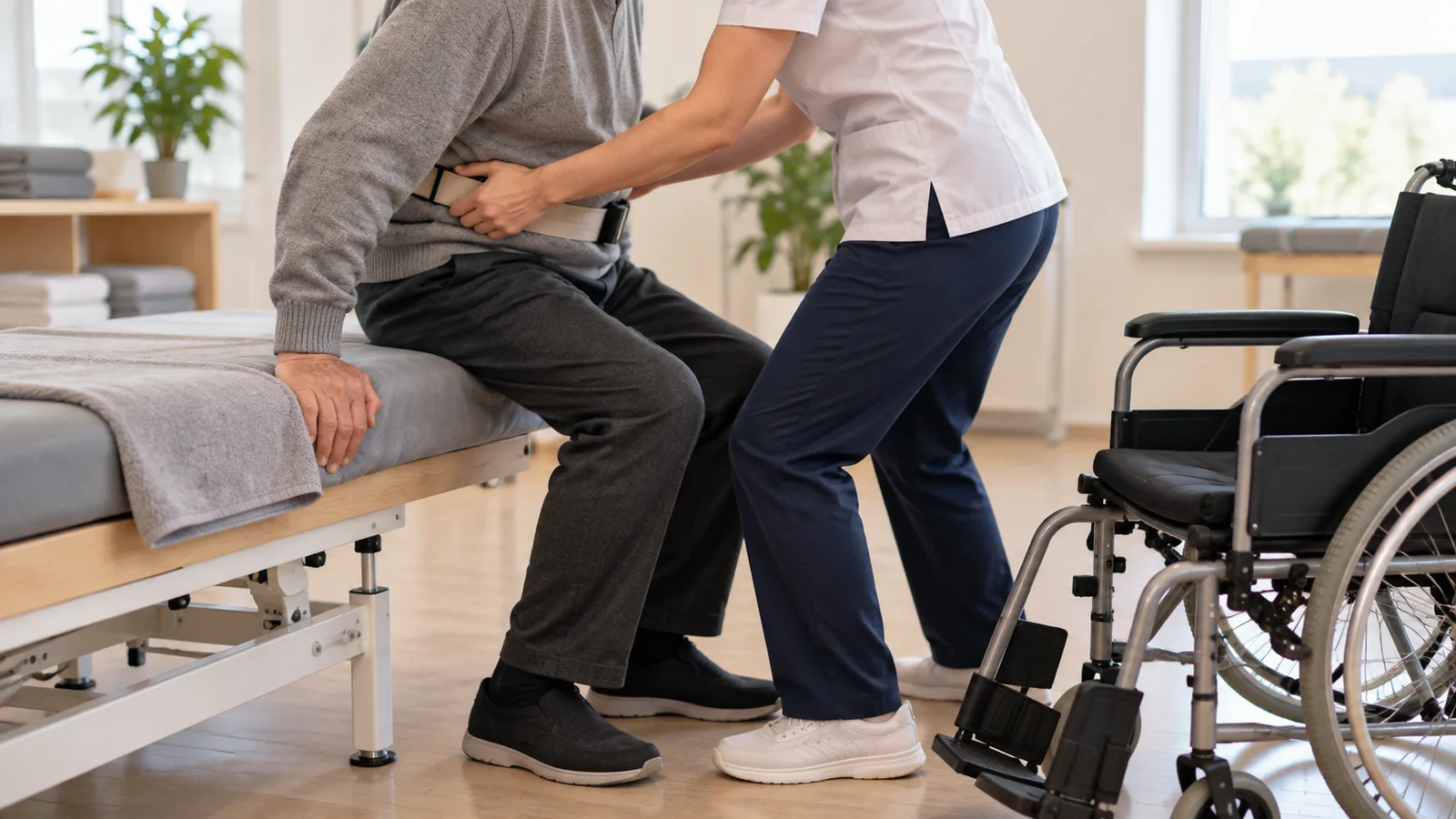
- Getting out of bed and transfers: bed to chair, chair to toilet, safely.
- Standing: shifting weight onto the affected leg as well and staying balanced without locking the knee backwards.
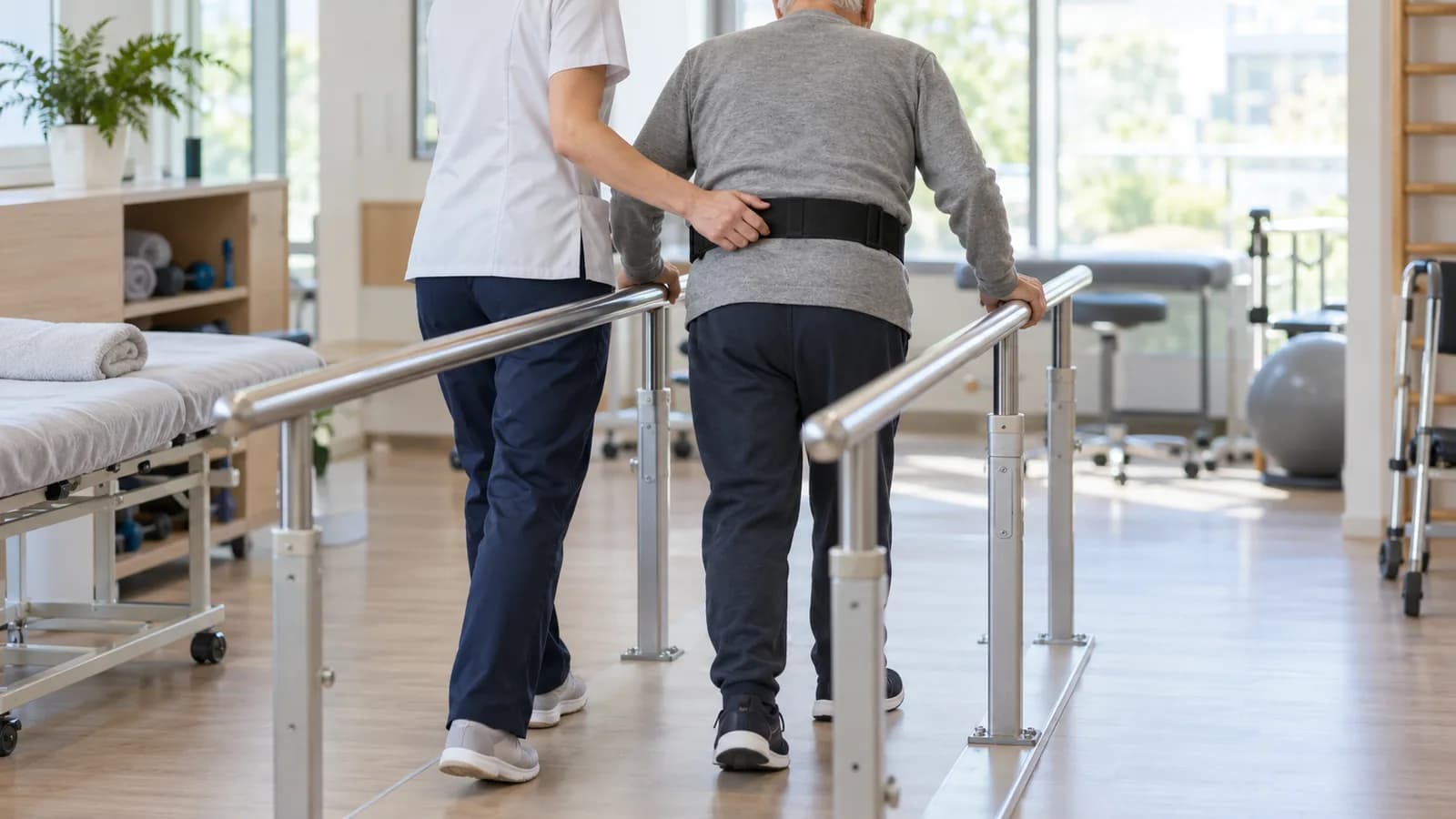
- Walking: with a stick, a walking frame or an ankle-foot orthosis if needed. An aid is not a defeat; it is a tool for walking safely.
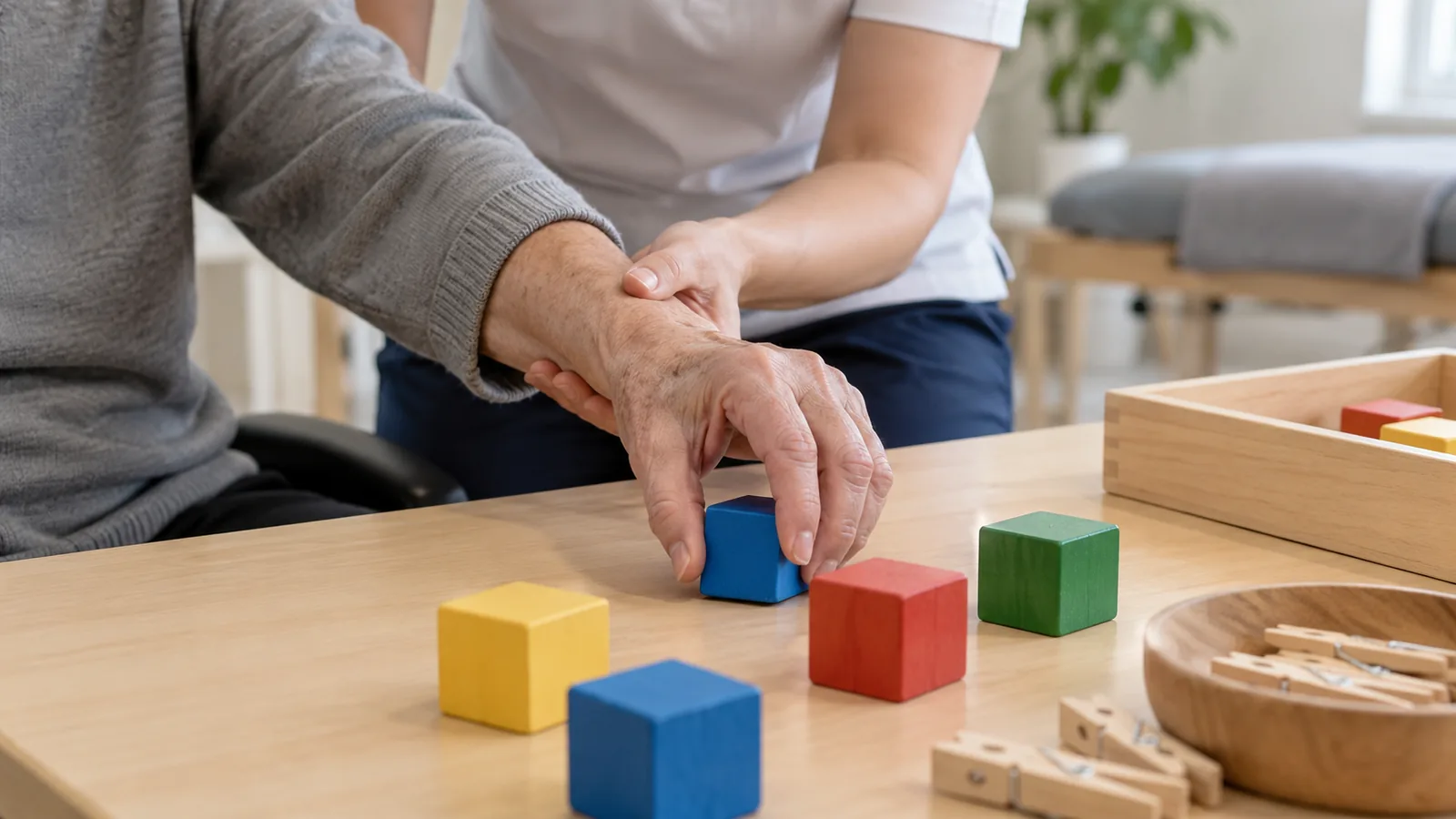
- Arm and hand function in daily tasks: practising with real tasks such as holding a cup, doing up a button or bringing a spoon to the mouth.
- Managing spasticity: keeping involuntary muscle tightness under control with regular stretching and good positioning, and, where needed, the doctor considering medication or injections.
Two ideas make the difference here: task-specific practice and intensity. The brain relearns a task by doing the real thing, many times over. A few exercises in a couple of sessions a week, with the rest of the day spent in bed, is not enough. So we turn what we teach in the session into short home routines spread through the day. The family's part matters as much as the session.
We tell every family the same thing: doing things for the patient is love, but it doesn't heal. As long as it is safe, let them do it. Each time you lift the cup for them, they lose a repetition they could have done themselves.
Intensity does not mean exhausting the patient. Fatigue after a stroke is very common, and a well-meant hard day can cost the next one. So we prefer short practice spread over the day, and adjust the dose weekly to blood pressure, pulse and how tired the patient feels.
The affected shoulder: rules every family should know
Pain in the shoulder on the affected side is one of the most common, and largely preventable, problems after a stroke. When the muscles around the shoulder weaken, the weight of the arm pulls the joint downwards; this is called subluxation, a partial dislocation. If the arm is held badly or pulled, the joint and surrounding tissues are strained, and the pain can slow the whole rehabilitation. Simple rules at home:
- Never lift the patient by pulling on the affected arm or under that armpit. Support them at the trunk and hips instead.
- When sitting, the affected arm should not hang down at the side; rest it on a pillow, an armrest or a tray fitted to the chair.
- When lying on the side, make sure the shoulder is not trapped under the body; bring the arm slightly forward on a pillow.
- When dressing, put the affected arm in first; when undressing, take the stronger arm out first.
- Do not use overhead pulleys to haul the arm above the head; move the shoulder only within the range your physiotherapist shows you.
- If new pain, swelling or colour change appears in the shoulder, don't push through the programme; tell your physiotherapist or doctor.
Home layout, fall prevention and the carer's back
After a stroke, balance, sensation and the field of vision can all be affected, so the risk of falling rises. We have collected detailed advice in our article on osteoporosis, safe exercise and fall prevention; after a stroke these are the priorities at home:
- Remove loose rugs and mats, and move cables out of walking routes.
- Have grab bars fitted in the bathroom and next to the toilet; use a shower seat and a non-slip floor.
- Put a night light along the route from bed to toilet; getting up at night is one of the riskiest moments.
- Set the bed height so that, sitting on the edge, the patient's feet are flat on the floor and the knees are at roughly a right angle.
- Keep everyday items within easy reach of the stronger hand.
Don't forget the person giving the care. Some of our back pain patients are spouses and adult children caring for a relative after a stroke. The basic transfer rules are simple: keep the patient close to you, bend your knees, lift with your legs rather than your back, don't twist while carrying weight and turn with your feet. Transfer towards the patient's stronger side whenever possible and ask them to do as much as they can themselves. We show and practise these techniques with the family at our first home visits. Carers need rest too; share the shifts within the family if you can.
A team effort: who does what
Stroke rehabilitation is not a one-person job. The neurologist manages treatment, medication and the risk of another stroke; a rehabilitation physician may set the overall framework. As physiotherapists we work on movement, balance, walking and arm function. An occupational therapist focuses on daily tasks such as dressing, washing and eating, and on adapting the home. A speech and language therapist deals with problems in speaking and understanding, and with swallowing. In Turkey this team is rarely under one roof; keep the discharge summary and reports in one folder so every specialist starts from the same information.
Swallowing deserves special attention. Swallowing problems after a stroke can let food or drink go into the airway and lead to pneumonia. If you notice frequent coughing during meals, a “wet” sounding voice or food staying in the mouth, do not experiment with textures and foods at home. Giving “a little water to see how it goes” without a swallowing assessment is risky; the specialist who assesses decides which consistency is safe.
Where home physiotherapy fits, and the Antalya realities
In the first period after discharge many patients are not ready to come to a clinic: a car ride, the stairs, even a waiting room is tiring. Working with home physiotherapy at this stage lets us build the programme in the place where the patient actually lives and makes it easier for the family to take part. We describe what can and cannot realistically be done at home in our guide to home physiotherapy when mobility is limited. After a stroke, people learn best in the bed, bathroom and hallway they use every day. Even so, home physiotherapy doesn't solve everything; once a patient can travel, the space and equipment of a clinic may offer more.
Antalya's own conditions are part of the plan too:
- Older buildings without lifts: in many older blocks in Muratpaşa, stairs are a daily obstacle. The rule: going up, the stronger leg leads; going down, the affected leg leads, with the handrail on the stronger hand's side if possible.
- Summer heat: in July and August a patient who drinks less and sweats in a warm room can become weak and dizzy. We move exercise to cooler hours and, unless the doctor has set a fluid limit, remind families about regular drinking.
- Children living abroad: for families organising care from a distance, we leave the home programme in writing and on video and suggest naming one contact person, so carer and family follow the same rules.
- Strokes on holiday: some foreign visitors have a stroke while on holiday in Antalya and are discharged from hospital here. Before the flight home, get clearance from the doctor, keep the discharge summary and medication list with you, and arrange in advance for rehabilitation to continue without a gap in your home country.
Honest limits and when to call a doctor straight away
Not every loss comes back fully. We say this openly at the first visit, because unrealistic expectations wear everyone down. Our aim is not to promise “everything will be as before” but to increase independence and safety step by step: going to the toilet without help, getting up and sitting down alone, moving around the home safely. These goals look small, yet they change daily life the most.
Mood changes after a stroke, depression in particular, are common. Reluctance, bouts of crying or avoiding exercise are not laziness; they can be signs of a treatable problem, so talk to the doctor about them. The NHS has clear, neutral information on recovering from a stroke for patients and families.
Pause the exercises and contact a doctor if you notice:
- New weakness, facial drooping or speech problems: suspect a new stroke and call 112 at once.
- Painful swelling in one calf: see a doctor the same day because of the possibility of a blood clot (deep vein thrombosis).
- Fever, especially with a cough or shortness of breath.
- Frequent coughing or choking while eating or drinking.
If your relative has been discharged and you don't know where to start at home, you are welcome to contact our clinic for an assessment with your doctor's approval; if the patient cannot come in yet, we can arrange the first visit at home.