“The operation went well, but nobody told me what to do next.” Most patients who come to us after surgery open with some version of that sentence. They arrive holding a discharge letter with a single line on it: physiotherapy recommended. When to start, which movements are allowed, how much weight the leg may take — none of that is written down. So people understandably pick one of two extremes.
In reality the decisions that shape the whole recovery are made in those first days. Only the surgeon who operated knows how much load the repair, the prosthesis or the plate and screws can currently tolerate. Our job is to stay inside that limit and give you back joint movement, muscle strength and a normal walking pattern. Below is what we actually do in the first week, what we measure, and the point at which we stop and send you back to the doctor.
The two sentences we hear most often after surgery
The first: “I will not move at all until the pain is completely gone.” It sounds protective, but the cost is high. An immobile joint loses capsule length and stiffness settles in within a few weeks. Muscle bulk on the operated side melts away surprisingly fast. Swelling pools in the limb and drives the pain up on its own. Immobility also raises the risk of a blood clot. Waiting does not speed healing up; it holds it back.
The second: “The harder I push, the faster I will recover.” This one is just as common. Healing tissue runs on its own timetable, and loading beyond that timetable puts the repair line at risk. Lifting the arm actively and forcefully soon after a rotator cuff repair, twisting and pivoting too early after an ACL reconstruction, putting more weight through a fractured bone than allowed — all of these can cause damage that is hard to undo.
The right path sits between the two, and that middle point is not a general rule. It is specific to the person and to the operation. Our starting point is always the surgeon's rehabilitation protocol: which movements are free, which angles are forbidden, when and how much load is permitted. Without that protocol we do not write a programme.
Which operations bring people to our clinic
Most of our post-operative patients come from one of these groups:
- Knee and hip replacement (total arthroplasty): the largest group, usually after advanced osteoarthritis.
- Meniscus surgery and ACL reconstruction: a repair and a partial removal follow completely different timetables, and telling them apart matters.
- Rotator cuff repair of the shoulder: one of the operations with the most sensitive protection phase.
- Fracture fixation with a plate, screws or a nail: wrist, ankle, hip, upper arm.
- Spinal surgery: disc surgery, decompression for a narrow canal, fusion.
- Hand and wrist surgery: carpal tunnel release, tendon repair, trigger finger.
What these have in common is that none of them can be run on another one's programme. After a knee replacement we want early movement and an upright walking pattern. After a rotator cuff repair we want the opposite in the first weeks: the arm moved by someone else's hands, with the muscle deliberately kept quiet. Two opposite programmes, same clinic, same week.

The rough timeline of tissue healing: protect, move, strengthen, function
Whatever the operation, rehabilitation moves through four phases. The first days and weeks are the protection phase: getting swelling and pain under control, keeping circulation going, not losing the movement you are allowed to have. Then comes regaining range of motion, where the aim is to bring the joint as close as possible to its pre-operative angle.
The third phase is strength. Jumping to strength work before range of motion has returned usually produces an unhealthy compensation pattern, which is why the order matters. The fourth and longest phase is function: stairs, squatting, carrying, returning to work and — where appropriate — returning to sport. Because the timing depends on the operation, on age and on where you started from, we do not promise exact dates. A programme that tells you “you will be running in six weeks” is treating the calendar, not you.
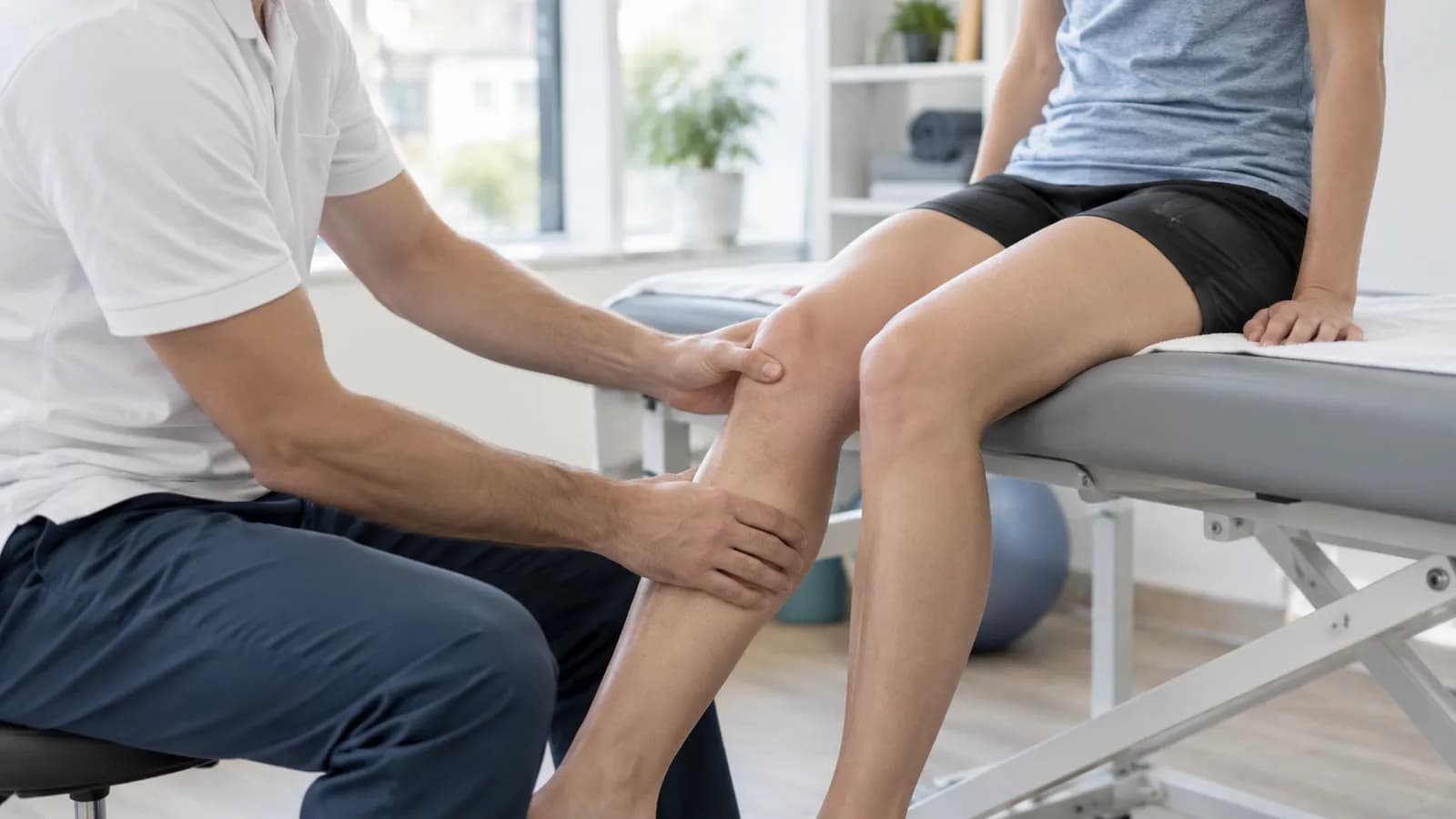
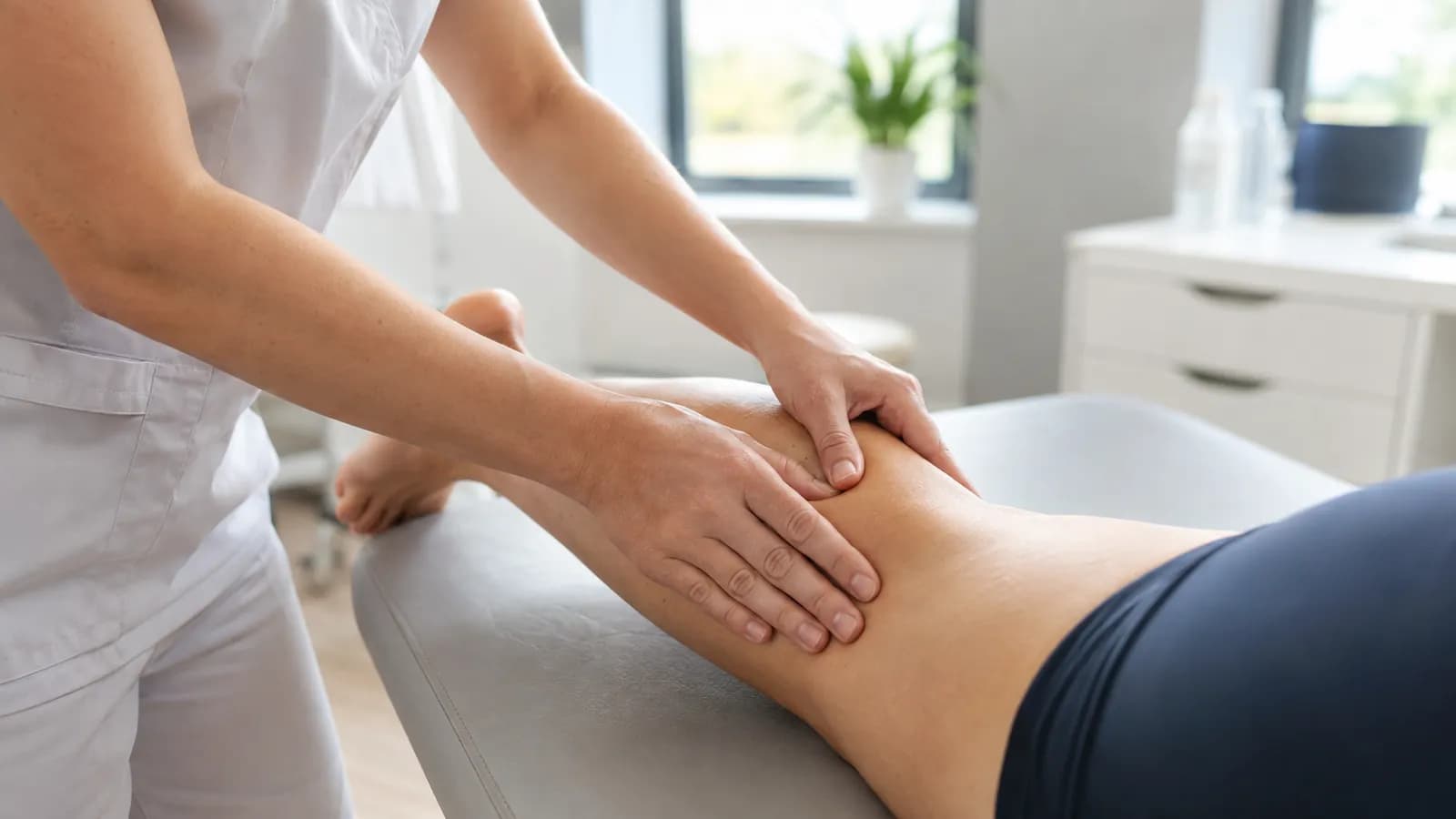
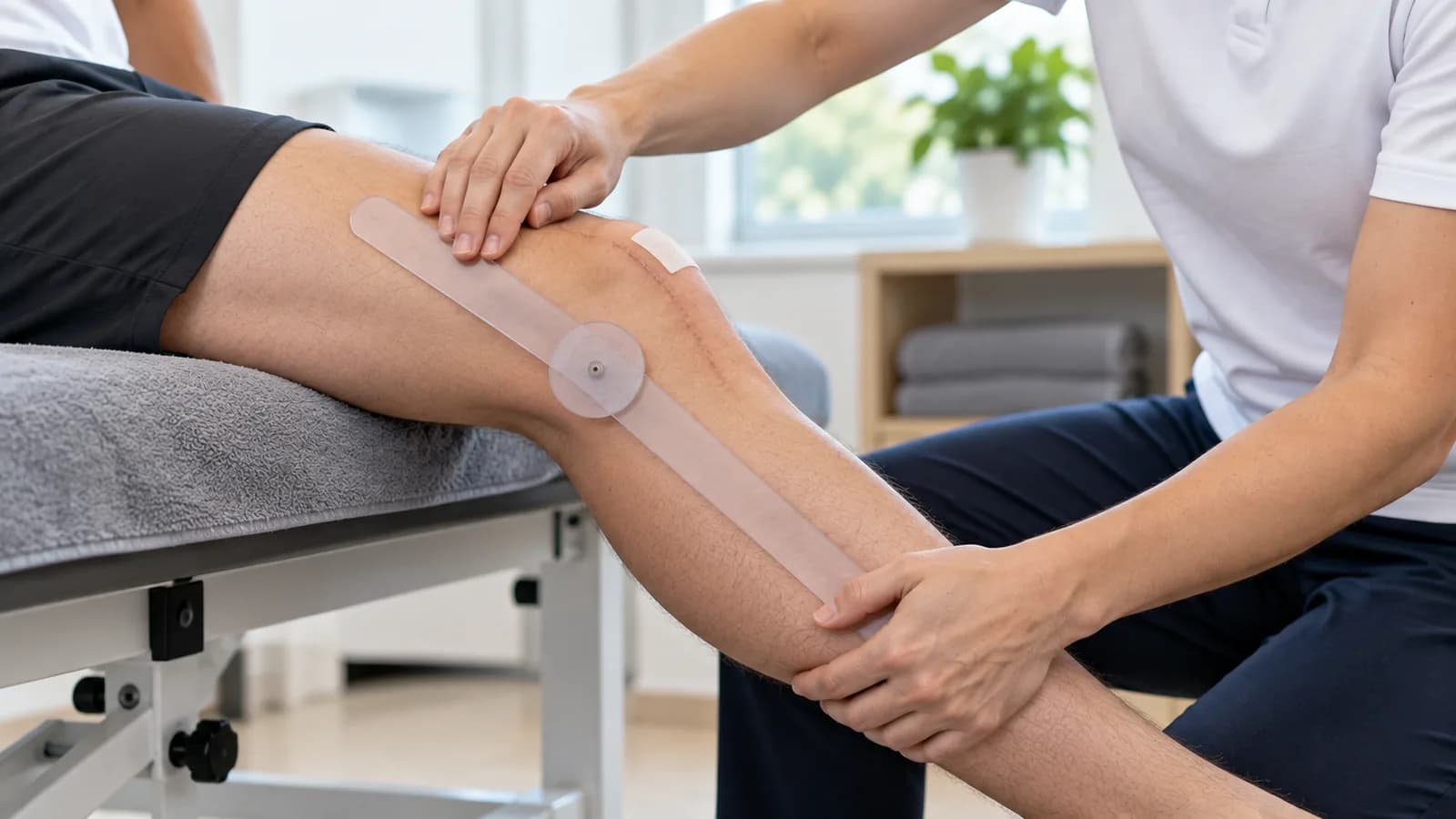
Scar tissue work is a separate matter. We do not put hands on the scar or the soft tissue around it until the wound has fully closed and the doctor has given permission. Once we have that permission, soft tissue work that improves how freely the scar glides makes a noticeable difference to range of motion, particularly after knee and shoulder surgery.
What we do in the first week
The first week is not the week of impressive exercises. It is groundwork:
- Swelling and pain management: correct positioning, raising the limb above heart level, cold application to the extent your doctor approves.
- Respecting the wound and the suture line: working around the dressing without touching it, reducing friction from clothing and bandages.
- Safe transfer training: bed to sitting, sitting to standing, getting to the toilet and the bathroom — which way to turn, where to place which hand.
- Correct use of the walking aid: setting the crutch or walker to the right height, teaching the sequence of steps, practising which leg goes first on the stairs.
- Reducing the risk of falling at home: loose rugs, thresholds, wet bathroom floors, night lighting, moving everyday items within reach.
- Breathing and circulation exercises: deep breathing work and ankle pumps — they look trivial and they do serious work in reducing clot and chest complications.
What the patient gains by the end of that week is much more than a few degrees of movement: it is the ability to live at home without falling, without fear and without flaring the pain up.
Why we come to your home in the early phase
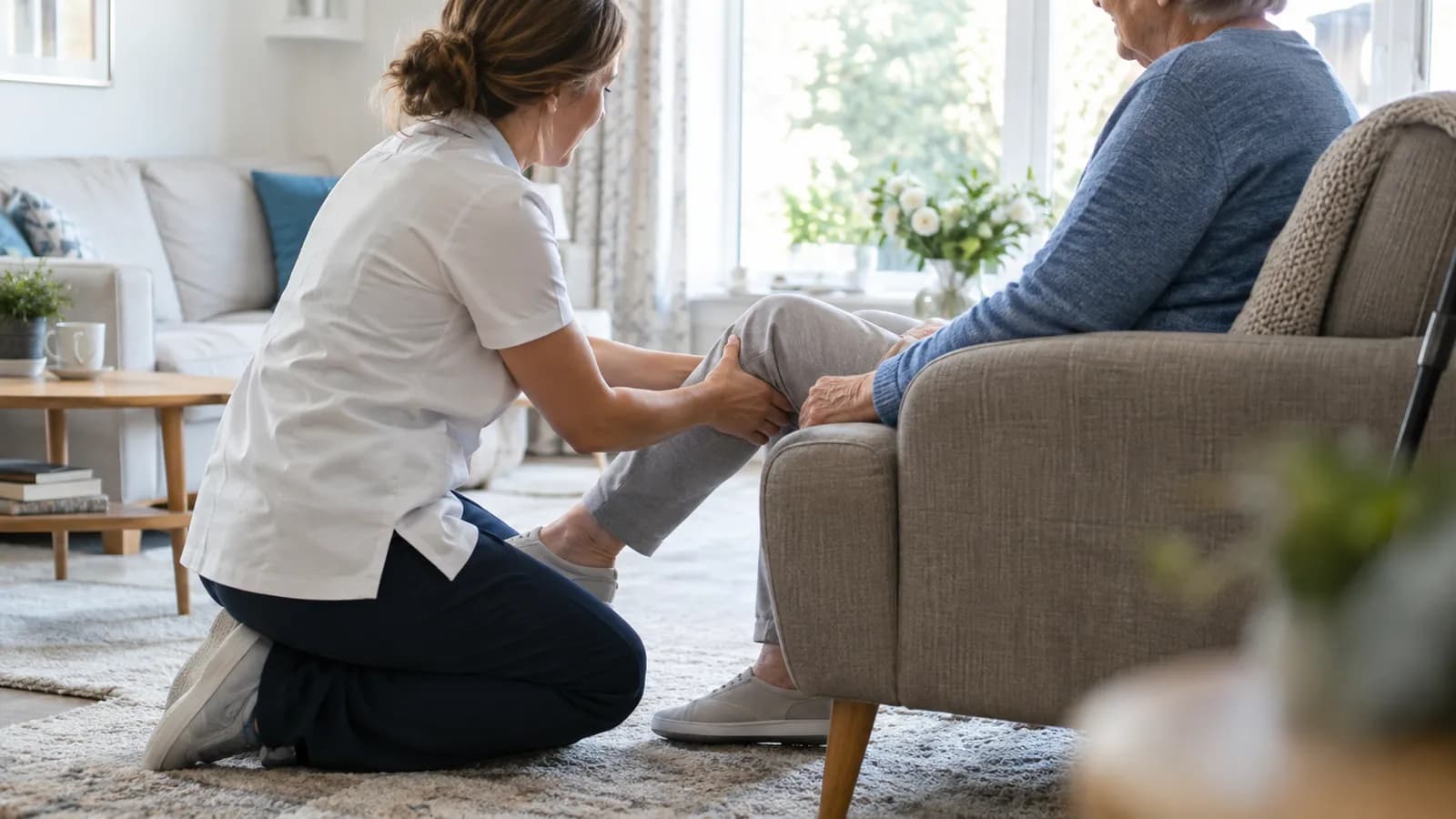
Bringing a patient into the clinic straight after surgery is often simply unrealistic. In Antalya you may live on the third floor of a building with no lift; getting in and out of a car with an operated leg, managing the stairs, waiting on the street on a hot day — that alone uses up a whole day's energy. So we set the first weeks up in your own home, in the framework we describe in our article on what home physiotherapy offers when mobility is limited. Seeing the home is also information for us: the height of the sofa, the width of the bathroom door, the edge of the bed. Half the programme is shaped inside that flat.
Once you can get in and out of a car safely, we move to the clinic. The strength and function phases need equipment, graded resistance and varied surfaces, and a home cannot fully provide those. When that transition happens is decided by measurements, not by the calendar.
One thing is specific to Antalya: a good number of our patients had their operation abroad or in another city and came back here afterwards. If we do not have the surgeon's protocol, we ask for the discharge summary, the operation note and the date of the follow-up appointment, and where necessary we ask that the operating surgeon be contacted. We do not skip this step. A programme written without knowing which tissue was repaired is guesswork.
“I feel fine” is not enough: what we measure
In post-operative follow-up we look at numbers rather than impressions. At every assessment we record:
- Range of motion: in degrees with a goniometer, always measured in the same position.
- Muscle strength: graded and compared between the operated and the unaffected side.
- Swelling: circumference in centimetres, taken at fixed points above and below the joint.
- Walking quality: step length, symmetry between sides, limping, how much the walking aid is still needed.
- Pain score: at rest and after exercise, plus how many hours it takes to settle after a session.
How a patient feels matters, but on its own it does not point the way. A knee that feels far better under painkillers can still be fifteen degrees behind on measurement. The dose of a session is set by the change in the numbers, not by the feeling.
The practical use of those numbers is simple. If range of motion has not improved within a week, we change the programme. If the swelling circumference is going up, we reduce the load. If pain does not settle for hours after a session, that day's dose was too high. Rehabilitation without measurement stays a well-intentioned guess.

Do not wait with these symptoms
The following are not things to watch for a little longer. They need medical review:
- Increasing redness, heat or discharge around the wound.
- Fever and general malaise.
- One-sided swelling, warmth and pressure-sensitive pain in the calf — possible blood clot.
- Sudden shortness of breath or chest pain: this needs emergency care, not an appointment.
- Pain that painkillers no longer control, or that increases day by day.
- Sudden loss of strength, a dropping foot, new numbness.
- Wound edges opening or the suture line separating.
If any of this happens, contact your doctor or the emergency department directly rather than calling us. This is exactly where the limits of physiotherapy begin: these are not problems that exercise solves, they are findings that need a medical assessment.
If you would like to read about the process from a neutral source, the UK National Health Service page on recovery after a hip replacement sets out the general shape of the post-operative weeks in plain language.
Let us finish with an honest limit. The outcome of rehabilitation does not depend only on the exercises we give you. The type of operation, your age, other conditions such as diabetes, rheumatic disease or smoking, the state of your muscles before surgery and above all your consistency all shape it. Not every patient returns to their pre-operative level. For some, the goal is not old performance but a pain-free, safe daily life. Saying that at the start is better than a disappointment later on.
If a knee replacement has not yet been decided, or you would like to postpone it, our article on why exercise comes before medication in knee osteoarthritis may be closer to your situation. If you have already had surgery, bring your discharge letter, your operation report and your surgeon's rehabilitation protocol if you have one, and come in for an assessment; if there is no protocol, obtaining it is part of the process too.