"When I get out of bed in the morning, the back of my heel is stiff as a rock, and it loosens up as I walk." We usually hear this from a new runner or someone who suddenly stepped up their training, sometimes from someone who spent the summer standing at a hotel reception desk. The pattern is similar: stiff, sore first steps, fine after fifteen or twenty minutes, then back to square one by the next morning.
Most of the time this picture is Achilles tendinopathy. Many people still call it "Achilles tendonitis", and the first advice they get is usually "rest it for a while and it will go away". What we see in the treatment room is different: complete rest may quieten the pain for a few weeks, but it does not make the tendon stronger, and once you go back to sport or work the pain returns in exactly the same place. In this article we explain why we say "load it properly, don't just rest it", how treatment is built, and when to stop thinking about physiotherapy and see a doctor the same day.
Is the pain in the middle of the tendon or where it attaches to the heel?
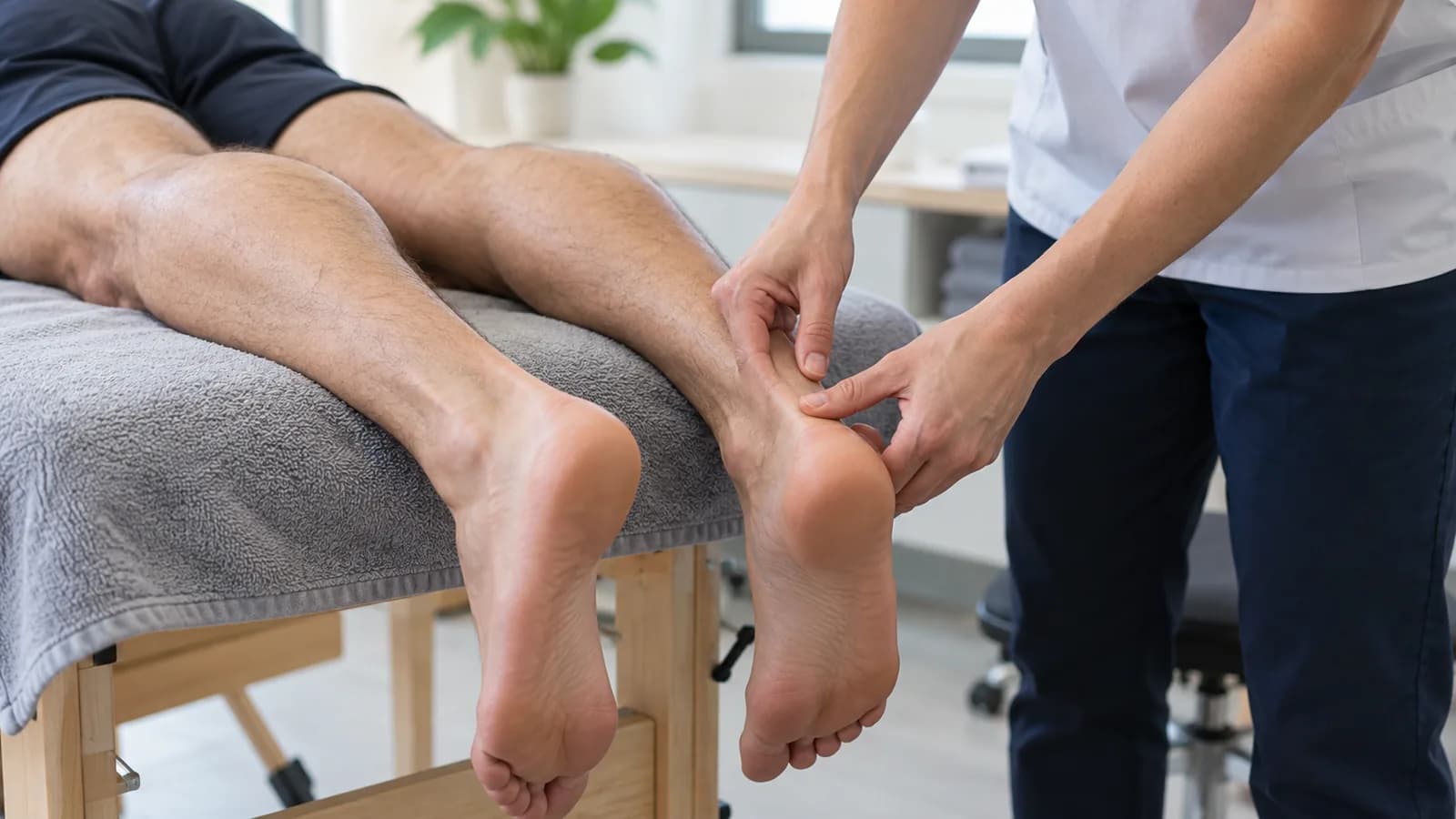
The Achilles is the thickest and strongest tendon in the body, connecting the calf muscles to the heel bone. On examination we first work out where along it the pain sits, because the two main regions behave differently and need different programmes.
Mid-portion tendinopathy: The pain and tenderness are a few finger-widths above the heel, in the body of the tendon. It may feel slightly thickened. We see it more often in runners.
Insertional tendinopathy: The pain is where the tendon attaches to the heel bone, right at the back of the heel. A stiff heel counter or a sandal strap irritates it, and walking uphill or letting the heel drop off a step makes it worse. It is more common in people who stand for long hours at work and in people over middle age.
A sharp pain under the heel, especially with the first step, is usually a different condition, which we cover in our article on heel spurs and plantar fasciitis. The two can occur together in the same person, so before starting any treatment for "heel pain" it matters to find the exact spot by hand.
Not "inflammation": a gap between load and capacity
For many years tendon pain was called "tendinitis", meaning inflammation. We now know that in most long-standing tendon pain the main process is not classic inflammation but a mismatch between the load the tendon is asked to carry and its capacity to carry it. When a tendon suddenly has to do more than it is prepared for, the tissue starts to change, and pain is the warning.
This changes treatment directly: because the problem is a lack of capacity, the answer is to increase, in a controlled way, the load the tendon can tolerate. The typical behaviour of tendinopathy fits this: stiffness and pain in the morning or after sitting for a long time, easing after a few minutes of walking or warming up, and a clear flare the day after an overloaded day. Pain that fades once you are warm does not mean the tendon has "healed"; the real measure is how it feels the next morning.
This also explains why complete rest is not enough. A tendon that is not loaded at all for a few weeks may hurt less, but it loses even more capacity; when you return to sport or a busy working week, it struggles at an even lower load. What breaks the cycle is not rest but controlled loading.
What set it off? Triggers, and examples from Antalya
On examination we always ask, "What changed in the last few weeks?" There is usually a change that increased the load suddenly.
The ones we see most often are a sudden increase in training volume or pace (often while preparing for a race), hill running and stair or step workouts, a change of shoes, especially switching abruptly to a model with a lower heel, weight gain, and a new job that keeps you on your feet for long hours.
There is also a medication side: fluoroquinolone antibiotics (such as ciprofloxacin and levofloxacin) can raise the risk of tendon problems. If pain at the back of your heel started while taking one of these, or shortly afterwards, do not stop the medication yourself, but contact the prescribing doctor straight away.
In Antalya we see the local versions of this list all the time. Running on the beach is lovely, but soft sand asks more of the calf and the Achilles than tarmac does, and people who suddenly start running on sand in summer often come to us within the first few weeks. Many of our patients walk briskly along the Konyaaltı promenade in winter, switch to running in spring and increase the distance quickly. Long weekend hikes on the uphill trails in the Taurus foothills, standing all day as a housekeeper, waiter or receptionist during the tourist season, and walking for hours in flip-flops or sandals with no heel support are also familiar starting points.
What we check on examination, and what we change in daily life
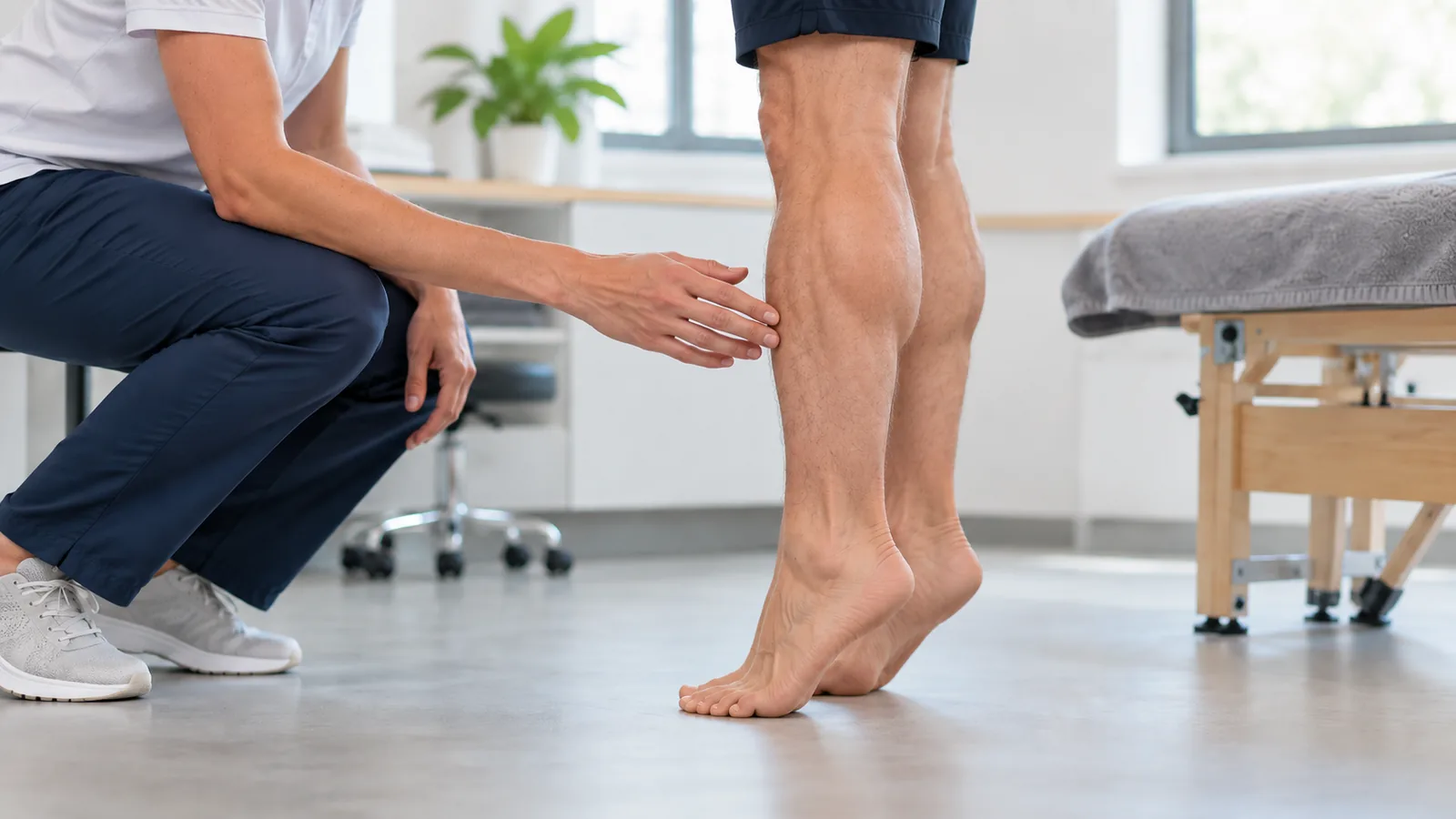
Besides locating the pain by hand, at the first visit we assess how many times, and how well, you can rise onto your toes on one leg, the difference in strength between the two calves, how far your ankle bends and how you walk. If the single-leg heel raise breaks down after a few repetitions, that tells us a lot about the tendon's current capacity, and we repeat the same test to track progress.
Adjusting everyday load matters as much as the exercises. The aim is to temporarily reduce the load that flares the pain, not to stop everything. Rather than banning a runner from running altogether, we usually cut back distance and hills and add cycling or swimming. For someone working on their feet in shifts, we talk about work shoes, breaks and short heel-raise sets during the day. For patients planning long walks in sandals in summer, we suggest a model that holds the heel in place and has a sole that is not too thin.
The backbone of treatment: progressive loading
In Achilles tendinopathy exercise is the core of physiotherapy, but not just any exercise: a loading programme that is increased step by step and monitored as you go. We tailor it to your pain level, to where the tendinopathy is, and to your goal, whether that is getting back to running or finishing a shift without pain. The general framework looks like this:
- Isometric start: While pain is high, holding a contraction with the heel slightly raised, without moving. The aim is to get the tendon used to load and make pain manageable.
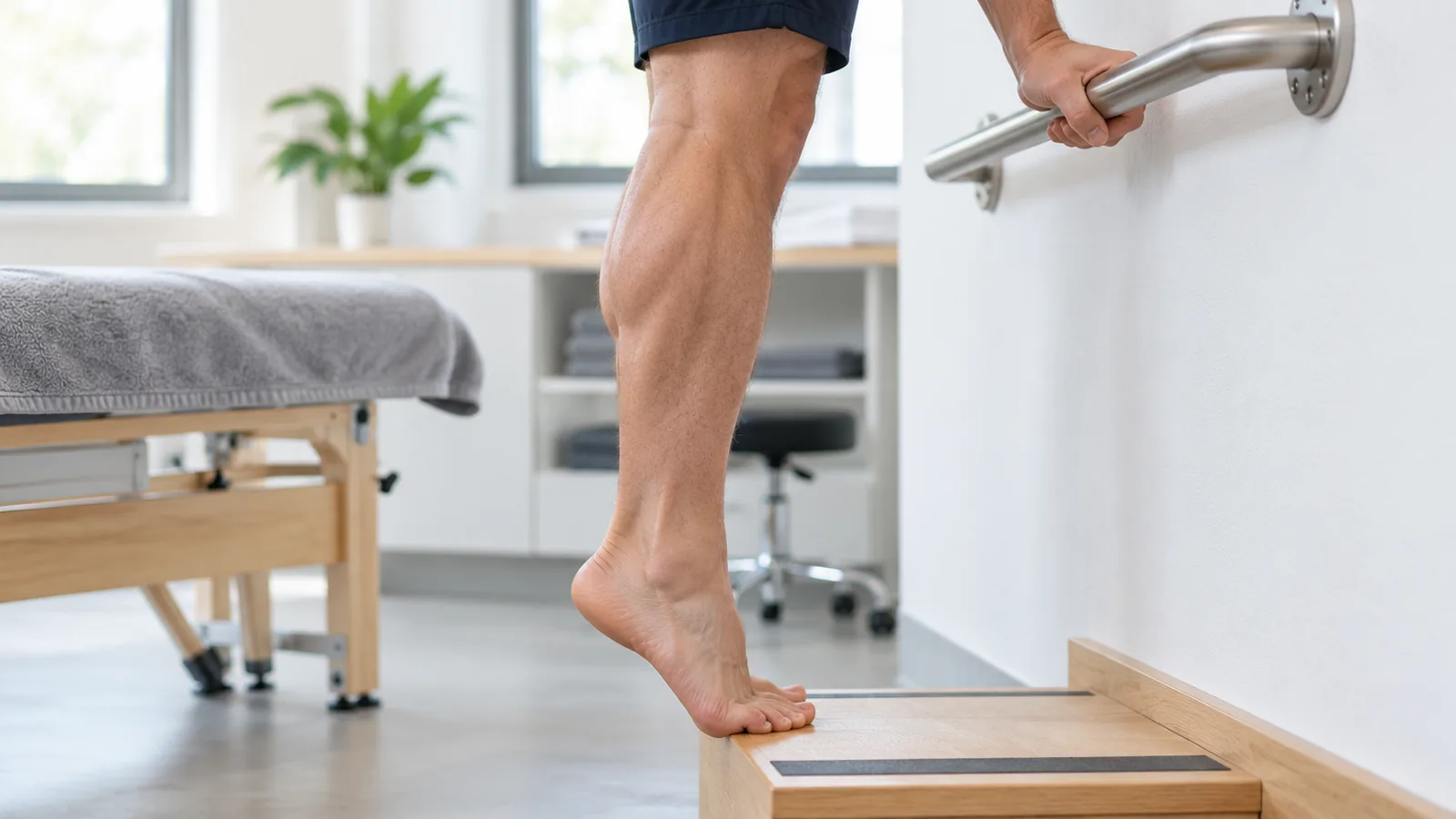
- Heel raises: First on two feet, then on one; both with the knee straight and with the knee slightly bent. With the knee straight the superficial calf muscle works more, with it bent the deeper muscle does; both load the Achilles.
- Heavy slow resistance: Using a backpack or weights, rising and lowering slowly and increasing the load over weeks. This is the stage that actually builds the tendon's capacity.
- Return to hopping and running: Small hops on the spot, skipping, then walk-run intervals. Distance and speed are increased separately and gradually.
Throughout, we use a pain-monitoring rule. Mild to moderate pain during exercise is acceptable; the aim is that it does not go above the middle of a 0-10 scale. The real check is the next morning: if morning stiffness and pain are not clearly worse than the day before, the load is right. If they are worse, we step the programme back one level rather than abandoning it.
The Achilles tendon does not get stronger by resting; it gets stronger by being loaded at the right dose. Our job is to find that dose and adjust it week by week.
One detail matters in insertional tendinopathy: at least in the early stages, we avoid doing heel raises on the edge of a step and letting the heel drop below it. As the heel goes down, the tendon is compressed against the bone, which can increase pain at the attachment. So in insertional cases we do the exercises on flat ground and, if needed, suggest a small temporary heel raise in the shoe. If an old ankle sprain has left you with poor balance, we add that to the programme too; we cover it in detail in our article on recurring ankle sprains.
Shockwave, manual therapy and injections: where do they fit?
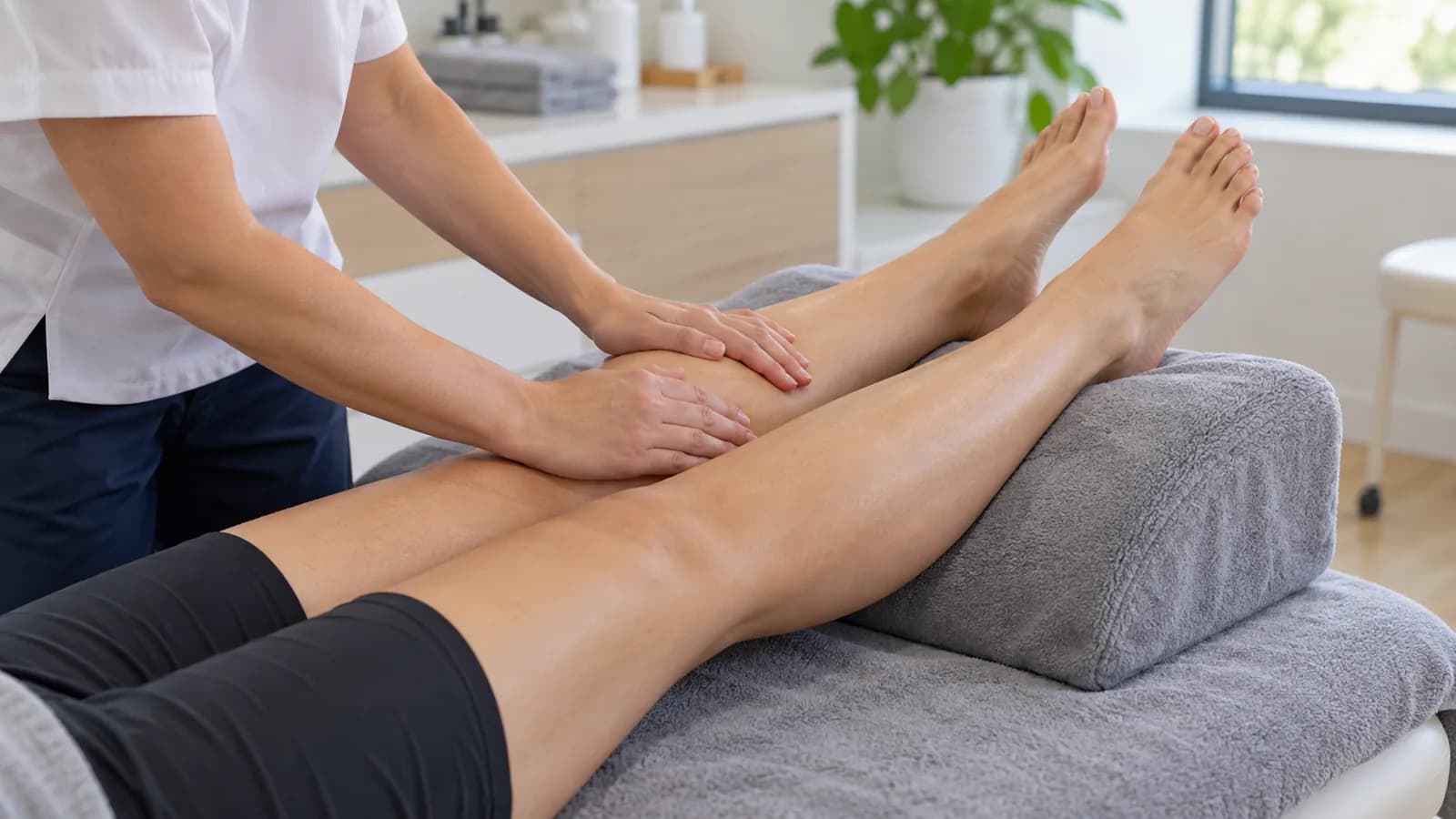
Passive methods have a place, but it is a supporting role. Extracorporeal shockwave therapy can help reduce pain in some chronic cases that are not progressing despite loading. Manual therapy for tight calf muscles and restricted ankle movement, or soft-tissue work such as the Graston technique, can make it easier to start exercising. None of these increases the tendon's capacity on its own, though; passive sessions without an exercise programme usually give only short-lived relief.
Let us be clear about cortisone injections: injecting cortisone into or around the tendon can weaken the tendon tissue and has been linked to a risk of rupture. For this reason it is generally avoided in the Achilles, and in every case the decision belongs to a doctor who can weigh the risks.
An honest limit: time, patience, and when not to wait
Achilles tendinopathy does not clear up quickly. With the right programme many people notice relief in daily life within a few weeks, but genuinely strengthening the tendon and returning confidently to running or the pitch can take months. One bad morning does not mean the programme has failed. If there is no progress after a few months of consistent exercise, we refer you to a doctor to review the diagnosis and consider imaging or an orthopaedic assessment. For a short, neutral overview, see the MedlinePlus page on Achilles tendinitis.
In one situation, though, waiting is the wrong choice. The following signs suggest an Achilles tendon rupture and need a doctor's assessment the same day:
- A sudden blow, as if someone kicked you or a stone hit the back of your leg, sometimes with a "pop"
- Being unable to rise onto your toes on the affected foot, or losing your push-off when walking
- A gap or dip you can feel along the tendon a few finger-widths above the heel
- Marked swelling and bruising that come on suddenly
If you suspect a rupture, do not try to "work it out" with exercise. Avoid putting weight on the foot and go to an emergency department or an orthopaedic doctor; in Turkey you can usually see an orthopaedic specialist directly, without a GP referral. Rehabilitation comes later; the first step is the doctor.
If the back of your heel is stiff every morning, the pain has lasted more than two weeks, or it comes back in the same spot every time you rest and return to sport, you are welcome to visit our clinic for an assessment. Together we will find where the pain is, measure how much load your tendon can take today, and build a loading plan that suits you.