"I hurt everywhere, my blood tests come back clear, and I keep being told there's nothing wrong with me." We hear this sentence in our clinic more often than you might think. Behind it there is usually a long search: months, sometimes years, of blood work, scans and appointments with different specialists. The diagnosis that finally comes is often fibromyalgia. And the first question that follows is almost always the same: "So what do I do now? Should I just rest?"
In this article we want to explain what fibromyalgia is, why "take it easy and it will pass" so often fails, and why movement deserves as much attention as medication. Let us say one thing clearly before we start: the pain you feel is real. Clear test results do not mean the pain is imaginary.
What is fibromyalgia, and why is the pain real?
Fibromyalgia is a long-term condition marked by widespread pain across many parts of the body, persistent fatigue, waking up unrefreshed and difficulty concentrating. Many patients call the last one "fibro fog": losing words mid-sentence, rereading the same page, getting lost in simple tasks. Headaches, digestive complaints and heightened sensitivity to cold or touch can also be part of the picture.
Current understanding links fibromyalgia to a change in the way the nervous system processes pain, often called central sensitisation. Put simply, the nervous system's volume control seems to be turned up: a touch, a bit of tiredness or a mild strain that would normally go unnoticed is registered by the brain as pain, and louder than it should be. That is why searching for damage in muscles or joints usually turns up nothing. The problem is not in the tissue, it is in how the pain signal is handled.
Fibromyalgia is more common in women, and it often becomes noticeable after a demanding period: prolonged stress, an illness, sleepless months after giving birth, or years of carrying both a job and a household alone. This does not mean fibromyalgia is "just stress". It only shows that a nervous system kept on high alert for a long time can change the way pain is perceived. In our assessments we see many patients blaming themselves first. There is no one to blame here.
The diagnosis is made by a doctor, usually a rheumatologist or a physical medicine and rehabilitation specialist, after ruling out conditions that can cause similar symptoms, such as thyroid disorders, inflammatory rheumatic diseases or vitamin deficiencies. Our job as physiotherapists is not to diagnose; it is to help you function better in daily life once the diagnosis has been made. If you would like a neutral overview of the condition, the NHS page on fibromyalgia is a clear and reliable starting point.
Why "just rest" usually does not work
Telling a painful body to rest sounds sensible, and after a simple sprain it may well be. In fibromyalgia, however, long periods of inactivity create a new problem: muscle strength and fitness drop, everyday tasks take more and more effort, sleep gets worse, and the nervous system becomes even more reactive to small loads. Over time, resting can increase the pain rather than ease it.
Doing the opposite does not work either. The story we hear most often goes like this: on a good day the house gets cleaned, the shopping gets done and everything that was postponed is squeezed into one day; then come two or three days of barely getting out of bed. This "do everything on a good day, then crash for three days" cycle, known as boom and bust, is one of the habits that feeds fibromyalgia pain and fatigue the most.
The answer is pacing. The aim is to keep your activity level roughly similar on good days and bad days. In practice we suggest breaking long jobs into pieces, for example three 15–20 minute blocks of housework with short breaks instead of a full hour. Stop before you are exhausted; the moment you think "I'll just finish this" is usually the moment to stop. Even on a good day, do not go beyond what you planned, keep some energy in reserve for tomorrow, and spread heavy tasks across the week.
This is not always easy at work. For patients who bend over crops in greenhouses, stand for hours in a hotel kitchen or cannot get a day off during the tourist season, "split up your tasks" is not enough. In those cases we sit down together and build a realistic plan: a one- or two-minute stretch during breaks, a short gentle walk after a shift instead of going straight to bed, and days off that mix rest with light movement rather than being spent lying down.

Exercise: the first step, but start slowly
International rheumatology guidelines recommend exercise as a first-line part of fibromyalgia treatment, alongside and independent of medication. That does not mean "sign up for a gym". The rule for exercise in fibromyalgia is simple: start at a low intensity and build up very slowly. In the first weeks the goal is not fitness; it is to teach the nervous system again that movement is not dangerous.
In our clinic we usually build the programme from these elements:
- Walking: starting with 5–10 minutes a day and adding a little time every week or two.
- Exercise in water: warm water relaxes the muscles and takes weight off the body; many people can move in water in ways they cannot on land.
- Gentle strengthening: using body weight or light resistance bands, with few repetitions.
- Stretching and breathing exercises: especially for the neck, shoulders and back, in short sessions spread through the day.
Living in Antalya is a genuine advantage here. In late summer and autumn the sea is pleasantly warm, and in winter heated pools are an option. But a midday walk in the July heat can easily trigger a flare for someone with fibromyalgia, so move your walks to early morning or the cooler evening. In winter, shorter sunny days tend to mean less movement, so have an indoor alternative ready.
Clinical Pilates has a place in this picture, but it should not be oversold. Controlled, breath-led clinical Pilates sessions with the intensity adjusted to the individual can be a safe way in, especially for people who are afraid to move. Still, Pilates on its own is not a treatment; it is one part of the programme.
Many people who start exercising fear that the pain will be worse the next day. A mild increase in the first weeks is possible and does not, by itself, mean you have harmed yourself. The simple rule we use is this: if your pain is clearly worse the day after exercise and stays that way for more than a day, we go back to the previous level and stay there a little longer. A short diary helps: what you did, how you slept, how your pain and fatigue were. After a few weeks it shows far more clearly than guesswork what overloads you and what helps.
In fibromyalgia, the best exercise is not the most intense one, but the one you can keep doing for weeks.
Where massage and manual therapy fit in
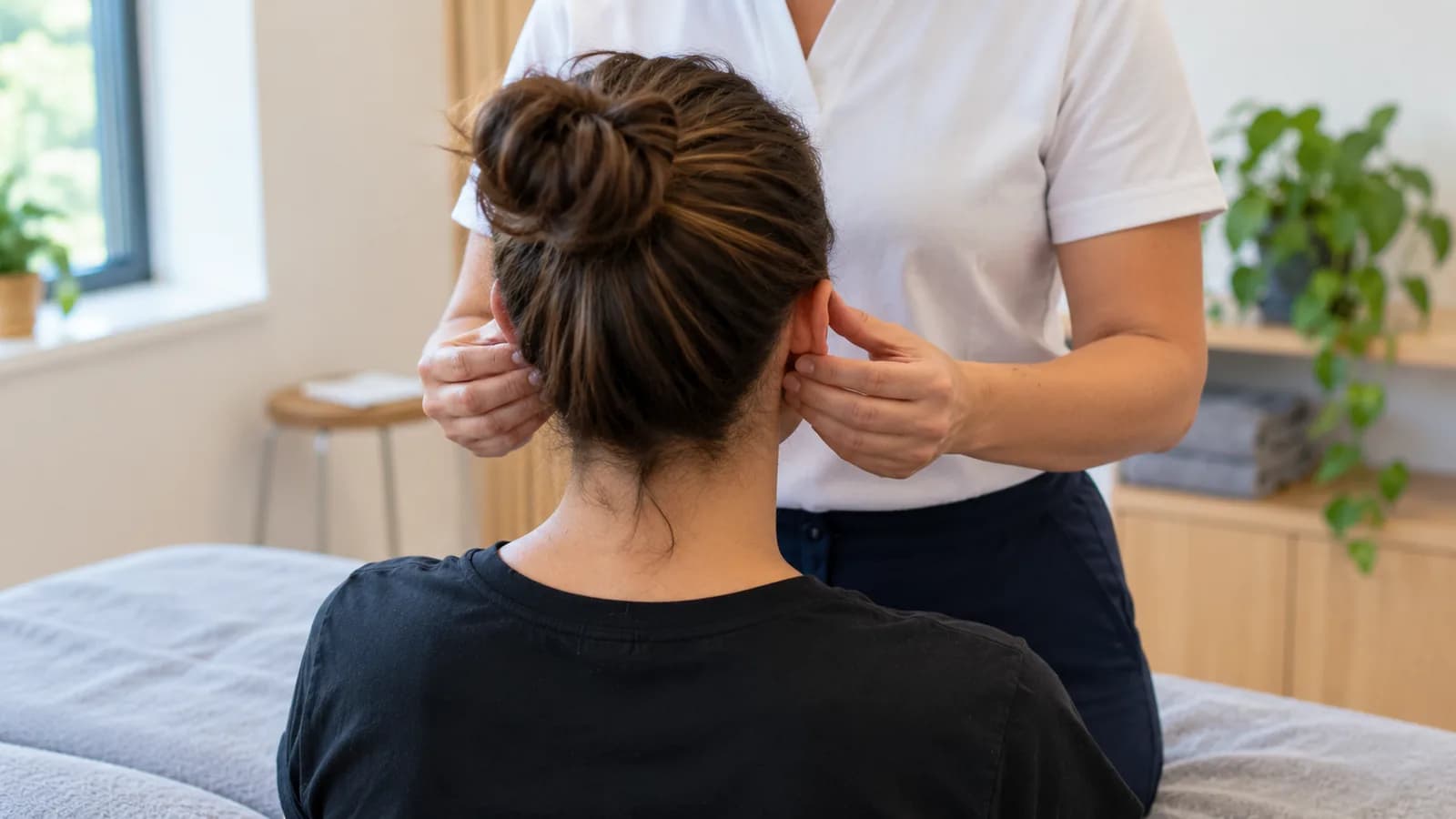
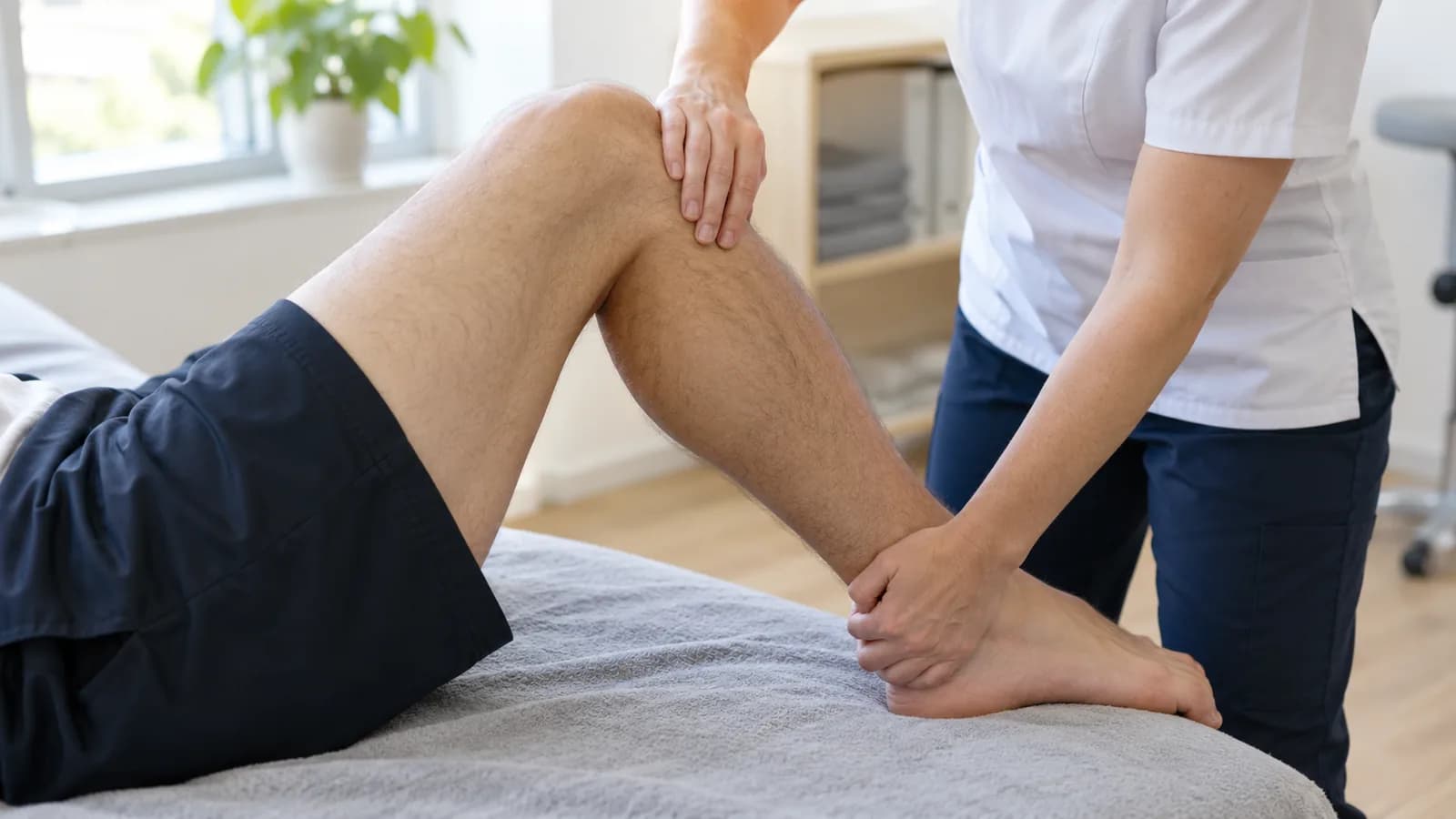
Many of our patients arrive hoping for massage, and that is understandable: touch is soothing. Gentle medical massage or soft manual techniques, with pressure adjusted to the person, can bring short-term relief from pain and muscle tension. For some patients that relief becomes a bridge that makes it easier to start exercising.
But we want to be honest: massage or manual therapy does not resolve fibromyalgia on its own. The effect usually lasts hours or a few days. That is why we use passive treatments as a support next to an active exercise and pacing programme. Deep, hard pressure is often poorly tolerated in fibromyalgia, and the idea that "if it hurts, it's working" does not apply. If you leave a session feeling more tired or sore, the pressure was too much, and telling us helps us adjust the plan.
Sleep, stress and a flare-up plan
Unrefreshing sleep is both a symptom of fibromyalgia and something that makes the pain worse. A few simple steps often make a difference: going to bed and getting up at the same time every day, avoiding caffeine after midday, putting screens away before bed, and taking short rest breaks during the day instead of long naps. In Antalya we often see flares increase in patients whose sleep is disrupted by shift work in the tourist season, such as kitchen staff or housekeepers finishing late at night. Changing shifts is not always possible, but keeping sleep times as regular as you can does help.
Stress also turns up the nervous system's volume. Tension building up in the neck and shoulders sometimes shows itself as a tension-type headache. Breathing exercises, short relaxation practices and, where needed, psychological support are therefore part of the programme. We want to correct a common misunderstanding: being offered psychological support does not mean your pain is imaginary. Living with long-term pain is exhausting, and strengthening your coping skills is a way of taking that pain seriously.
There will be bad days, and accepting this from the start matters. The core rule of a flare-up plan is: on a bad day, reduce the programme, do not abandon it. Halve your walk, scale the exercises down to their lightest version, but do not stop completely. Then return slowly to your previous level over a few days. This keeps a flare from turning into a long stretch of inactivity.

The limits of physiotherapy and when to see a doctor
There is currently no cure for fibromyalgia. Our aim in physiotherapy is not to make the pain disappear completely, but to help you live better with it, get back to everyday activities and have fewer bad days. This happens over weeks and months. Decisions about medication, doses and changes belong entirely to your doctor; we do not start, stop or change medicines. The best results usually come when medical follow-up and an active programme run side by side.
Some symptoms are not explained by fibromyalgia and need to be investigated separately. If you notice any of the following, see your doctor first:
- Swelling, redness or warmth in the joints
- Fever
- Unexplained weight loss
- Joint stiffness in the morning that lasts longer than an hour
- New weakness or numbness
If widespread pain has been limiting your daily life for more than two weeks and your doctor has ruled out other conditions, you are welcome to visit our clinic for an assessment and a tailored exercise and pacing programme. We start by listening to your pain and measuring what you can do today.