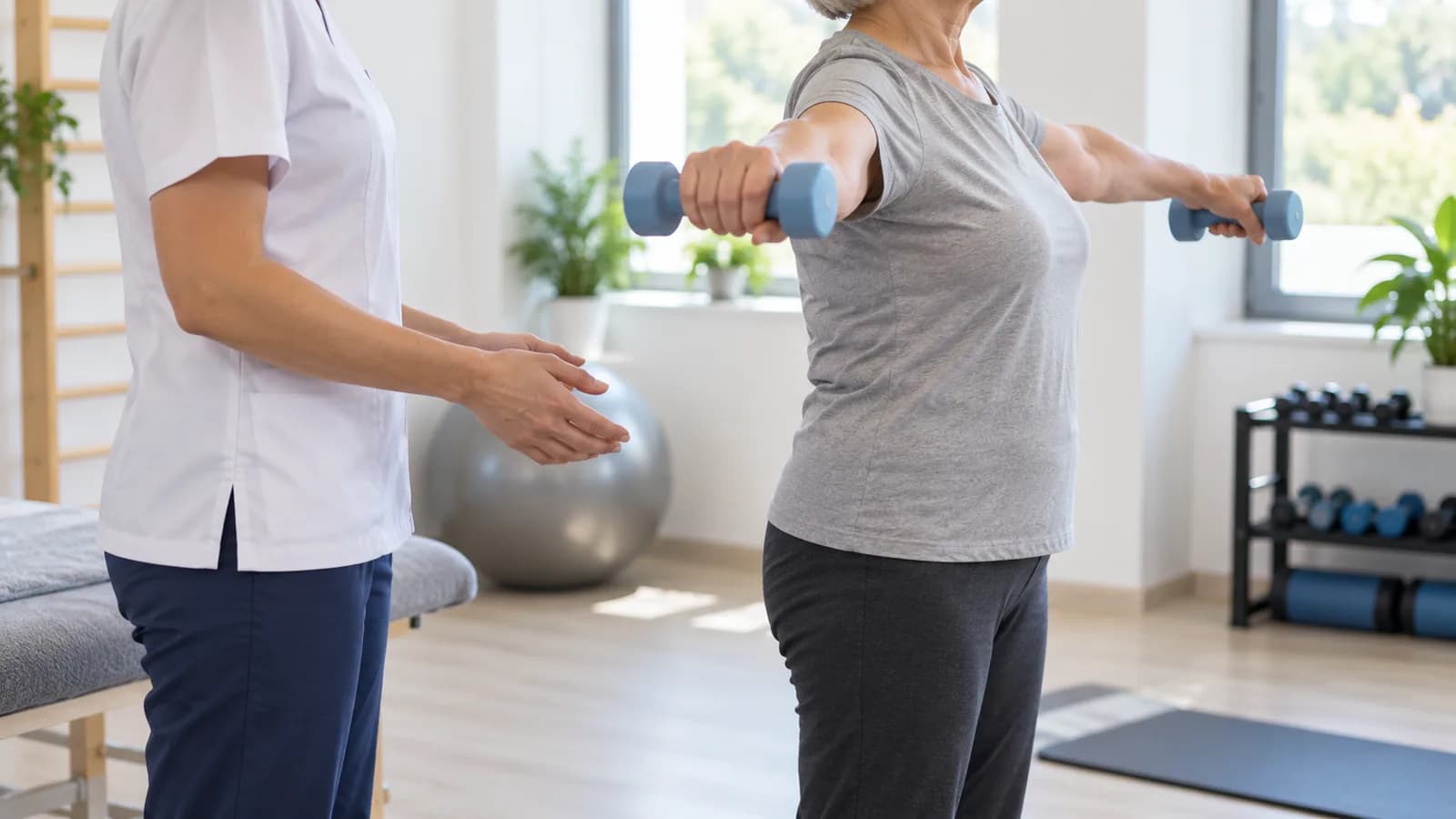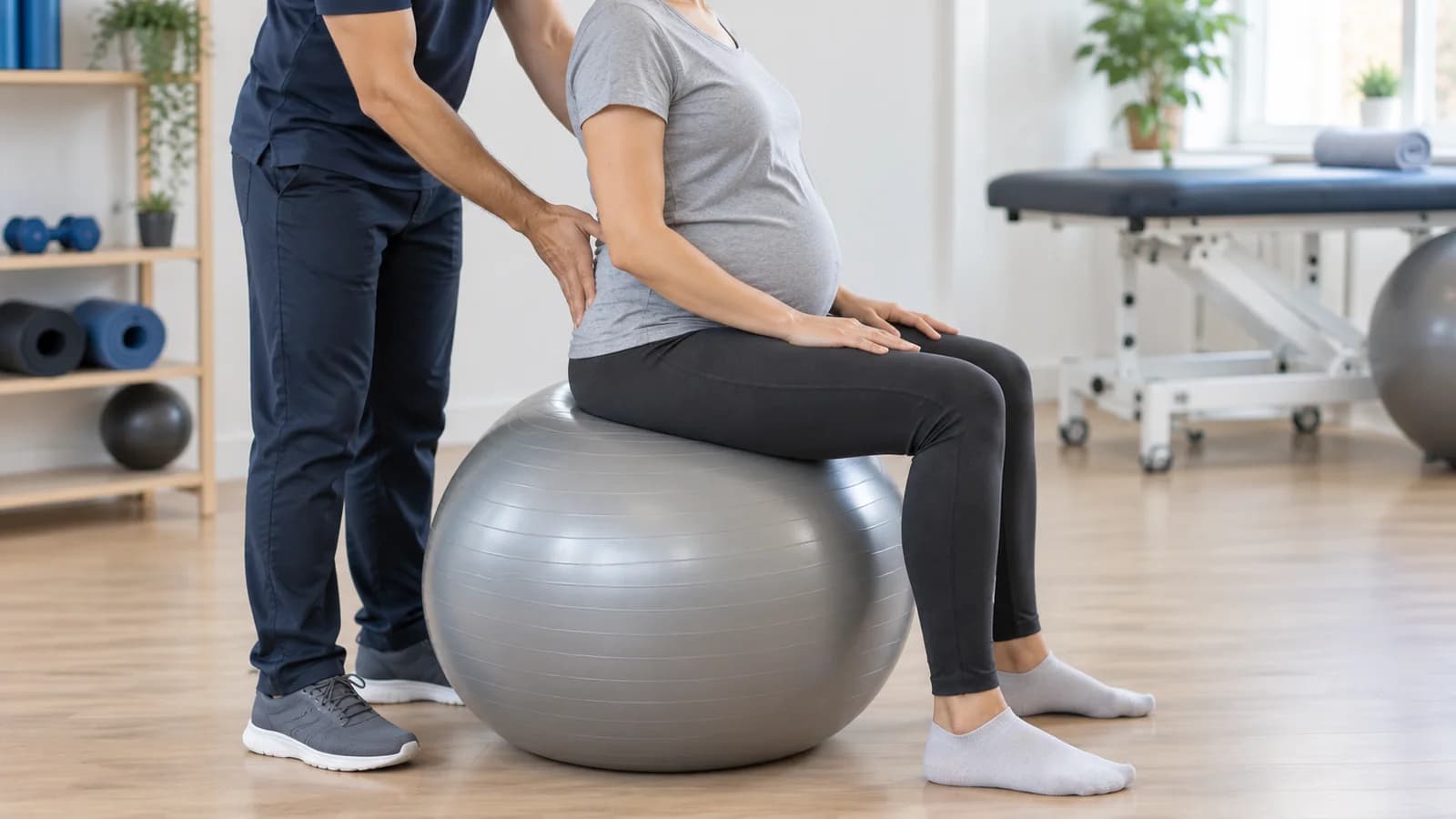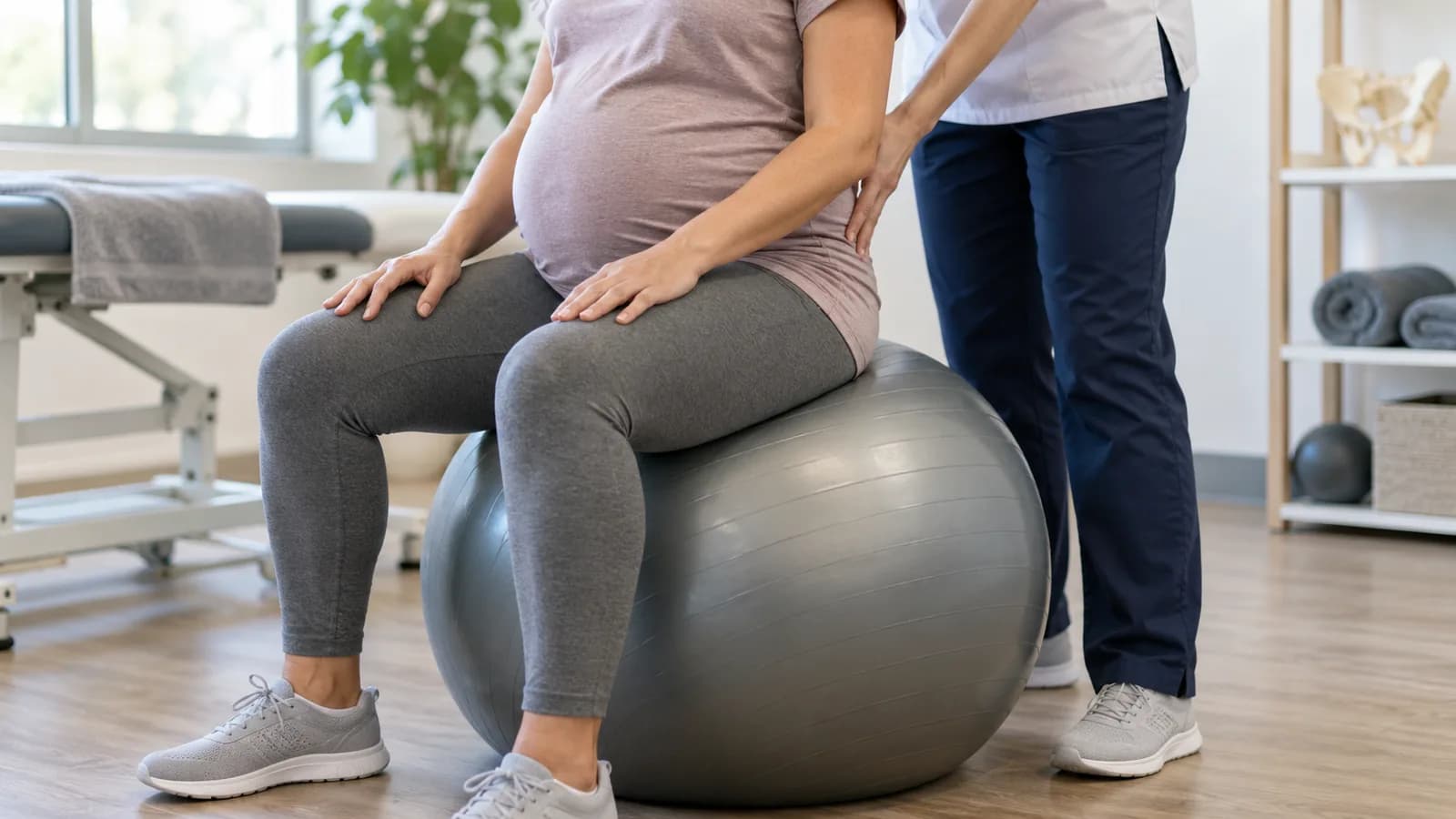
“I want to go out for a walk, but I am scared. What if something happens to the baby?” We hear this every week in the clinic, usually followed by a second sentence: at home everyone says lie down and rest. Treating pregnancy as an illness is still common, and that habit sentences women to nine months of unnecessary stillness.
Here is the honest picture: in a healthy pregnancy with no complications, and as long as the doctor following you agrees, regular moderate activity is something we recommend, not something to avoid. But “recommended” does not mean every movement suits every pregnancy. This article separates the two: what you can do comfortably, what to leave alone, and which signs mean you stop and call your doctor.
Will moving actually harm the baby?
This is how we open the subject in an examination. The uterus sits inside the abdomen surrounded by amniotic fluid; walking, swimming or controlled strength work does not shake the baby. In a normally progressing pregnancy there is no evidence that moderate exercise raises the risk of miscarriage, preterm birth or low birth weight. The real risks are falling, a blow to the abdomen, overheating and pushing to an intensity where you cannot breathe. The useful question is not “should I move” but “which movement, at what intensity”.
There is one condition, and it is a real one: approval from the doctor following your pregnancy. With bleeding, a threat of preterm labour, placenta previa, pre-eclampsia, cervical insufficiency, a multiple pregnancy or an uncontrolled medical condition, the decision belongs entirely to the doctor. We fit our programme inside the boundary the doctor draws; we do not draw it ourselves.
If you want a neutral overview in plain English, the NHS page on exercise in pregnancy is a sober place to start.
The complaints exercise genuinely reduces
Most women who come to us saying “I am in pain and I do not know what to do” are in fact in a position to gain a great deal from movement. Where regular exercise makes a visible difference:
- Low back and groin pain: as the abdomen grows forward, load shifts onto the lower back and pelvic joints. Working the hip and trunk muscles spreads that load.
- Swollen, heavy legs: every calf contraction pumps blood upwards. Sitting still for hours switches that pump off; walking and ankle movements switch it back on.
- Constipation: bowel movement slows down in pregnancy. A regular walk is the least demanding help there is.
- Sleep quality: women who move during the day fall asleep more easily. Just not right before bedtime.
- Gestational diabetes risk: regular physical activity supports blood sugar control and lowers the risk of gestational diabetes.
- Recovery after birth: women who keep moving through pregnancy recover noticeably faster.
The background here is our article on what changes in the body during pregnancy, which goes through which tissue is under strain and why.

A safe frame: a pace you can still talk at
The practical measure is the talk test: if you can hold a normal conversation while you exercise, the intensity is right. If you have to break sentences to catch your breath, slow down. This is more reliable than counting your pulse, because resting heart rate is already higher in pregnancy.
So what is suitable? The safest options are the most ordinary: walking, swimming or walking in water, a stationary bike, light resistance work, and pilates or yoga adapted for pregnancy. Water carries part of your weight, so the joints get relief and swelling settles. Half an hour on most days is a good target, and you may split it into three blocks of ten minutes. If you have never exercised, start with ten minutes and build up over weeks.
- Warm up and cool down: five to ten easy minutes at each end reduces cramping and dizziness.
- Water: drink before you feel thirsty. Thirst can arrive late in pregnancy, so keep a bottle beside you.
- The Antalya heat is a genuine risk: in summer, do not walk outdoors between 11am and 5pm. Early morning, late afternoon, an air-conditioned indoor space or a pool are all safer. In humid heat the body struggles to shed excess warmth.
- Leave out anything with a risk of falling: skiing, horse riding, cycling, contact sports, diving. After the second trimester your balance point has shifted, even if you do not feel it.
- Mind the surface: slippery pool edges, uneven paving, unlit paths. It sounds trivial, but the cost of a fall is different in pregnancy.
Our aim in pregnancy is not fitness or performance. It is a body that can manage its pain, sleep and get through its own day for nine months. That is the measure.
After the second trimester: lying flat, sit-ups and the midline
From the second trimester on we change two things. The first is lying flat for long periods: the growing uterus can press on the large vein returning blood to the heart, which comes back as dizziness, nausea and palpitations. A short spell on your back is fine, but we do not build a programme around exercises that keep you there. We use side-lying, four-point kneeling and seated versions.
The second is the classic movements that raise pressure inside the abdomen. Sit-ups and their variations, lowering and lifting both legs together, holding a long plank: these load the midline and the pelvic floor at once. In a pregnant abdomen there is nothing to gain from them and something to lose.
In their place: deep abdominal and pelvic floor work driven by the breath. As you breathe out, the lower abdomen gathers gently inwards; as you breathe in, it releases completely. Not “clenching” the stomach, but working with the breath. From the outside it looks like nothing, yet this is the work whose effect we see most clearly after the birth.
This is where diastasis recti belongs. The two strips of straight abdominal muscle at the front meet along a line of connective tissue. In pregnancy that line stretches and the strips move apart. This is expected; the problem is when it does not close afterwards, or the wrong exercises strain it further.
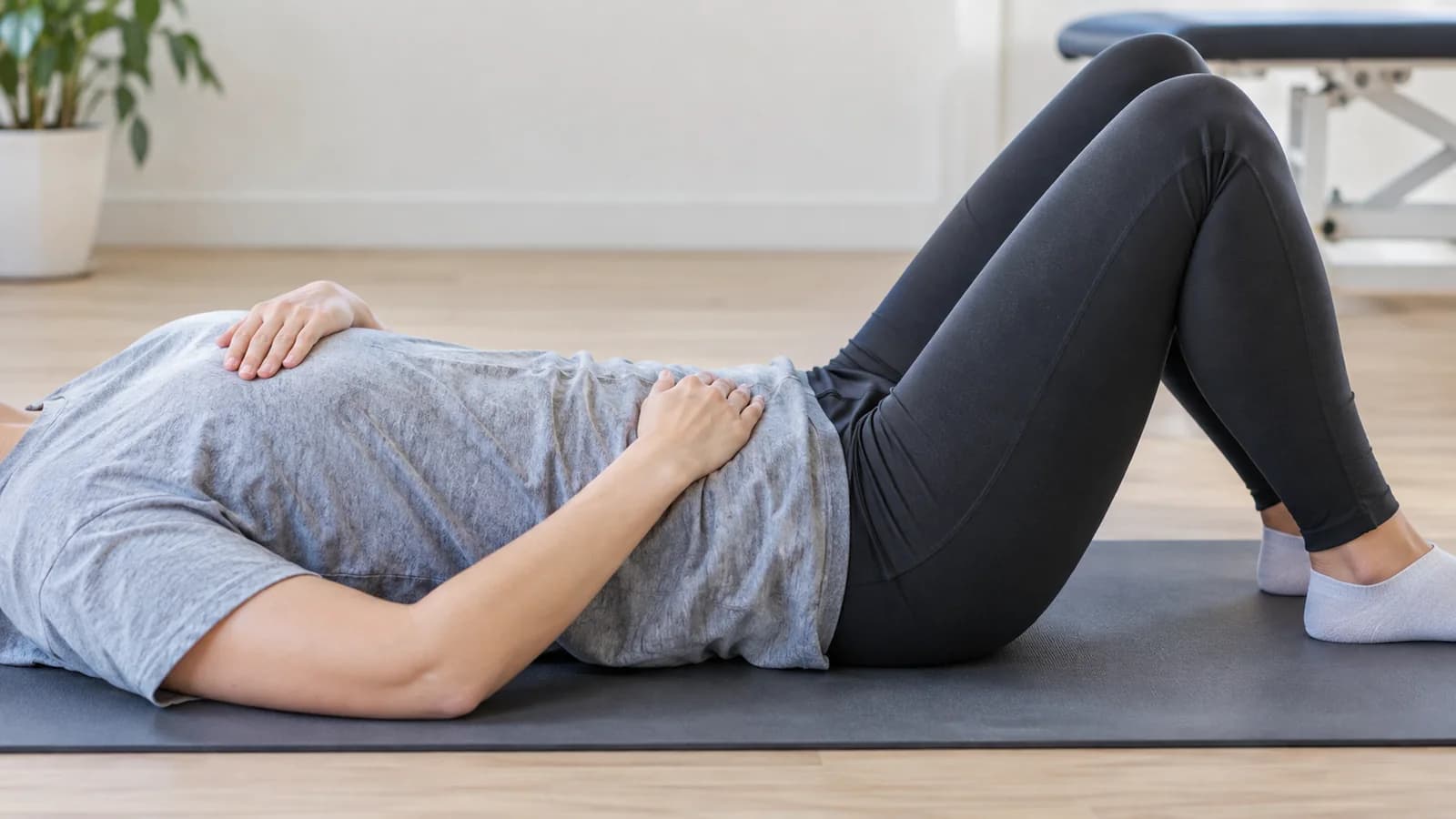
How to notice it: lie on your back with knees bent, place your fingers just above the navel and lift your head slightly. If your fingers sink into a gap, or the navel area domes forward like a ridge, the midline is under load. Do not push this test in the last months; the period when it really tells you something is after the birth, covered separately in our article on postpartum recovery.
Movements that strain the midline: sit-ups, double leg lowering, classic push-ups, and holding your breath and straining while lifting something heavy. In their place: controlled arm and leg reaches in four-point kneeling, the knee version of a side plank, breath-led deep abdominal work and hip strengthening. The rule of thumb is simple: if the middle of your abdomen domes out or sinks in during a movement, that movement is not for you right now.
Pelvic floor: releasing matters as much as squeezing
“Do your Kegels” is not enough on its own, and for some women it is harmful. A pelvic floor problem is not always weakness. In some of the women who come to us the floor is already overly tight, and telling her to squeeze more increases her pain, her difficulty passing urine and pain during intercourse. The “three sets a day” instruction online does not know which floor it is talking to. In an examination, we do.
So we do not hand out a programme before we assess. Correct work has two directions: being able to contract and being able to let go completely. The release half is very often never taught, yet in labour what matters is not the floor contracting but releasing at the right moment. In pregnancy we build both directions together, and for most women it starts with simply learning to feel the floor.
Our piece on pelvic floor health in women and men completes this section.
Signs that mean stop exercising and contact your doctor
This list is not open to negotiation. If any of the following happens, stop then and there and contact your doctor:
- Vaginal bleeding or spotting.
- A leak of fluid; your waters may have broken.
- Contractions or cramping that come back at regular intervals.
- Dizziness, feeling faint, blurred vision.
- Chest pain, or shortness of breath that does not settle with rest.
- Swelling, warmth and pain in one calf only; this needs to be assessed for a clot.
- A clear reduction in the baby's movements.
- Severe headache, sudden swelling of the hands and face.
And if you have had a caesarean, if your pregnancy is classed as high risk, if there is a history of threatened preterm labour, or a diagnosis of placenta previa or pre-eclampsia, the decision about exercise belongs to your doctor, not your physiotherapist. We can narrow the boundary the doctor sets; we cannot widen it. Saying “it is fine, just walk a bit” in that situation is not our job.

What we actually do with pregnant women in the clinic
Our work in pregnancy is not handing over a ready-made list of exercises. First an individual assessment: posture, where the load lands, which movement increases the pain, pelvic floor awareness, breathing. Then a programme for that woman, with positioning advice and gentle hands-on techniques for the pain. Nothing to exaggerate; the core of the job is measuring and redistributing load.
Antalya adds its own layer. Some of the women who come to us work as hotel housekeepers, some stand all shift in a restaurant kitchen, some bend and straighten all day in greenhouse work, some arrive from a long flight with swollen legs. Telling a woman who cannot drop her shift to “rest” does not help. Instead we work out how to do the same job with the least load on her back, two movements for her break, and how to position her legs in the evening. For those who prefer a group we run prenatal pilates sessions; not a magic method, just a controlled movement programme that depends on medical approval.
If low back, groin or upper back pain has lasted more than two weeks in your pregnancy, or you want to start moving but do not know where to begin, you are welcome to come in for an assessment. With your doctor's approval we will plan what suits you, and if something in your case makes exercise unsuitable, we will say so plainly.