The sentence I hear most often in the clinic goes like this: “I leak a little when I sneeze, but I have had two children, so I suppose it is normal.” The second sentence rarely changes either: “I was too embarrassed to tell anyone.” That is where the real problem sits — not in the muscle, but in the silence around it. Asked how long it has been going on, patients answer in years.
Then there are these three people. A 28-year-old woman who has never been pregnant. A 64-year-old man still using pads three months after prostate surgery. An athlete who lifts heavy four times a week. Three complaints, one shared muscle layer. This article is about that layer — and about what is wrong with the “just do Kegels” advice the internet hands out without asking a single question.
Where the pelvic floor actually is
Picture a hammock stretched between the pubic bone at the front, the tailbone at the back and the sitting bones on either side. It is not one muscle but several layers stacked on each other. The urethra passes through it, so does the outlet of the bowel, and in women the vagina.
It has four jobs: bladder and bowel control, since much of the closing pressure that keeps you dry comes from here; support for the organs above it; sexual function; and the one most patients have never heard of — trunk stability. With the diaphragm, the transversus abdominis and the multifidus, it forms a closed pressure container.
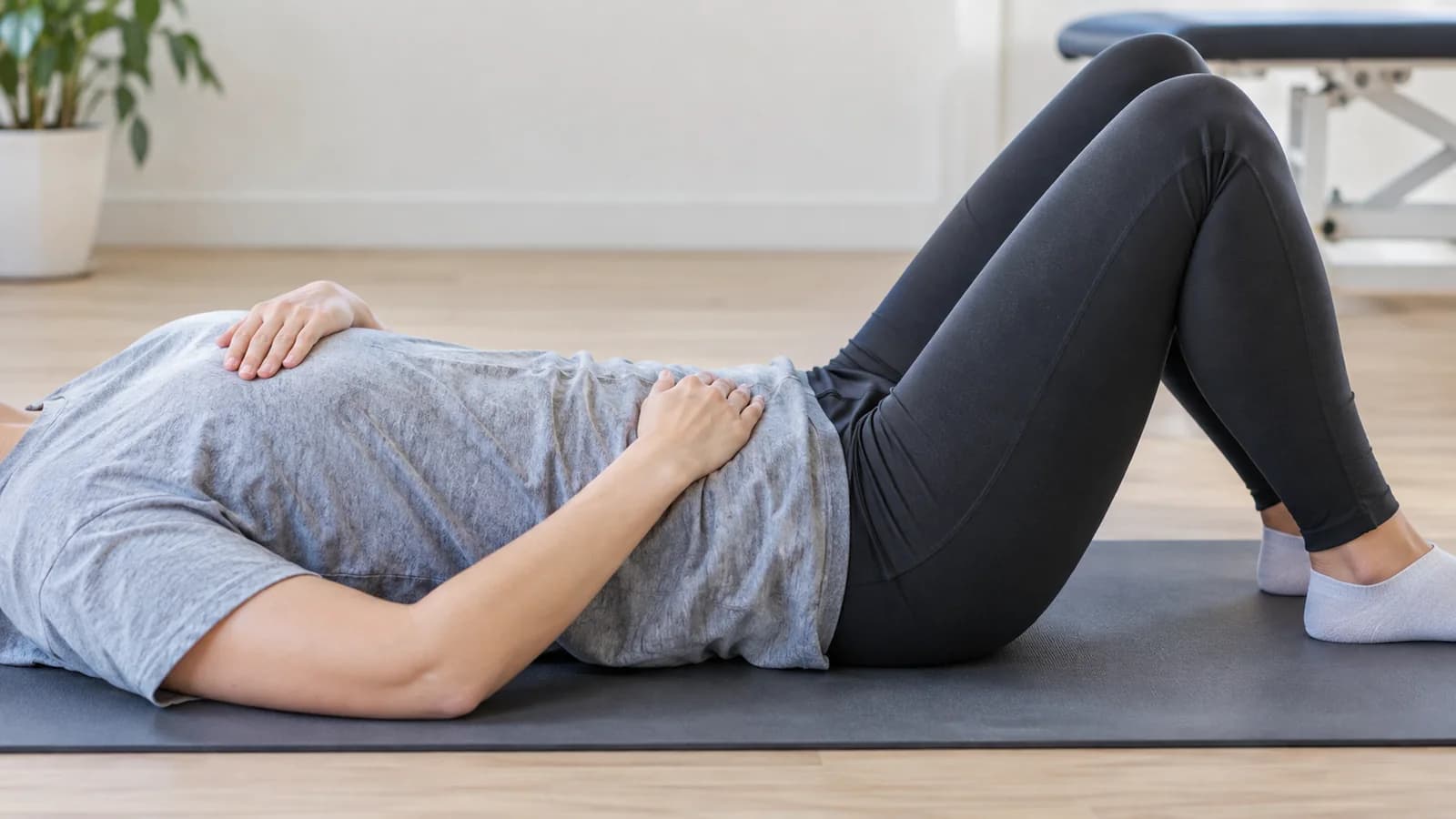
Breathing is the easiest way to feel that container. Breathe in, the diaphragm drops and the pelvic floor gives slightly downwards; breathe out, both recoil upwards. It is not a belt you clench and hold — which is why exercising with a held breath pushes the pelvic floor down instead of up.
This is not only a “women who gave birth” issue
Filing pelvic floor problems under one group is exactly why most people never ask for help. Here is who actually walks in:
- Men after prostate surgery — leaking is common in the first months, and pelvic floor training is standard there.
- Athletes — heavy lifting, distance running, trampoline, skipping: anything that repeatedly spikes intra-abdominal pressure.
- Chronic constipation — straining at every toilet visit pushes the same tissue downwards.
- Chronic coughers — smoker's cough, asthma, long bronchitis; every cough is a small impact.
- Extra weight — permanently raised pressure wears down the closing mechanism.
- Menopause — falling oestrogen changes tissue quality and urethral closing pressure.
- People whose job is lifting — construction, warehouses, moving, care work.
And one thing plainly: leaking as you get older is not inevitable. Age is a risk factor, not a verdict. Someone whose symptoms start at seventy still has ground to gain.
The symptom list is much longer than leaking
Patients arrive with one complaint; once we start asking, the list is far longer:
- A sudden, urgent need to go, and the fear of not reaching the toilet
- Going very often, and waking twice or more at night
- Not emptying fully, needing to go again shortly after standing up
- Leaking wind or stool, or being unable to hold wind
- Heaviness, pressure or something coming down in the vagina, which can point to prolapse
- Pain during intercourse or difficulty with penetration
- Long-standing tailbone, groin or perineal pain, worse after sitting
So “I do not leak, therefore my pelvic floor is fine” is not a safe conclusion. Leaking is only the symptom people talk about most; it does not have to come first.
It can be weak — but it can also be far too tight
Say pelvic floor and everyone pictures a loose, weak muscle. In reality roughly a third of the people we see are the opposite: a pelvic floor that cannot let go, permanently on guard, overactive and tight. It has been held for so long that it can neither contract fully nor release fully.
Both pictures produce similar symptoms: urgency, frequency, incomplete emptying, pain. The difference comes out of the examination — on the tight side you usually find pain, constipation and a sense of never being able to relax. The treatments run in opposite directions: in one we train the muscle, in the other we first teach release, breathing and soft tissue work.
Clinical note: giving Kegels to a pelvic floor that cannot release is like squeezing a calf that is already cramping. Plenty of patients start “100 Kegels a day” from a video and arrive with more pain than before. Do not exercise before someone has worked out which picture you are in.
Most people do Kegels wrong
Finding the right contraction on the first try puts you in the minority. The typical mistakes: bracing the abdomen, lifting the buttocks, squeezing the thighs, holding the breath, and the most common one — bearing down instead of lifting up, which pushes the hammock further down. Practising by stopping the urine stream belongs on the list too; we do not recommend it even once, because it disrupts emptying and raises infection risk.
The contraction that works: imagine holding back wind while also stopping the flow of urine, and draw everything inwards and upwards. Put a hand on your belly — the abdominal wall should not harden. Buttocks and thighs stay relaxed, hips stay down. Let the breath keep flowing; if you can talk comfortably while holding, that is a good sign. Hold three to five seconds, then let go completely and feel it release.
Releasing matters as much as contracting, and almost nobody learns it. Not finding the muscle is no failure either — you cannot see or touch it.
There is a duller side that comes before any exercise. In some patients we see clear improvement without a single Kegel, just from fixing everyday habits:
- Stop going to the toilet “just in case” before leaving the house. A bladder used to emptying while nearly empty loses capacity, and urgency grows.
- Empty without straining: a small step under your feet so the knees sit higher than the hips, elbows on knees, breathe out.
- Take constipation seriously — fibre, water, daily movement. Straining is the hammock's most reliable enemy.
- Breathe out as you lift something heavy, and keep the load close to your body.
- When a cough or sneeze is coming, contract gently just before it; that reflex reduces leaking.
- Smoking is a pelvic floor issue too, through the cough it causes.

How we assess it in the clinic
First the history: when symptoms started, what triggers them, births and surgeries, bowel habits, pads, fluid intake. Then a bladder diary — three days of writing down what you drink, when you go and how much you leaked. That sheet of paper often surprises both of us: the patient sees eleven visits a day and had assumed it was normal.
Then the muscle itself: can a voluntary contraction be found, how strong is it, how long can it be held, and the critical question — can it relax completely. We watch how it coordinates with the breath and whether the abdominal and gluteal muscles take over. Where it helps we use biofeedback or surface EMG; seeing their own muscle on a screen does more than an hour of explaining.
The evidence deserves an honest summary. Supervised pelvic floor muscle training is first-line treatment for stress urinary incontinence — what should be tried before surgery is discussed — and its effect is well documented. But results take months: a typical programme runs about three months, with daily home work, and the first real change at four to six weeks is common. We promise nobody that leaking will vanish. In some it does; in others it drops far enough that pads are no longer needed; in others we hand the case back to a doctor.

Where physiotherapy stops: see a doctor first
Pelvic floor rehabilitation helps with a great deal, but it is not the answer to everything. See a doctor before working on exercises if you have:
- Blood in the urine
- Burning or pain on passing urine, fever, flank pain, repeated urinary infections
- Leaking that starts suddenly with weakness or numbness in the leg or saddle area — urgent neurological assessment
- A feeling of tissue coming out of the vagina, or a bulge you can feel
- Unexplained pelvic pain that wakes you at night, or unintentional weight loss
- New symptoms after birth that worsen, especially leaking of stool
We list these not to frighten anyone but to put things in order: here physiotherapy is the second step, diagnosis the first.
Pelvic floor rehabilitation in Antalya
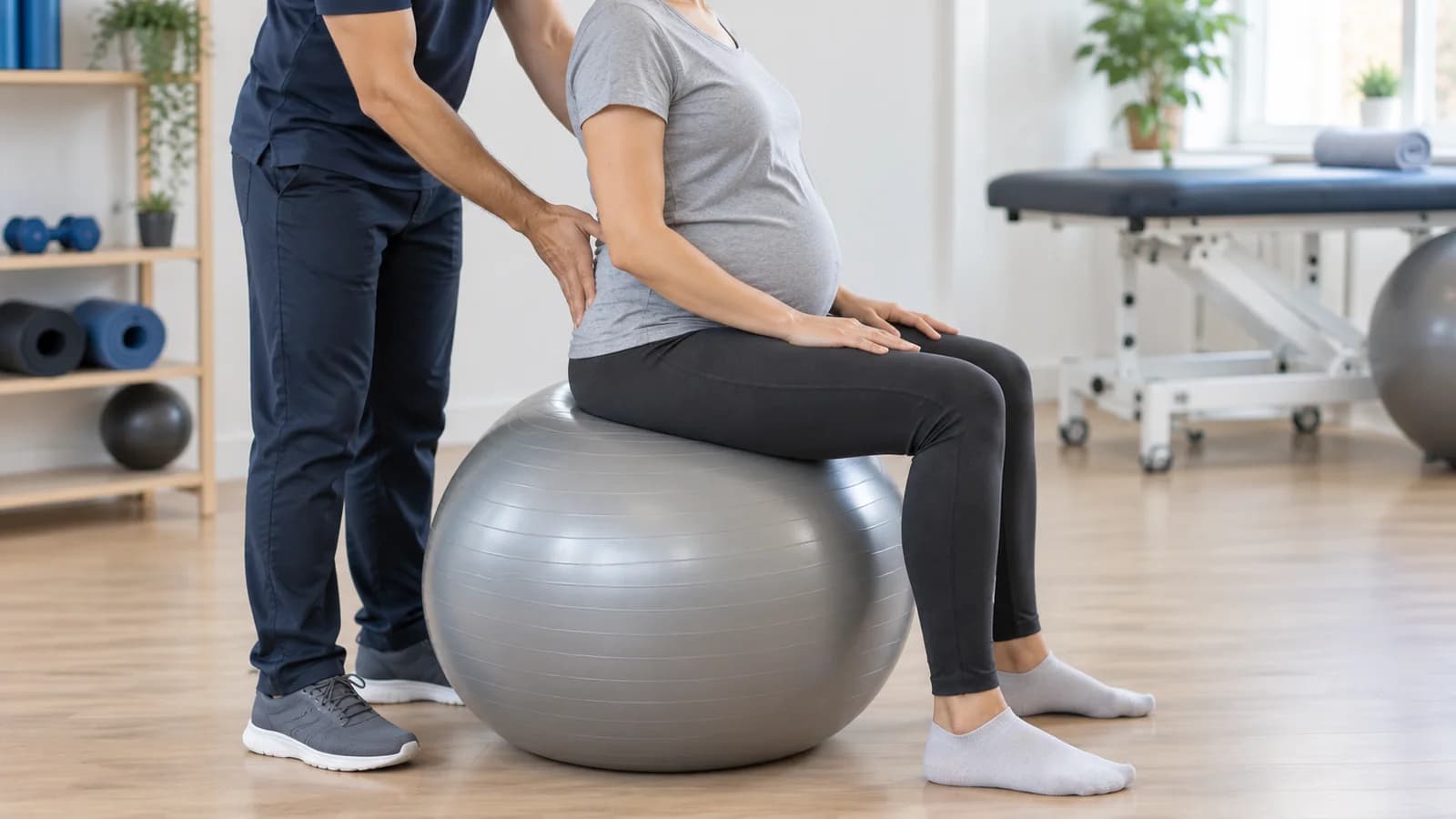
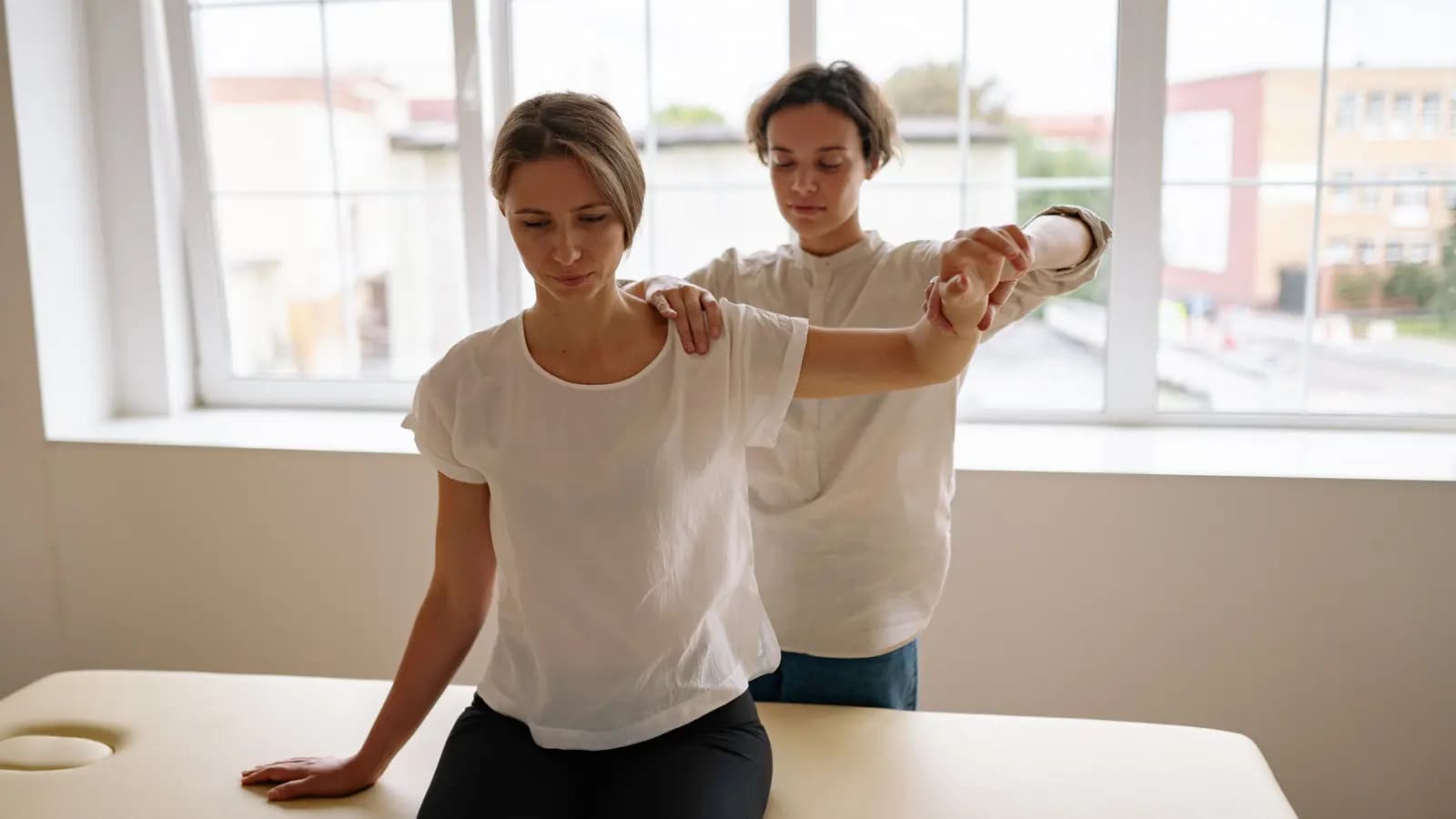
At our clinic in Kircami we start with an assessment, build the programme around the individual, and run it with clinical Pilates where that fits. We do not hand out exercises before working out whether your symptoms come from weakness or tightness — starting from the wrong side costs more than time.
If you are in the first months after giving birth your situation is more specific, and we wrote it up step by step in our article on postpartum pelvic floor and abdominal recovery. If your lower back hurts as well, the two complaints may not be independent: in the article on the causes of lower back pain we look at the same pressure container from the trunk side.
To start at home, the NHS page on pelvic floor exercises is plain and trustworthy. If nothing changes over several weeks, or if there is pain, come in for an assessment at our clinic in Muratpasa — Physiotherapist Serdar Mataraci.