Most pregnant patients open with the same sentence: "My back hurts, but everyone says it is normal in pregnancy." Half of that is true — roughly half of pregnant women go through a spell of back or pelvic pain. The other half rarely gets said: common does not mean you should grit your teeth for nine months.
This article is about the months before birth: what the body is doing, where each pain comes from, what to change at home, and which symptoms mean you stop exercising and call your doctor the same day. Recovery after delivery is a separate story, linked at the end.
What actually changes over nine months
Weight gain alone does not explain the pain. The real shift is in connective tissue: relaxin and progesterone soften the ligaments around your joints so the birth canal can open, but the effect is not selective — the low back and knees end up looser too. When a joint loses stability, muscles take over the job, and muscles tire by the end of the day.
Your centre of gravity also moves forward. To balance it the curve in the low back deepens and the back muscles stay mildly switched on all day. That is usually the late-afternoon "my back feels like stone" sensation.
Meanwhile the abdominal wall lengthens. Rectus abdominis fibres stretch considerably across pregnancy, and a lengthened muscle produces less force, so the load shifts backwards onto the low back and pelvis. The rib cage widens, the growing uterus pushes the diaphragm up, breathing gets shallower, and pain turns up along the lower ribs and between the shoulder blades.
Back pain or pelvic pain? The distinction changes the treatment
Most of the assessment goes into pinning down where the pain actually lives. Everything gets called back pain, but there are three pictures: the low back itself, the back of the pelvis — the sacroiliac joints either side of the tailbone — and the groin at the front.
They behave differently. Low back pain worsens with bending forward and long sitting. Sacroiliac pain sits on one side, in the dimple above the buttock, and sharpens when you load that leg alone. Groin pain flares with stride length. The same exercise will not do the same thing for all three, which is why a generic pregnancy exercise list off the internet makes some patients worse.
The daily pattern helps too. Fine in the morning and worse towards evening points to load and endurance; pronounced morning stiffness sends us to sleeping position instead.
A stabbing pain in the groin: pelvic girdle pain
Patients describe pelvic girdle pain almost identically: a knife-like pain at the front joint of the pelvis, the pubic symphysis, sometimes running down the inner thigh. What provokes it is not movement in general but the two legs separating. The triggers repeat with surprising consistency:
- Rolling from one side to the other in bed
- Swinging one leg out first when getting out of the car
- Standing on one leg to pull on trousers or socks
- Climbing stairs, pushing a shopping trolley
- A throb in the groin or tailbone after a long walk
So keep the legs together as much as you can. Roll in bed with the knees squeezed and a pillow between them, turning the trunk as one block. Getting out of the car, swing both legs out together, then stand. Put trousers on sitting down. And shorten your stride — a long stride prises the sore joint open a little further with every step.
A pelvic support belt is one of the few things that genuinely helps, but it has to sit low, at hip joint level rather than up on the pelvic rim. A belt that has ridden up does nothing.
A note from the clinic: "walking is always good" can backfire in pelvic girdle pain. Forty minutes of walking and then two days in bed is not progress. We split the distance instead — ten minutes three times a day is tolerated far better than thirty in one go.

Swelling, numb hands at night, calf cramps
Ankles swelling by the end of the day is expected, and worse through an Antalya summer. What helps is unremarkable: fifteen minutes a day with the legs above heart level, no long spells standing still, compression stockings on before you get out of bed, and no cutting back on water. Drinking less does not reduce swelling.
Swelling is not limited to the feet. Rising pressure in the tunnel at the wrist brings numb hands at night, tingling fingers and a weak grip in the morning — carpal tunnel syndrome of pregnancy. Most of it settles by itself in the weeks after delivery; until then a night splint, a corrected wrist position and gentle drainage work make it liveable.
Calf cramps mostly come at night; stretching the calf and sole before bed, enough fluid and sleeping with the legs elevated cut the frequency. The manual lymphatic drainage we use in lymphoedema suits pregnancy swelling too, and easing tissue pressure is welcome in the third trimester.
One warning: if swelling comes on suddenly, affects one leg only, and that leg is warm, red and tender in the calf, this is not pregnancy oedema. See the section below.
When the midline opens: diastasis recti
The connective tissue joining the abdominal muscles in the middle thins during pregnancy and the two sides drift apart. We call it diastasis recti, and in late pregnancy it is physiological to a degree — expected, not a failure. The goal now is not to close the gap but to stop loading the abdomen badly:
- Roll onto your side and push up with the arm instead of curling straight up out of bed
- Drop sit-ups, planks and straight-leg raises, anything that domes the midline
- Do not hold your breath while straining; bearing down loads the midline and the pelvic floor at once
If a vertical ridge bulges in the middle of your abdomen as you stand, that movement is too much for the day. Rebuilding starts after delivery.
Exercise in pregnancy: safe, and in fact recommended
One misunderstanding to correct plainly: in an uncomplicated pregnancy regular moderate exercise is safe and recommended, and the 150 minutes a week target applies to pregnant women too. It lowers the risk of gestational diabetes, excessive weight gain and back pain. Unless your doctor has a specific reason for it, bed rest treats nothing.
Set intensity with the talk test: if you can hold a conversation but not sing, you are at moderate intensity. Heart rate targets are unreliable here, since resting heart rate is already raised.
The list of things to avoid is short and clear:
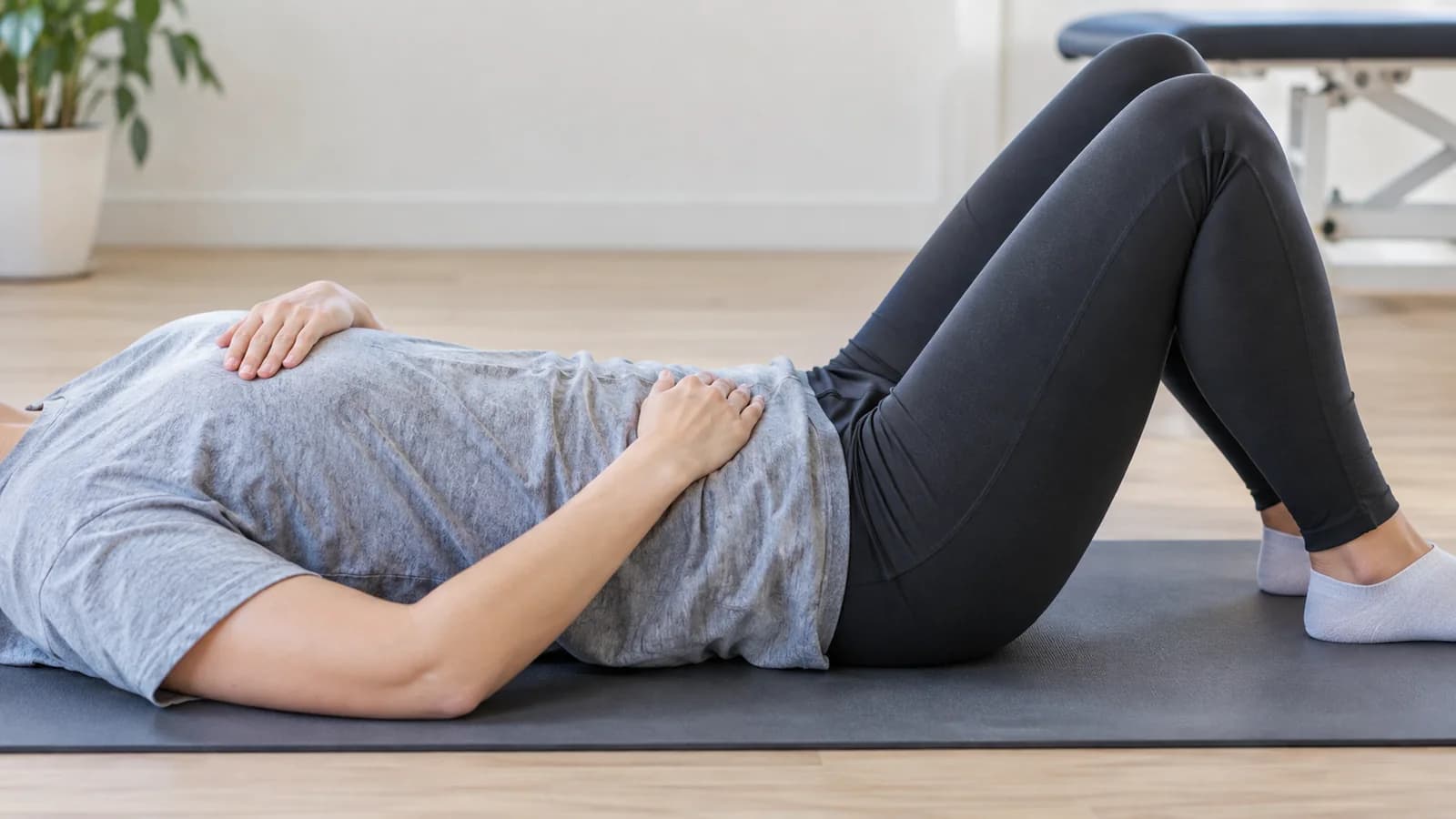
- Long spells flat on your back after the first trimester; the growing uterus compresses the main vein
- Sports with a risk of falling: cycling, skiing, riding, contact ball sports
- Scuba diving
- Overheating: hot yoga, sauna, steam rooms and, in Antalya, outdoor exercise around midday
- Breath-holding and straining (the Valsalva manoeuvre) and one-rep maximal lifts
Water is the most comfortable option of this period. Walking in a pool takes visible load off the joints, and patients with pelvic girdle pain manage durations there they cannot tolerate on land. Warm pool, not hot. And the aim is not fitness or strength records; it is keeping function, reaching the birth with a body that still gets through its own day.

Stop exercising and call your doctor: symptoms that cannot wait
This section matters more than the rest of the article. If any of the following happen, stop exercising then and there and contact your own doctor — do not wait for a physiotherapy appointment:
- Vaginal bleeding or fluid leaking
- Regular, painful contractions
- A noticeable drop in the baby's movements
- Severe headache, blurred vision, sudden swelling of hands and face (signs of pre-eclampsia)
- Breathlessness or chest pain that does not settle with rest
- Warmth, redness, one-sided swelling and calf pain in a single leg (possible deep vein thrombosis)
Physiotherapy does not replace antenatal care. We deal with the mechanics of pain; the course of the pregnancy, blood pressure and the baby's monitoring belong to your obstetrician. With a high-risk pregnancy, threatened preterm labour or a history of pre-eclampsia we do not start a programme without medical clearance.
What we do here during pregnancy
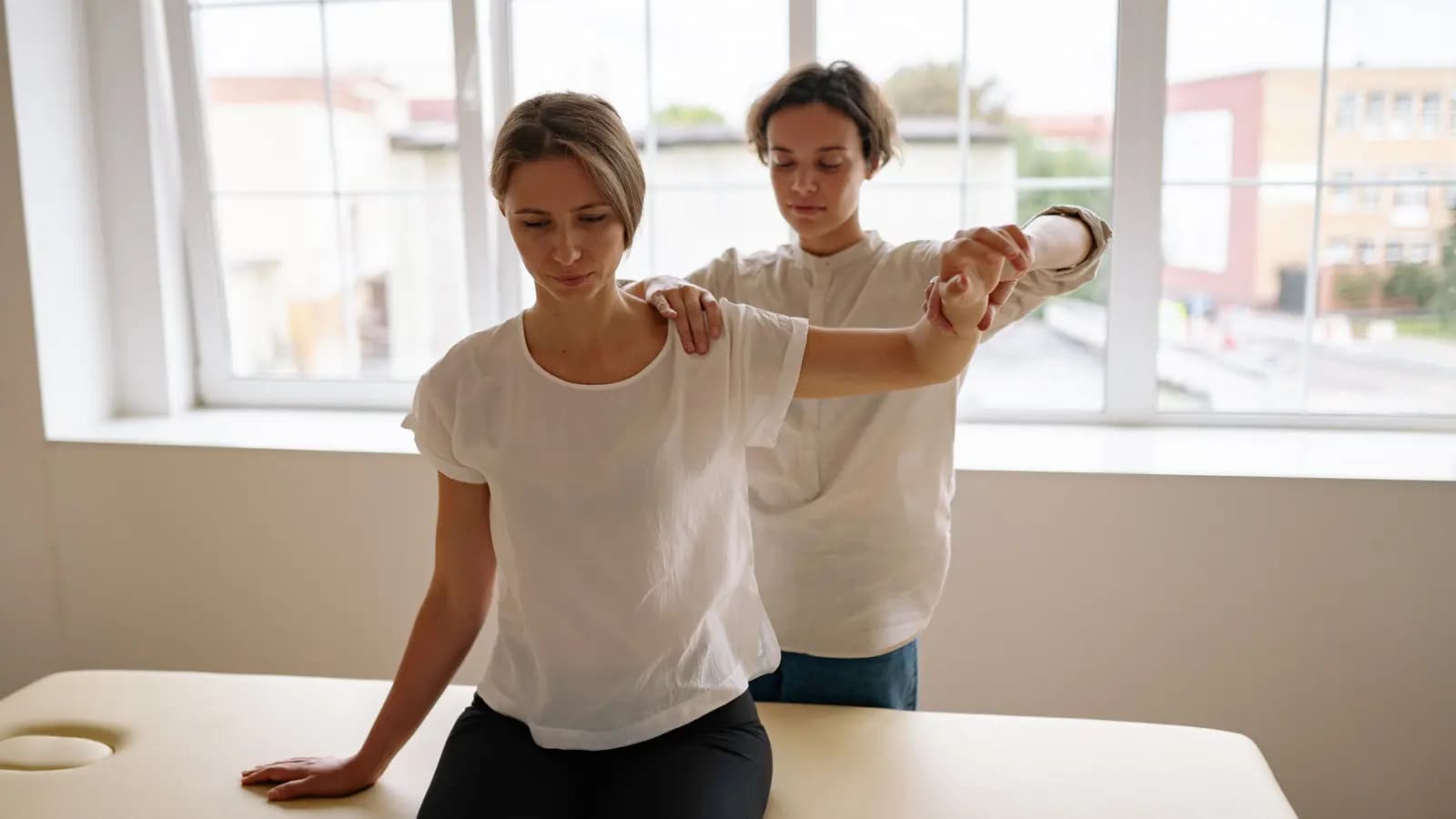
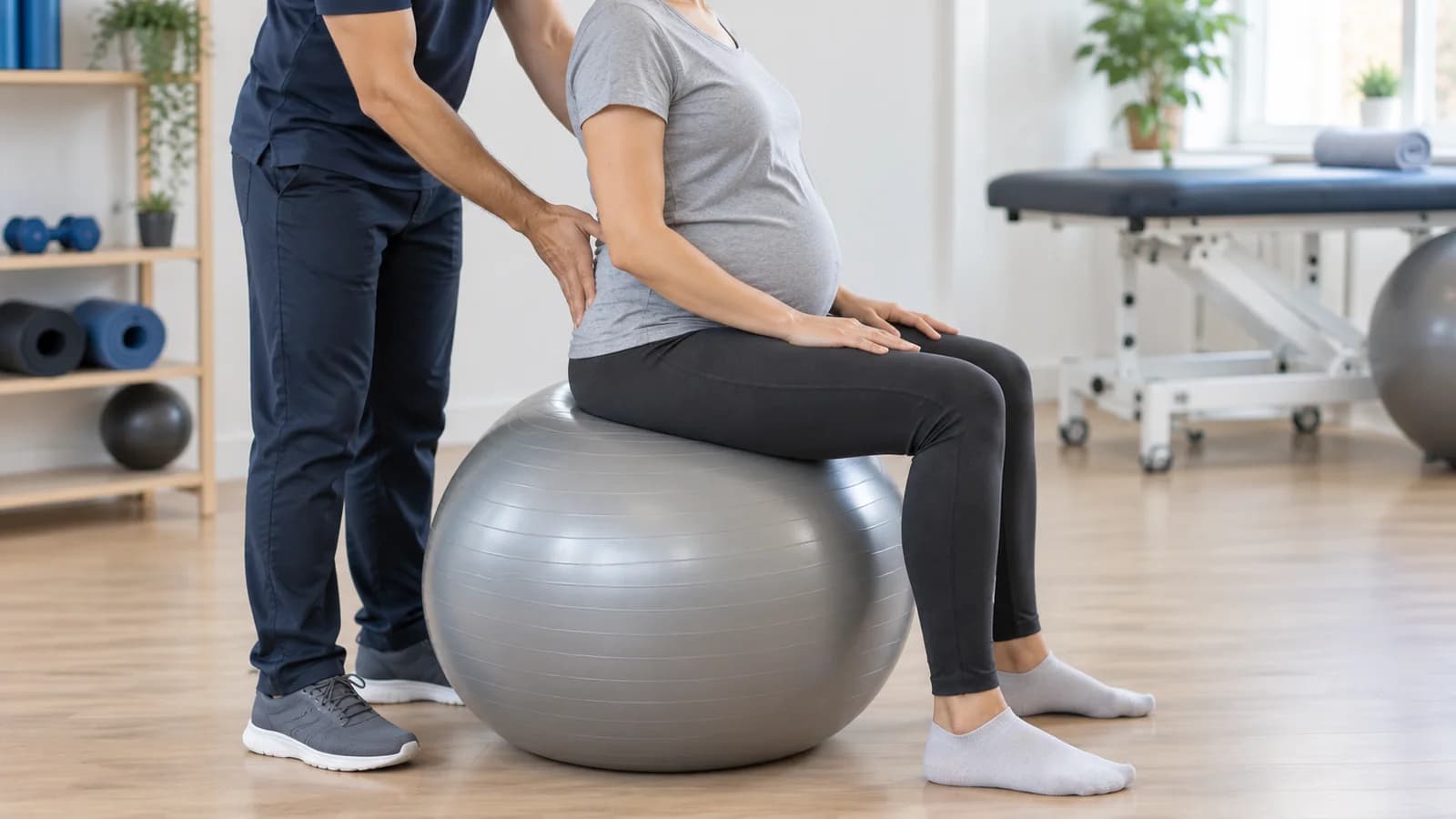
We build the programme around where the pain is. Prenatal pilates covers trunk stabilisation, endurance for the hip and back muscles and breathing, with the movements changing by trimester. On the pelvic floor we train relaxation as much as contraction — being able to let it go during labour matters as much as squeezing it, and hardly anyone is taught that. In pelvic girdle pain, a properly fitted belt, manual therapy around the hip and low back and relearned daily movements already solve half of it.
What we do not promise is taking pregnancy pain to zero, because most of the mechanical change stays until delivery. The goal is more modest: sleeping through the night, walking, getting to work, spending the third trimester out of bed.
For the general safety framework, the ACOG page on exercise during pregnancy is a clear and reliable read. For the months after birth, see what we wrote about pelvic floor and abdominal recovery; and if your back was already troubling you before pregnancy, our article on where low back pain comes from is closer to the mark.
You can book a pregnancy assessment at our clinic in Muratpaşa, Antalya. In the first session we locate the pain and build a programme suited to your trimester.