"I've just turned fifty and everything feels stiff: my shoulder, my hip, my hands in the morning." We hear some version of this sentence in our clinic almost every week. Often it is followed by: "I suppose it's just age." This article is written for that second sentence. Muscles, bones and joints really do change around the menopause, but there is a great deal you can do about it, and well-chosen exercise sits at the top of that list.
Let's be honest from the start: exercise does not stop the menopause, and it does not bring your hormones back to where they were. What it does is help slow down the loss of muscle and bone, keep your joints moving through their full range and protect your everyday function. A sensible programme started at fifty is groundwork for climbing stairs and lifting a grandchild at seventy.
What changes in muscle, bone, tendons and joints when oestrogen falls?
Oestrogen is not only a reproductive hormone. It helps regulate bone turnover, muscle repair and the collagen in tendons and ligaments. When it falls, the effect is felt in many places at once.
In bone, the years after the menopause can tip the balance towards breakdown, and bone density may fall more quickly. This is silent and usually found through a scan or a fracture. In muscle, the gradual loss of strength and mass that comes with age can speed up with hormonal change and with moving less. As muscles weaken, the load on the joints increases.
Tendons and ligaments become slower to adapt to load, which is why we see more tendon-related pain on the outside of the hip, in the shoulder and at the elbow in this period. Morning stiffness and widespread joint aches are also among the commonly reported complaints of the menopause.
"Menopausal joint pain" is real and common, but blaming every ache on the menopause can mean missing another cause. Thyroid problems, inflammatory arthritis, osteoarthritis or an injury can all appear at the same age. Our first job at the assessment is to work out which tissue the pain is actually coming from.
The NHS guidance on menopause and perimenopause also lists loss of bone density among the possible effects of this stage and recommends regular weight-bearing exercise.
The problems we see most often in our clinic at this stage
The complaints women bring to us around the menopause tend to fall into a few groups. Here is a brief summary, with links to our more detailed articles.
Frozen shoulder is more common in women in their forties and fifties: the shoulder first becomes painful, then locks up. We explain the stages and treatment in our article on frozen shoulder. Pain on the outer side of the hip that gets worse when lying on that side is often caused by gluteal tendinopathy, which is common around the menopause; our hip pain article explains how the location of pain points to its cause.
Stiffness in the hands and fingers is another frequent complaint: fingers that won't straighten in the morning, trigger finger, numbness at the wrist. Some of it passes; some may be an early sign of osteoarthritis or an inflammatory condition. Finally, the pelvic floor: leaking when coughing or jumping, needing to pass urine more often or a feeling of heaviness can all increase as the tissues become thinner. You can find the basics in our pelvic floor health article.
What most of these have in common is a drop in muscle strength and in the tissues' tolerance to load. So the long-term part of treatment is largely the same: gradually getting the tissue used to load again.
The logic of the exercise prescription: why strength training matters most
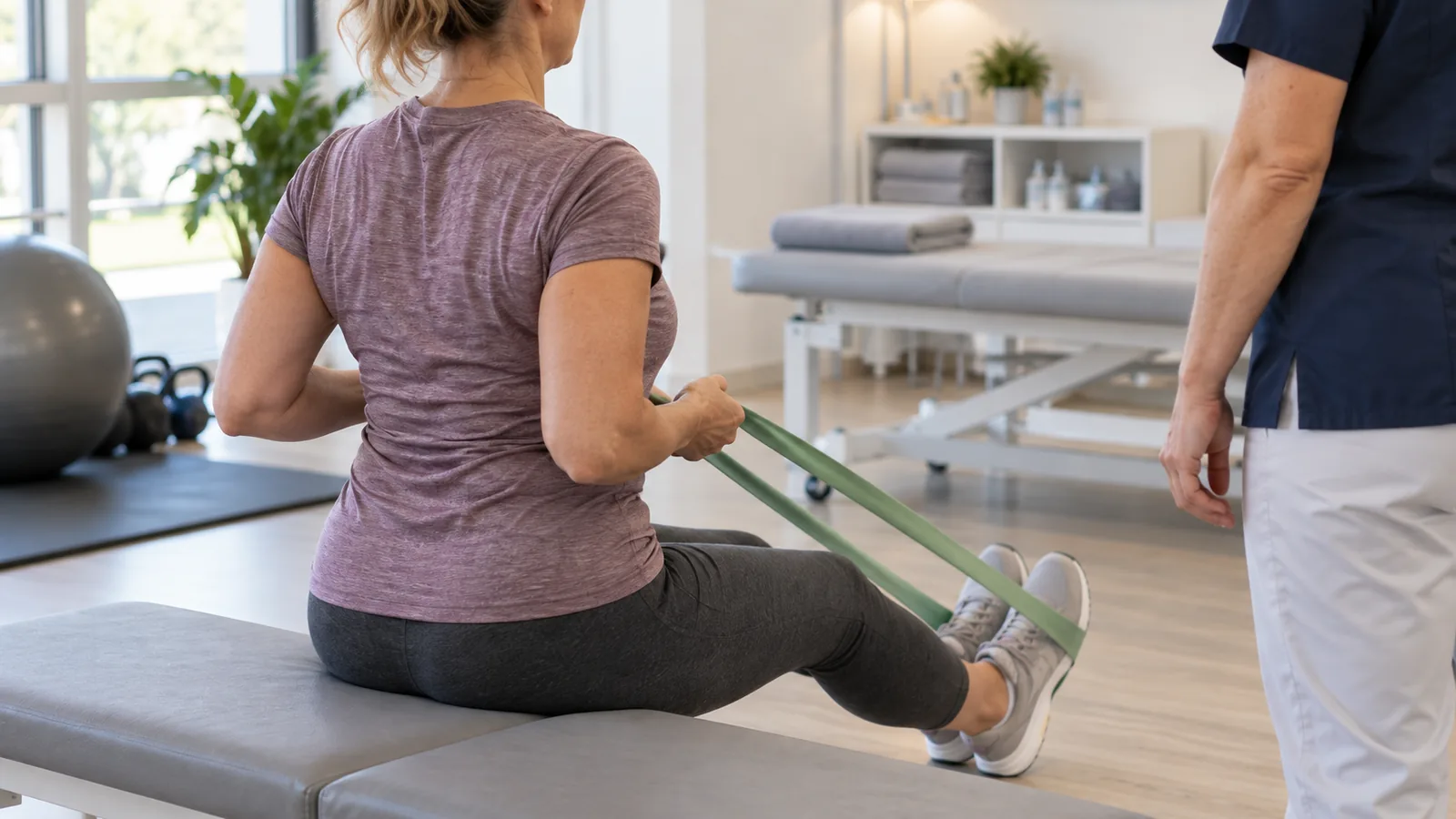
There is no single answer to "which exercise should I do during the menopause?", but there is an order of priority. For muscle and bone, the most valuable is resistance training: working the muscles against weights, resistance bands or your own body weight.
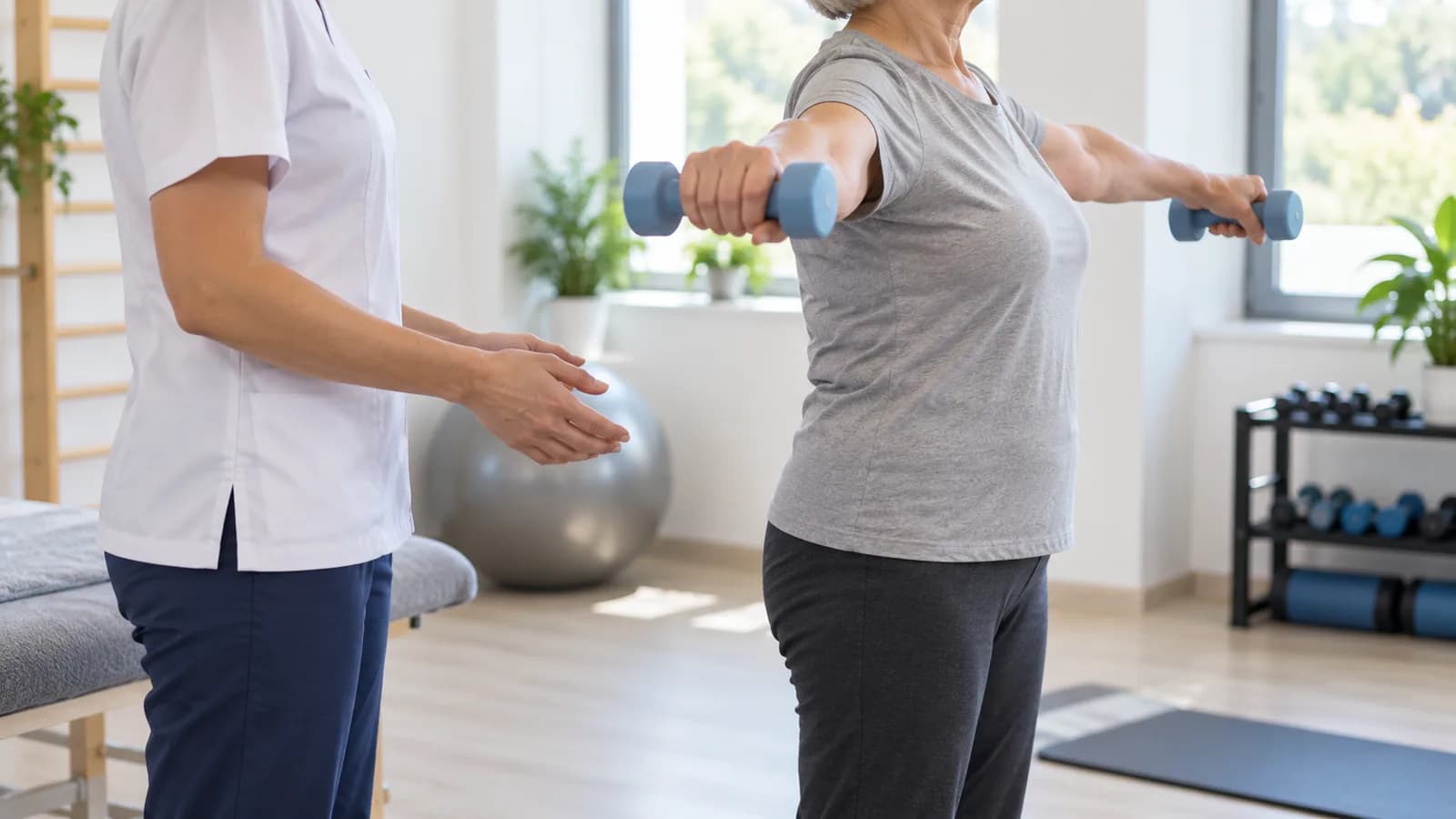
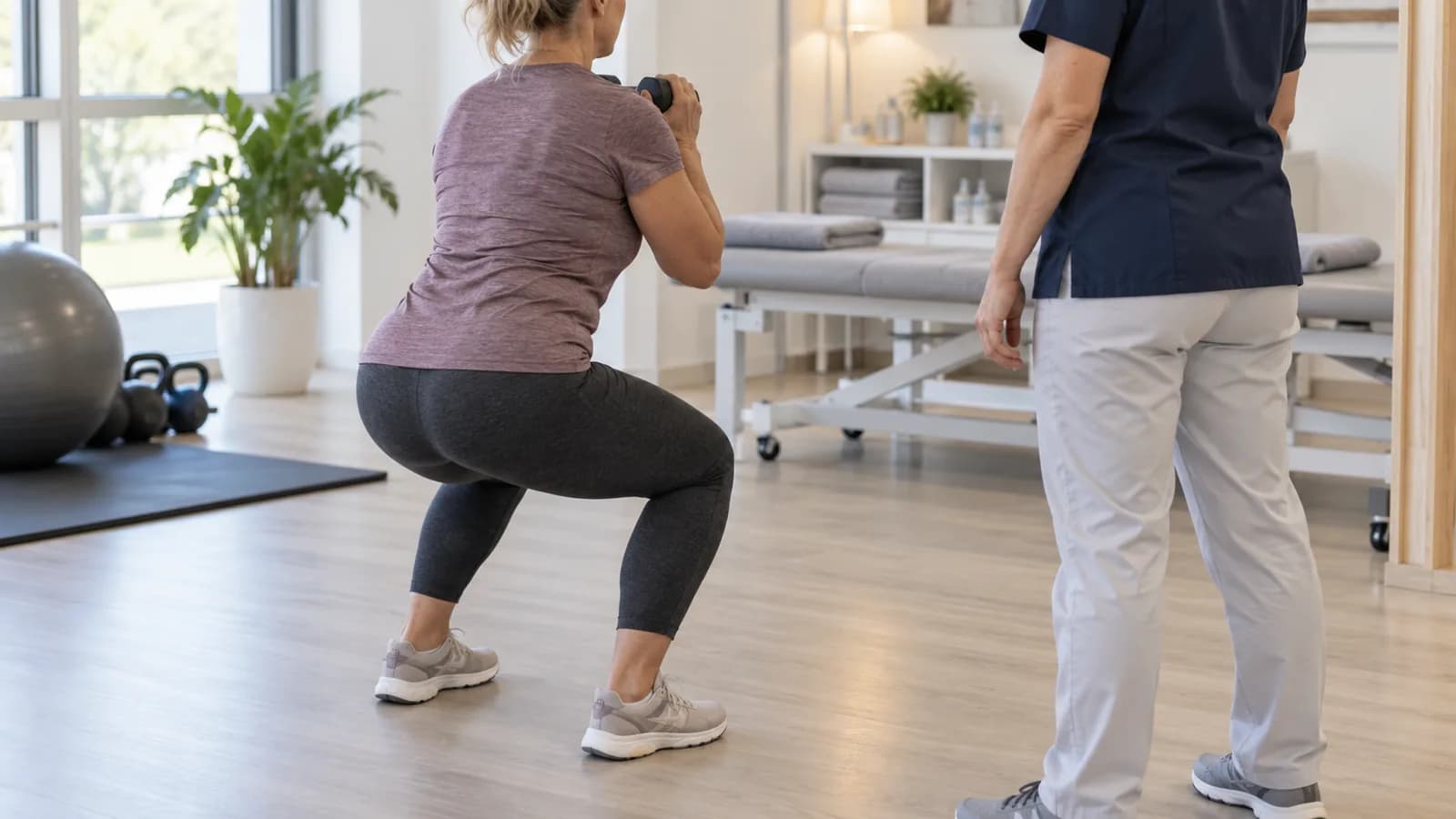
- Resistance (weight) training: a programme on several days a week that works the large muscle groups (legs, hips, back, chest, arms) and increases the load over time. Muscle only gets stronger when it is challenged a little beyond what it is used to; we call this progressive loading.
- Weight-bearing and impact exercise: brisk walking, stairs and small hops send a stimulus through the bone. But this is individual; if your bone density is low, if you have had a fracture or if you have pelvic floor symptoms, it needs to be adapted. We cover this in detail in our osteoporosis and bone health article.
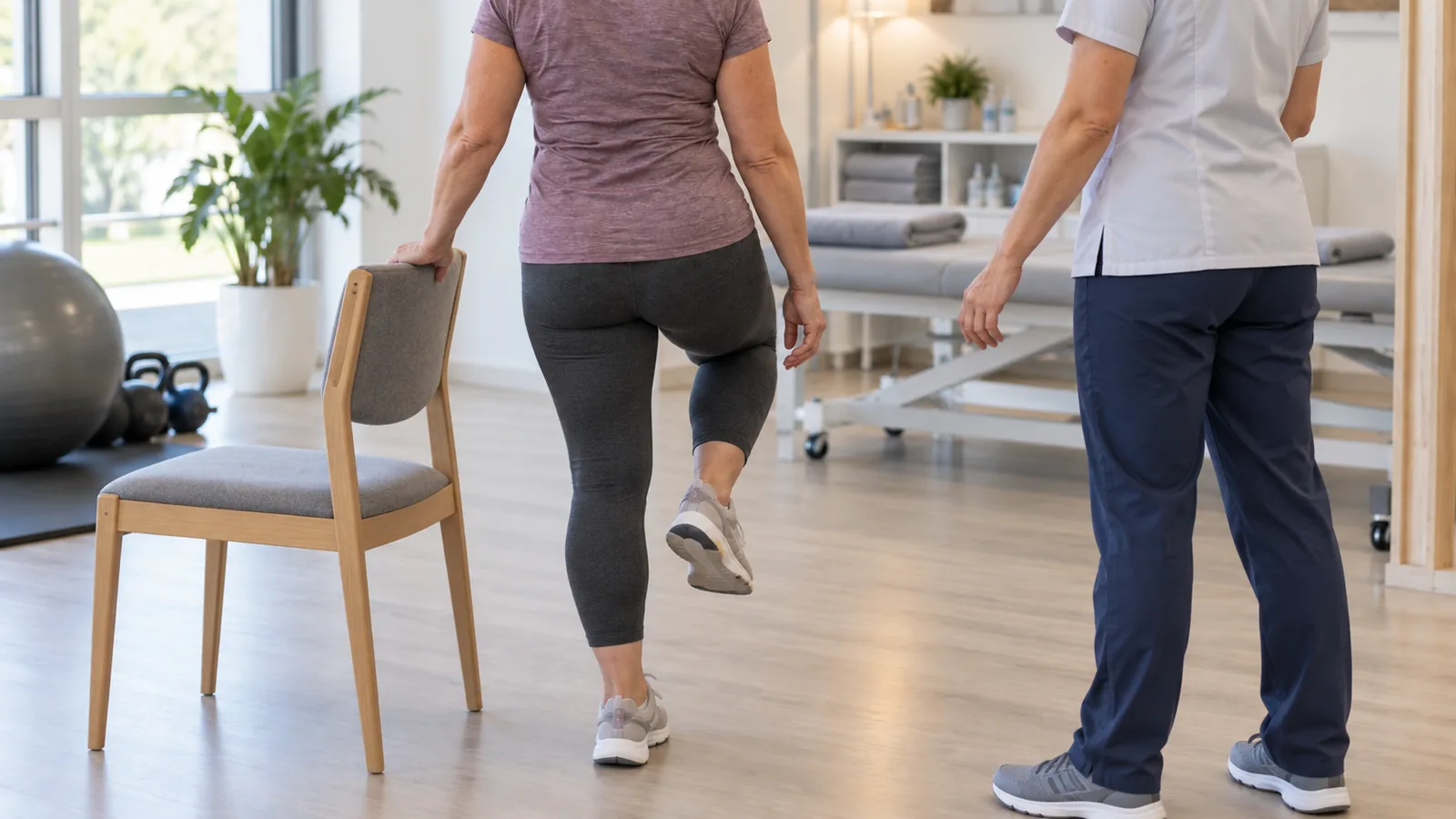
- Balance training: standing on one leg, walking along a line, changing direction. However strong your bones are, not falling is the most important part of avoiding a fracture.
- Walking: excellent for the heart, blood sugar and mood. On its own, though, it is often not enough of a stimulus to build muscle.
Some women are wary of weights: "I'll get injured", "I'll get bulky", "not at my age." None of this is true. The real risk lies in starting without knowing the technique, without warming up and by increasing the load all at once. So the first weeks go into learning the movements, breathing and trunk control. Supervised Pilates can be a good start, especially for trunk control and posture, but for muscle and bone you need to move on to genuine resistance work over time.
A common question early on is: "Should I stop if it hurts during exercise?" With tendon pain in particular, mild, tolerable discomfort is acceptable; what matters is that the pain is not clearly worse the next morning. If it is, the load was a little too much, and we reduce the weight or repetitions rather than abandoning the programme.
Lifting weights during the menopause is not a risk, it is an investment. The real risk is the muscle and bone that are quietly lost over years without any load.
Exercising without forgetting the pelvic floor, sleep and hot flushes
Many women give up after leaking on the first jump or heavy squat. So we say this up front: if you have leakage, a feeling of heaviness or a bulge in the pelvis, have your pelvic floor assessed before starting an exercise programme. Moving on to impact exercise before the pelvic floor muscles are strengthened and coordinated with the breath can make symptoms worse. In that case pelvic floor rehabilitation becomes part of the programme, not a separate project.
Sleep and hot flushes are closely linked to exercise too. Regular exercise may improve sleep quality; but some women tell us they find it hard to fall asleep, and notice more hot flushes, after intense exercise late in the evening. Moving harder sessions earlier in the day, in a cool space, usually helps.
Protein and vitamin D come up often. Both matter for muscle and bone, but how much you need and whether to supplement depends on your blood results and health; that is for your doctor or a dietitian to decide. We plan the exercise side.
We also want to be clear on one point: the decision about hormone replacement therapy is made with your gynaecologist or the doctor who knows your history, whether here or at home. It is not a physiotherapist's field. With or without HRT, exercise keeps its place for muscle and bone.
Staying active through the menopause in Antalya: heat, sea and seafront
Exercising outdoors at midday in summer can be both draining and risky for a woman who is already dealing with hot flushes. Between June and September it makes more sense to move outdoor sessions to early morning or after sunset, and to do strength training somewhere cool indoors.
Many of our patients, including those who have moved here from abroad, love swimming in the sea. It is excellent for the heart and lungs and easy on the joints. But because the water supports your weight, it does not load the bones, and for most people it does not provide enough resistance to build muscle. So we put swimming alongside the programme, not in place of it.
The routine we often suggest is this: brisk walks along the Konyaaltı or Lara seafront on a few days a week, plus resistance training on a few days a week, either supervised or with a programme you have learned properly. A hotel housekeeper making beds all day, or a woman bending and lifting in a greenhouse, is already tired by the end of the shift; for these patients we build a shorter, more targeted strength programme around the working day.
What exercise can and cannot do, and when to see a doctor
Exercise does not remove the menopause, restore the bone density of your twenties or make every ache disappear. What it can do is maintain and build muscle strength, help slow bone loss, improve balance and resilience against falls, and get tendons used to load again. Much of your independence ten years from now depends on these gains.
Some symptoms, however, need a doctor's assessment before exercise. If any of the following apply, see your doctor first:
- Bone pain that wakes you at night and does not settle with rest
- Sudden, unexplained weight loss
- Swelling, redness and warmth in the joints, especially in several joints with prolonged morning stiffness (to rule out an inflammatory condition)
- Pain after a fall or a minor strain that stops you putting weight on the limb (possible fracture)
If none of these apply, and your shoulder, hip or hands have been making everyday tasks harder for more than two weeks, you are welcome to come to our clinic for an assessment. We find the source of the pain, measure your strength and balance, and build a gradual plan that suits you.