“It starts in my buttock, runs down the back of my leg, and some days it reaches my toes.” Almost every patient who walks in with sciatica describes it that way — tracing a line with their hand from hip to knee while they talk. That line is half the diagnosis for us, because where the pain begins and where it stops tells us which structure is being compressed.
The other sentence we hear constantly is: “The doctor said sciatica, but I still don't know what I'm supposed to do.” That confusion is fair. Sciatica is not a named disease; it is the label for a pain pattern with several different causes underneath it. Below: how we read that pattern, what counts as an emergency, and where physiotherapy actually makes a difference.
Sciatica is a description, not a diagnosis
The sciatic nerve is the thickest in the body. It is formed where the L4, L5 and S1 nerve roots join, passes deep through the buttock, runs down the back of the thigh and splits behind the knee to supply calf and foot. When pain follows exactly that route, the problem is usually not the nerve itself but one of its roots being pinched where it leaves the spine.
In rough order of frequency: a disc herniation first, most commonly between 30 and 50. Then piriformis syndrome, where a deep buttock muscle irritates the nerve — typical in people who sit for hours, behind a steering wheel or at a desk. Over sixty, spinal stenosis takes the lead, its signature story being leg pain that builds while walking and eases the moment the person leans forward. Spondylolisthesis, hip problems that mimic sciatica, and the rare but never-to-be-missed tumour or infection complete the list.
Different cause, different plan. Giving the same exercise to two patients who both arrive with “sciatica” on a referral means harming one of them.
Does it go below the knee? That is the dividing question
The questions I ask in the first five minutes barely change, because they separate the sources of pain with surprising accuracy:
- Does the pain travel below the knee, with numbness or pins and needles in the calf or foot? Then we are thinking nerve root.
- Does it stay in the buttock and upper thigh with no numbness? Usually muscle, hip or sacroiliac joint — just as painful, but a different problem.
- Does coughing, sneezing or straining send pain down the leg? A strong pointer towards a disc: raised abdominal pressure loads the nerve root.
- Is there one position that clearly reduces the pain? This “directional preference” becomes the backbone of the plan.
- Is it hard to lift your foot off the floor, or to stand on tiptoe? That is no longer a pain question, it is a strength question.
- Does the pain own the whole night and never change with position? Then a different checklist opens, written out below.
What the examination actually involves
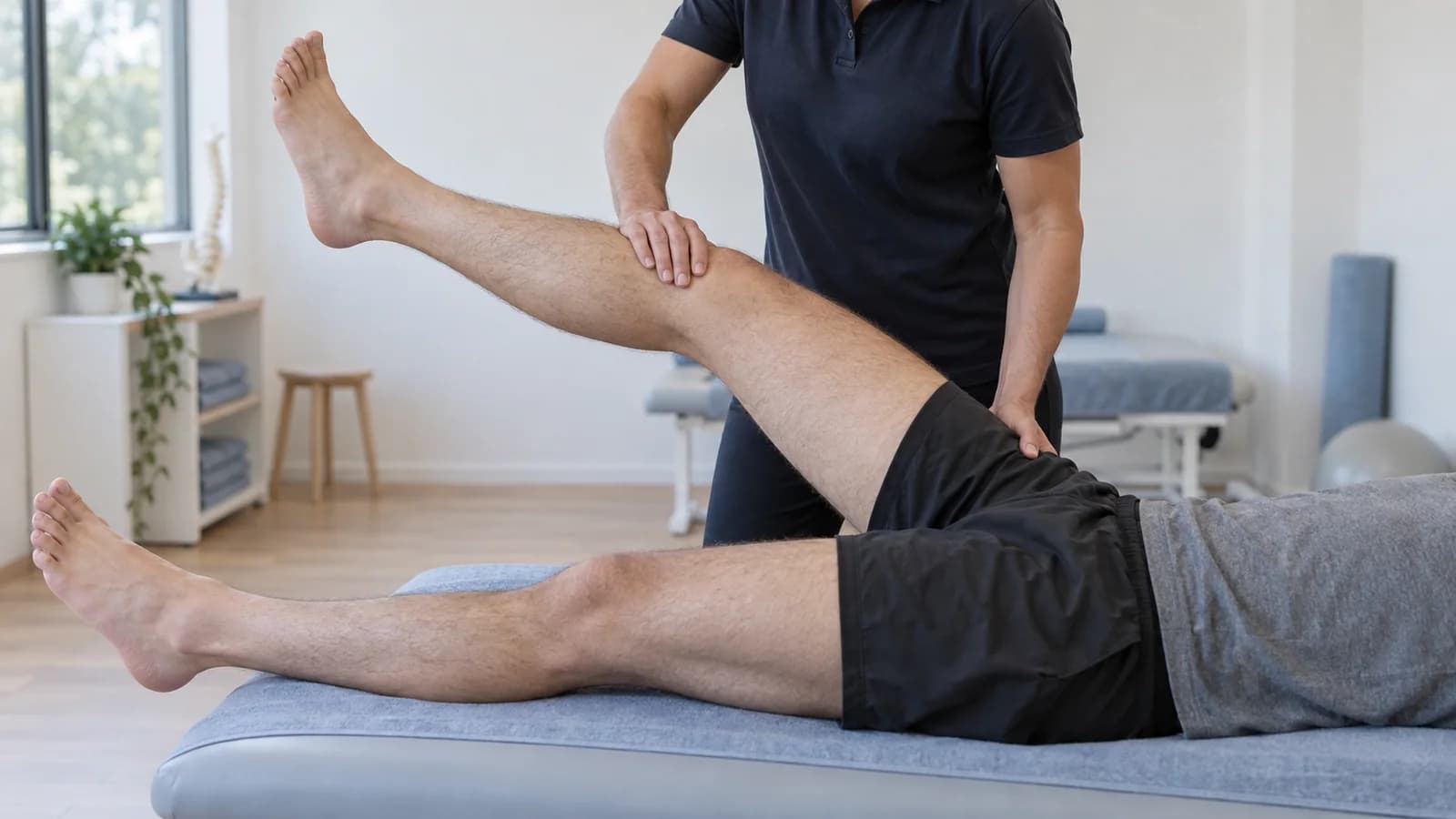
The straight leg raise — Lasègue's test — comes first: with the patient on their back we lift the leg with the knee straight. If the familiar radiating pain appears between 30 and 70 degrees, the “that's it, that's my pain” moment, the test is meaningful. Plain tightness behind the thigh is not positive on its own; pain increasing when we pull the ankle upwards does support nerve tension.
Next, the dermatome map. L4 covers the inner calf and inner border of the foot, L5 the outer calf, top of the foot and big toe, S1 the back of the calf, outer edge of the foot and little toe. The patch of numbness a patient points to often names the compressed root before any scan does.
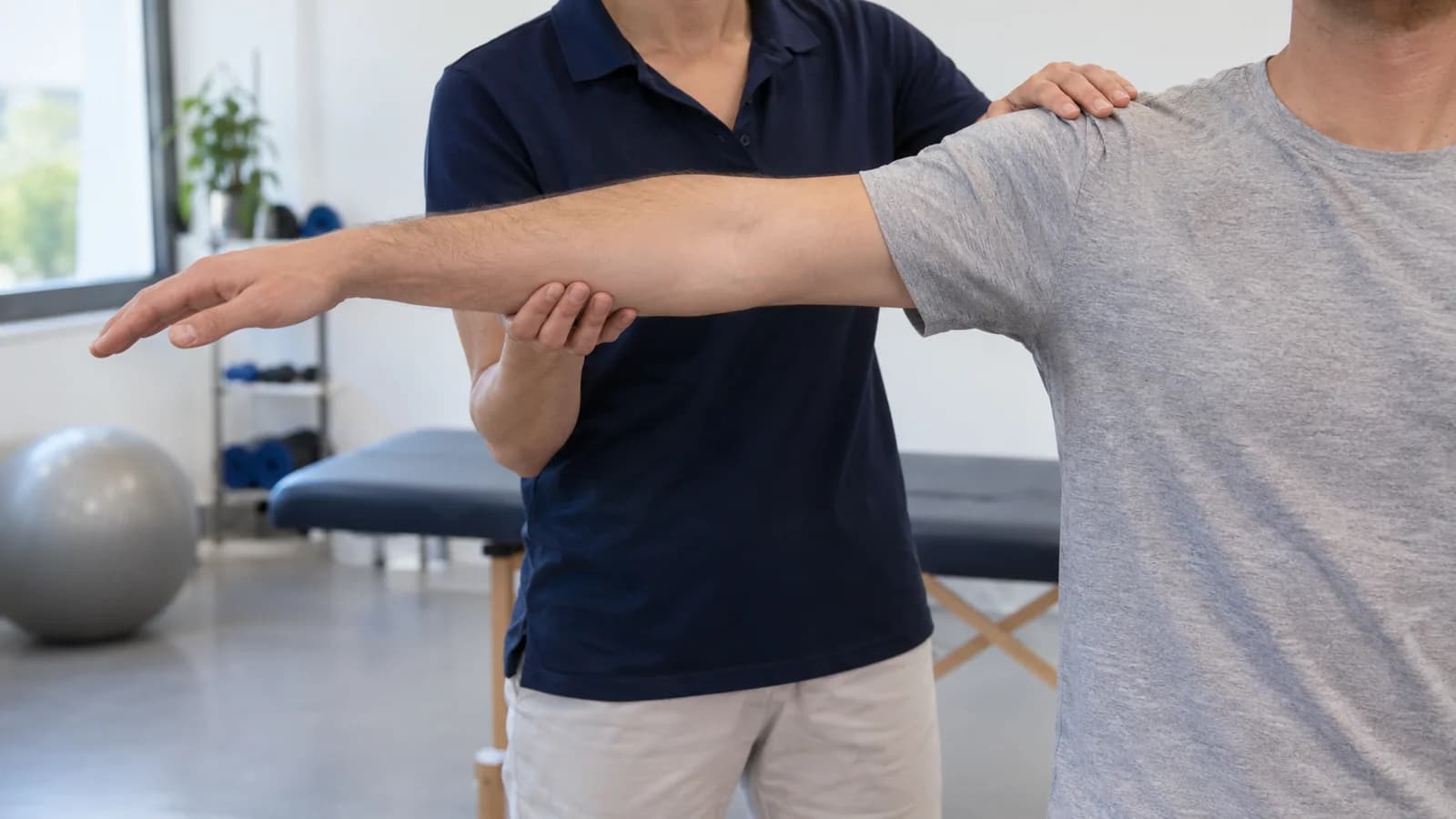
Third, muscle strength. Can they walk on their heels (L5)? Rise onto their toes ten times on one leg (S1)? We check the Achilles and knee reflexes too. A genuine loss here means the case belongs on a doctor's desk, not a physiotherapy table.
The red flags that cannot wait
If any of the following is present, do not book physiotherapy. Go to an emergency department.
- Loss of bladder or bowel control, or being unable to pass urine at all
- Numbness around the anus and inner thighs — the area that would touch a bicycle saddle
- Weakness increasing quickly, especially in both legs
- Being unable to lift your foot, or catching your shoe on the ground as you walk (foot drop)
- New back and leg pain, unrelieved by rest, in someone with a history of cancer
- Pain arriving with fever, weight loss or night sweats
- Symptoms that appeared straight after serious trauma, such as a fall or a road accident
The first two items suggest cauda equina syndrome: a situation that needs treatment within hours, where delay turns into permanent damage. Do not wait for anyone's appointment slot. A patient who calls us with these symptoms is sent to hospital without being examined here, because the only thing worth winning then is time.
Don't rush to the MRI, and don't go to bed
These are the two reflexes I correct most often. The first is running straight for a scan. With no red flags, guidelines do not recommend imaging in the first six weeks, and the reason is simple: roughly half of forty-year-olds with no pain at all have a disc bulge visible on MRI. Millimetres on the film and the pain a patient feels frequently disagree: some walk comfortably with a large herniation, others spend nights sitting upright with a small one. Diagnosis comes from the map on the leg and the examination; the scan earns its place when surgery is on the table or the picture is atypical.
The second is bed rest, standard advice twenty years ago and since abandoned. Every day lying down costs muscle strength, pain tolerance and recovery speed. What helps is movement within the limits the pain allows, frequent changes of position, several short walks rather than one long one. That limit matters in both directions: gritting your teeth and walking through it is as wrong as staying in bed.
An honest note as well: most cases of sciatica improve substantially within six to twelve weeks, so for most patients we see, time is on our side. Physiotherapy's job is to shorten that period, keep the pain manageable, and build the mechanics that stop it coming back — not to “push the disc back in.”
What we actually do in treatment
The plan follows the directional preference found during assessment. In many patients, movements in extension — backwards — draw pain out of the leg and concentrate it in the lower back. We call that centralisation and treat it as good news. In others the opposite holds, which is exactly why one-size-fits-all exercise videos online work about half the time.
Nerve mobilisation we perform as gliding rather than stretching, so the nerve moves freely in the tissues around it. Aggressive stretching amplifies pain here and the dose is easy to overshoot, so early sessions stay deliberately conservative.
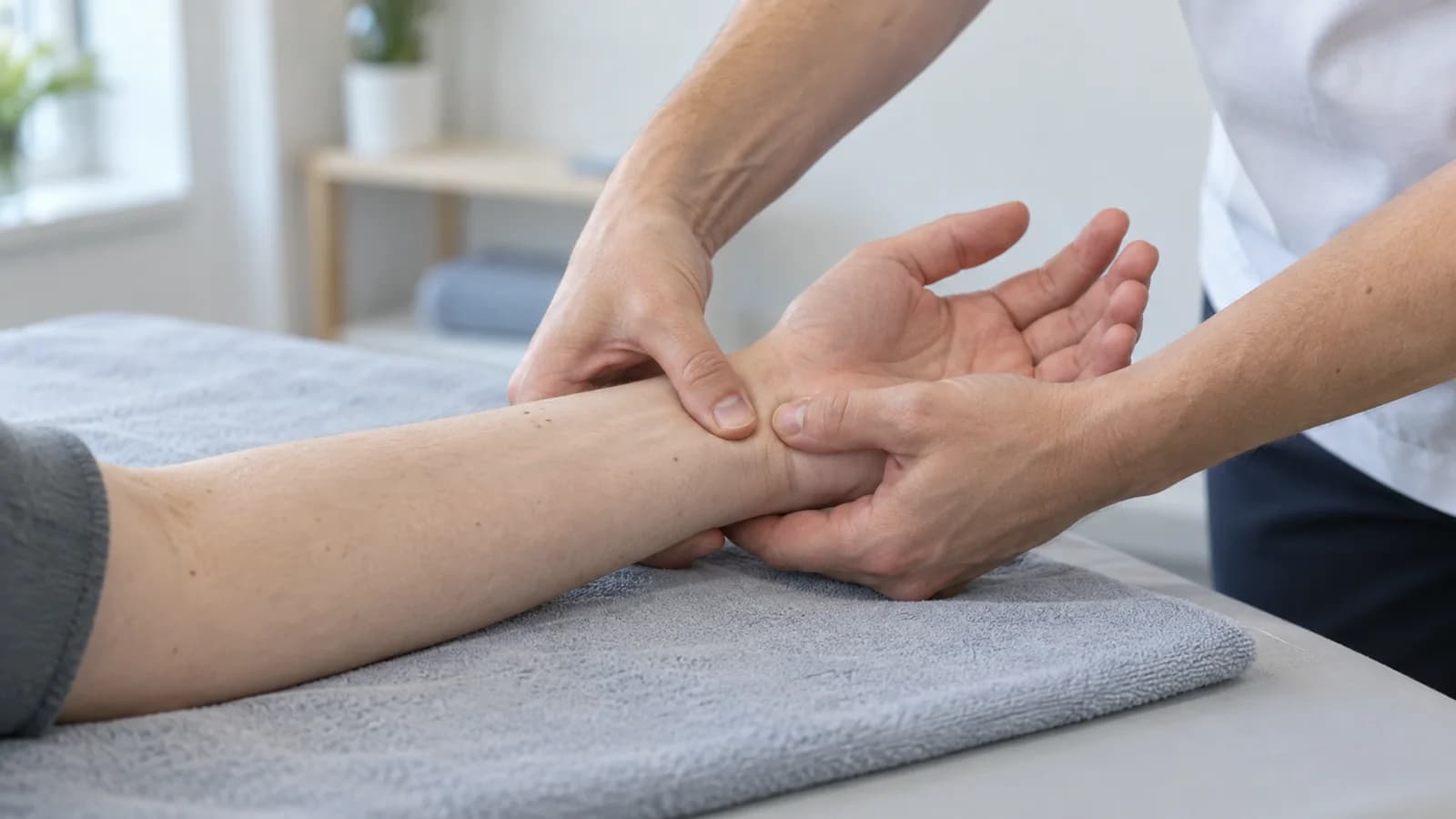
Manual therapy covers mobilisation of the lumbar segments and soft tissue work around the hip and piriformis. It is not a stand-alone answer; we use it to open a window in which exercise becomes possible. Inside that window, lumbar stabilisation and clinical Pilates take over: deep trunk muscles sharing the load, hip extensor strength returning, force travelling through the legs instead of the lower back.
The ergonomics stay concrete: break up sitting every 30 to 40 minutes, bring the car seat upright with lumbar support instead of reclining it, lift from the floor by pushing the hips back and keeping the load close to the chest, and never twist the trunk while carrying weight. Dull details, but the part that prevents recurrence largely lives here.

When surgery enters the conversation
In two situations. First, if a red flag is present — no waiting there. Second, if pain that limits daily life persists after six to twelve weeks of proper conservative treatment, or if strength loss is progressing. A neurosurgeon or orthopaedic surgeon makes that decision, never a physiotherapist. My job is to tell you at the right moment that it is time for a surgical opinion, and to send you there with a documented history of examination and exercise. And there is rehabilitation after surgery, which most patients go in unaware of.
Who we see in Antalya
We can usually guess the occupation of a sciatica patient here: shuttle and tour drivers at the wheel eight to ten hours a day in season, growers bent forward for hours inside greenhouses, people carrying harvest crates. Telling any of them to stop working is not realistic, so we fit the plan into the job — seat setup and a break rhythm for the driver, load variation and short exercise breaks in the greenhouse, lifting technique for the crate carrier. Foreign residents get the same conversation, with long flights in place of greenhouses.
If pain shooting into your leg has lasted more than two weeks, or numbness or weakness has joined it, come to our clinic in Muratpaşa for an assessment; the first session covers examination, directional testing and a home programme written for you. If the pain is still sitting in your back and has not travelled down yet, the article where we go through what causes lower back pain will serve you better. If you are curious about the hands-on part of the plan, have a look at how we apply manual therapy. For a second, independent summary, the NHS page on sciatica is plain and reliable.